

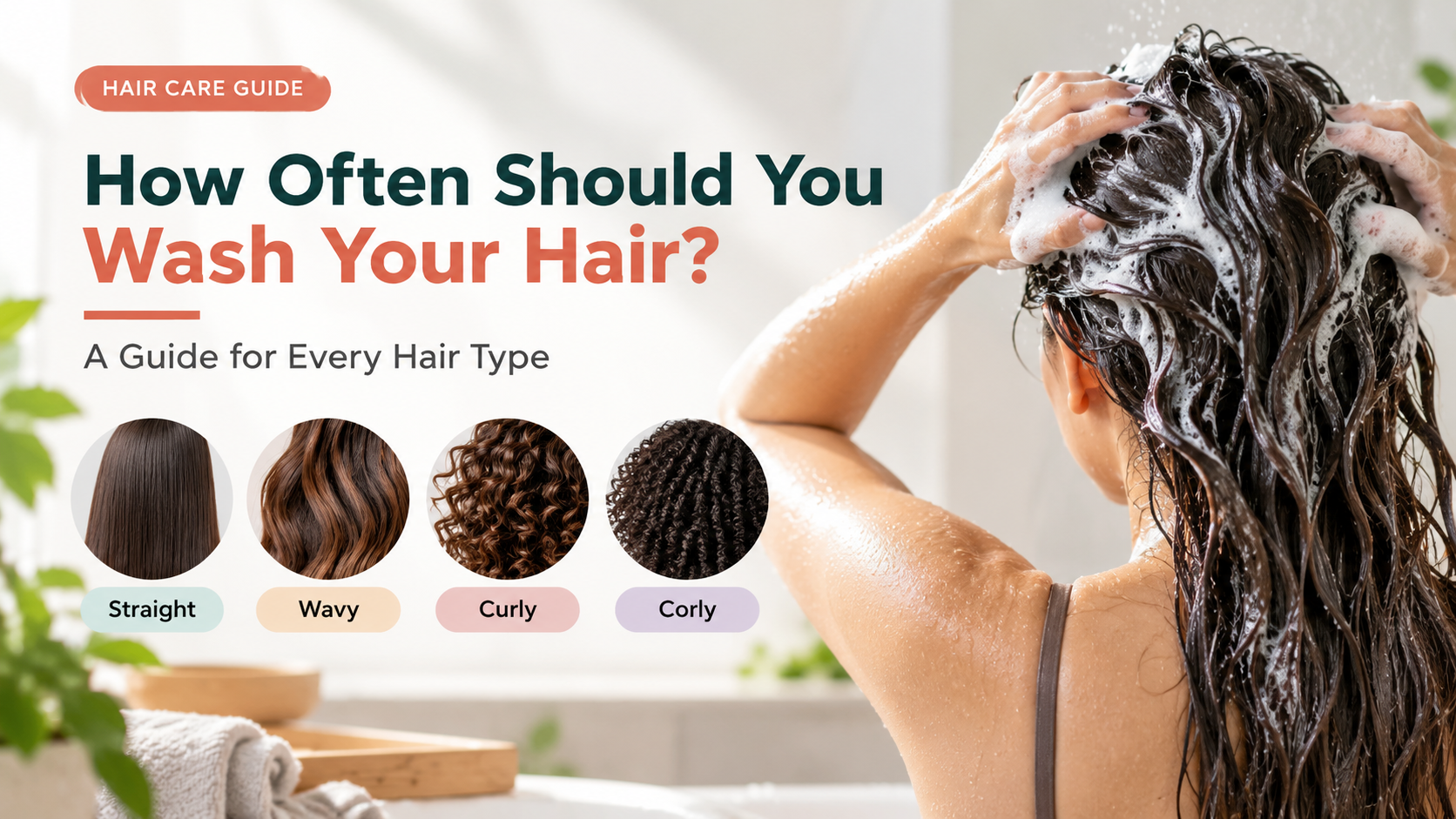

It is one of the most common hair care questions, and also one of the most confusing: how often should you wash your hair? One friend swears by a daily shampoo, another washes once a week and has gorgeous hair, and a stylist tells you something different again. The truth is that there is no single schedule that suits everyone. The right answer depends on your scalp, your hair texture, your lifestyle and even the weather where you live.
In this complete guide, you will learn how often to wash your hair for every hair type, how to spot the signs that you are washing too much or too little, how to wash correctly, and how to keep your hair looking fresh between washes. By the end, you will be able to build a routine that fits your own hair instead of following one-size-fits-all advice.
The Short Answer: How Often Should You Wash Your Hair?
For most people, washing hair two to three times a week is a good starting point. From there, adjust up or down:
- Oily or fine hair: every day or every other day.
- Normal or wavy hair: every two to three days.
- Dry, thick or damaged hair: once or twice a week.
- Curly and coily hair: about once every one to two weeks.
- Color-treated hair: two to three times a week, using gentle products.
These are guidelines, not strict rules. The best wash schedule is the one that keeps your scalp comfortable and clean and your hair soft, shiny and manageable.
Why Hair Washing Frequency Matters
Your scalp has sebaceous glands that produce sebum, a natural oil that protects the skin and conditions the hair. Sebum is helpful, but too much of it mixes with sweat, dead skin cells, dust, pollution and styling products. This creates buildup that can make hair look greasy and flat, and can leave the scalp itchy or irritated.
On the other hand, shampoo is designed to remove oil. Wash too often and you can strip away the oils your hair needs, leaving strands dry, rough and frizzy and the scalp tight or flaky. Finding your balance means cleaning the scalp enough to stay comfortable without constantly stripping it.
6 Factors That Decide Your Ideal Wash Schedule

1. Scalp Oil Production
Some people naturally produce more sebum than others. If your roots look greasy within a day, your scalp is on the oilier side and will usually need more frequent washing. If your scalp feels tight or dry a day after shampooing, you likely need to wash less often.
2. Hair Texture and Curl Pattern
Straight hair lets oil travel quickly from the scalp to the ends, so it looks greasy sooner. On curly and coily hair, the twists and bends slow that journey, so the lengths tend to be drier and need more moisture and fewer washes.
3. Exercise and Sweat
Sweat and salt can build up on the scalp. If you work out often, you may need to wash more frequently, or at least rinse your hair with water after sweating and shampoo when the scalp feels dirty.
4. Climate and Humidity
Hot, humid weather and polluted air make hair feel dirty faster. In cold, dry climates, indoor heating and winter air can dry out the scalp, so washing a little less often may feel better.
5. Color, Chemical and Heat Styling
Dyed, bleached, relaxed or heat-styled hair is more fragile. Frequent washing can fade color faster and increase dryness, so gentler products and fewer washes usually work better.
6. Water Quality and Products
Hard water contains minerals that can leave a film on the hair, while heavy styling products such as gels, waxes and oils build up over time. Both can make hair feel dull or heavy and may call for an occasional clarifying wash.
How Often to Wash Your Hair by Hair Type

Fine, Straight or Oily Hair: Every 1 to 2 Days
Fine hair has less volume to hide oil, and straight strands let sebum slide down quickly. If your hair looks limp and greasy by the second day, washing daily or every other day is perfectly fine. Choose a lightweight, gentle shampoo, keep conditioner away from the roots, and avoid heavy oils and rich creams near the scalp. Washing every day does not damage healthy hair when you use a mild formula and condition the ends.
Normal or Wavy Hair: Every 2 to 3 Days
If your hair is neither very oily nor very dry, you have the most flexibility. Wash every two to three days and use dry shampoo or a quick styling refresh on the in-between days. Wavy hair often looks its best on day two, when a little natural oil helps definition and reduces frizz.
Thick, Dry or Frizzy Hair: 1 to 2 Times a Week
Dry or very thick hair takes longer to look oily and loses moisture easily. Washing once or twice a week with a moisturizing shampoo and a nourishing conditioner or mask helps keep it soft. If your scalp still gets itchy or flaky between washes, rinse with water or use a gentle scalp cleanse in the middle of the week.
Curly and Coily Hair: Every 1 to 2 Weeks
Curly, coily and tightly textured hair is naturally drier, because scalp oil has a harder time moving down the strand, and the hair is more fragile and prone to breakage. Many people with these textures wash about once every one to two weeks, often using a moisturizing shampoo and a deep conditioner. Some choose a co-wash, which means cleansing with a conditioner-style product, between regular shampoos. If you wear protective styles such as braids or twists, you can still cleanse the scalp gently with diluted shampoo and keep it comfortable without disturbing the style.
Color-Treated or Chemically Treated Hair: 2 to 3 Times a Week
Color molecules can wash out more quickly with frequent shampooing. Many stylists recommend waiting 48 to 72 hours after coloring before the first wash, and then keeping washes to about two or three a week with a sulfate-free, color-safe shampoo and cool to lukewarm water. If you have had a smoothing or keratin treatment, follow your stylist’s specific instructions on how long to wait before washing.
Dandruff-Prone or Sensitive Scalps
Flakes are often linked to dandruff or seborrheic dermatitis, not simply a dry scalp. In these cases, washing with a medicated shampoo a few times a week is commonly recommended until symptoms improve, but follow the label or your dermatologist’s instructions. Ingredients you may see include zinc pyrithione, ketoconazole, selenium sulfide and salicylic acid. If flaking, redness or itching persists, see a doctor rather than guessing.
Quick Reference Table
| Hair Type | Suggested Frequency | Best Shampoo Style |
|---|---|---|
| Fine / oily | Every 1-2 days | Lightweight, balancing or clarifying |
| Normal / wavy | Every 2-3 days | Gentle, all-purpose |
| Thick / dry | 1-2 times a week | Moisturizing, hydrating |
| Curly / coily | Every 1-2 weeks | Sulfate-free, moisture-rich, co-wash between |
| Color-treated | 2-3 times a week | Color-safe, sulfate-free |
| Dandruff-prone | As directed on the label or by a doctor | Medicated anti-dandruff |
Signs You Are Washing Your Hair Too Often or Not Enough

Signs of Washing Too Often
- A dry, tight or itchy scalp soon after washing.
- Frizzy, rough or brittle strands that tangle and break easily.
- Fading hair color that loses shine and vibrancy quickly.
- Roots that turn greasy again quickly, even though you just washed.
Signs of Not Washing Enough
- Greasy, limp hair that looks flat, heavy and stuck to the scalp.
- Visible flakes or buildup from oil, dead skin and product residue.
- An itchy scalp or an unpleasant odor that comes back soon after styling.
- Dull hair that no longer reflects light or moves freely.
A simple test: if your scalp feels comfortable and your hair looks clean for most of the days between washes, your schedule is probably right. If you notice any of the signs above, try moving your wash day by one day in either direction and observe the difference over a few weeks.
Does Washing Your Hair Every Day Cause Hair Loss?
This is a very common worry, and the short answer is no. Most people naturally shed roughly 50 to 100 hairs a day as part of the normal growth cycle. Those hairs fall out whether or not you wash. When you shampoo, you simply see the hairs that were already ready to fall, collected in your hands or in the drain. Washing does not make healthy hair follicles stop working.
That said, rough scrubbing, very hot water and harsh products can irritate the scalp and damage the hair shaft, causing breakage that looks like thinning. If you notice patchy hair loss, a widening part, or clumps of hair coming out, speak to a doctor or dermatologist, because causes such as hormones, stress, nutrition and medical conditions are far more likely than shampooing.
How to Wash Your Hair the Right Way: A 5-Step Routine

How you wash matters almost as much as how often. Follow these steps for a cleaner scalp and healthier lengths:
- Rinse thoroughly first. Soak your hair with lukewarm water for a minute or two. This loosens dirt and oil and means you need less shampoo.
- Shampoo the scalp. Use about a coin-sized amount, work it into a lather in your hands, and massage it into the scalp with your fingertips. Do not scratch with your nails.
- Rinse well. Let the suds run through the lengths as you rinse, and keep going until the water runs clear. Leftover shampoo can cause itching and dullness.
- Condition mid-lengths to ends. Apply conditioner away from the roots, comb it through gently with your fingers or a wide-tooth comb, leave it for two to three minutes, then rinse.
- Dry gently. Squeeze out the water and pat your hair with a soft towel or old cotton T-shirt. Rough rubbing roughens the cuticle and causes frizz and breakage.
Water temperature: lukewarm is best. Very hot water can dry out the scalp and fade color, while a quick cool rinse at the end can leave hair feeling smoother.
Choosing the Right Shampoo and Conditioner
The right products can make your chosen schedule much easier to follow. Here is what to look for:
- Clarifying shampoo: deep-cleans buildup from styling products, hard water and chlorine. Use it once or twice a month, not every wash.
- Moisturizing shampoo: best for dry, curly and coily hair, with hydrating ingredients such as glycerin, shea butter or natural oils.
- Volumizing or lightweight shampoo: suits fine, flat hair and avoids heavy residue.
- Sulfate-free or color-safe shampoo: gentler on dyed, chemically treated or very dry hair.
- Medicated shampoo: for dandruff and seborrheic dermatitis, used as directed.
- Conditioner and masks: every hair type benefits from conditioner on the lengths. Add a deep conditioning mask once a week or every two weeks if hair feels dry or damaged.
How to Keep Your Hair Fresh Between Washes
If you are stretching the time between washes, these habits help hair look and feel clean:
- Use dry shampoo sparingly. It absorbs oil at the roots, but it is not a replacement for washing. Too many days in a row can lead to buildup and scalp irritation.
- Brush gently. Brushing spreads natural oils along the strands, which helps the lengths of fine or straight hair look shinier.
- Sleep on a silk or satin pillowcase. It reduces friction, frizz and oil transfer, particularly for curly and long hair.
- Try a protective or loose style. A braid, bun or low ponytail keeps hair away from sweat and dirt and reduces tangling.
- Rinse with water only. After a workout or swim, a water rinse removes sweat, salt and chlorine without stripping oils.
- Refresh curls. Lightly mist curly hair with water and a little leave-in conditioner to bring back definition.
What Changes When You Adjust Your Routine?
If you switch from daily washing to fewer washes, your hair may feel a bit oilier for the first couple of weeks while your scalp adjusts. Some people find their scalp seems to produce less oil over time, although scientific evidence on this “training” effect is limited. Be patient, try a gradual change such as adding one extra day between washes at a time, and rely on dry shampoo, a hat or a loose style to get through the transition. If your hair feels uncomfortable or itchy, return to your previous schedule.
Your needs can also shift with age and life stage. Puberty, pregnancy, menopause, medications and seasonal changes can all alter how much oil your scalp produces, so it is worth reviewing your routine now and then.
Special Situations to Keep in Mind
- Swimming: rinse hair before and after swimming, and shampoo soon after to remove chlorine or salt, which can dry and discolor hair.
- Hard water: if hair feels stiff, dull or sticky no matter what you do, mineral buildup could be the cause. A clarifying shampoo or a showerhead filter may help.
- Long hair: the scalp and roots usually get oily before the ends do. Focus shampoo on the scalp and condition the lengths.
- Short hair: products and oils reach the ends sooner and hair can look dirty faster, so more frequent washing is common.
- Hats, helmets and headwear: they trap sweat and heat near the scalp, so wash more often if you wear them for long periods.
When to See a Dermatologist
Washing habits cannot fix every scalp problem. Make an appointment with a doctor or dermatologist if you have:
- Persistent flakes, redness, scaling or itching that does not improve with regular shampoo.
- Painful sores, bumps or crusting on the scalp.
- Sudden or patchy hair loss, or noticeably increased shedding.
- A scalp that stays extremely oily or extremely dry despite changes to your routine.
Frequently Asked Questions
Is it bad to wash your hair every day?
Not necessarily. If you have fine, oily hair, sweat a lot or live in a hot, humid climate, daily washing can be perfectly healthy as long as you use a gentle shampoo and condition the ends. People with dry, curly or color-treated hair usually do better with fewer washes.
How often should you wash your hair if you have an oily scalp?
Most people with an oily scalp do well washing every day or every other day with a lightweight or balancing shampoo. Apply conditioner only to the mid-lengths and ends, and avoid heavy oils and creams near the roots.
How often should you wash curly or natural hair?
Many people with curly or coily hair wash about once every one to two weeks, using a moisturizing shampoo and a deep conditioner, and sometimes co-wash in between. If your scalp gets itchy or buildup appears sooner, it is fine to wash a little more often.
Can you go a week without washing your hair?
Yes, some people can, especially those with dry, thick or curly hair. If you have an oily scalp, sweat heavily or use many styling products, going a full week may cause greasiness, odor or scalp irritation. Listen to your scalp.
Should you shampoo twice?
Usually one wash is enough. A second shampoo can help if your hair is very dirty, has a lot of product buildup or you have not washed in a long time. The first wash breaks up oil and product, and the second cleans the scalp more thoroughly.
How often should you use conditioner?
Use conditioner after every shampoo, applying it mainly from the mid-lengths to the ends. Leave-in conditioners, masks and oils can be added as needed for extra moisture.
Is dry shampoo a good substitute for washing?
Dry shampoo is a handy short-term fix for oily roots, but it does not actually clean the scalp. Use it for a day or two between washes at most, and wash thoroughly to remove the powder and buildup.
Is it better to wash your hair in the morning or at night?
Either is fine. Washing at night can save time in the morning and lets curls or waves set while you sleep, though you should make sure your hair is dry enough before bed. Washing in the morning can give you a fresher look for the day, particularly for fine or oily hair.
Final Thoughts: Find the Schedule That Works for You
There is no perfect answer to how often you should wash your hair, because every scalp and every head of hair is different. Start with the guideline for your hair type, pay attention to how your scalp and strands feel, and fine-tune from there. Remember the essentials: focus shampoo on the scalp, condition the lengths, use lukewarm water, and choose products that match your hair type and concerns.
If your hair looks healthy, your scalp feels comfortable and your routine fits your life, you are washing your hair exactly the right amount.
Disclaimer: This article is for general information only and is not a substitute for professional medical advice. If you have a persistent scalp condition or unexplained hair loss, consult a qualified healthcare professional.