


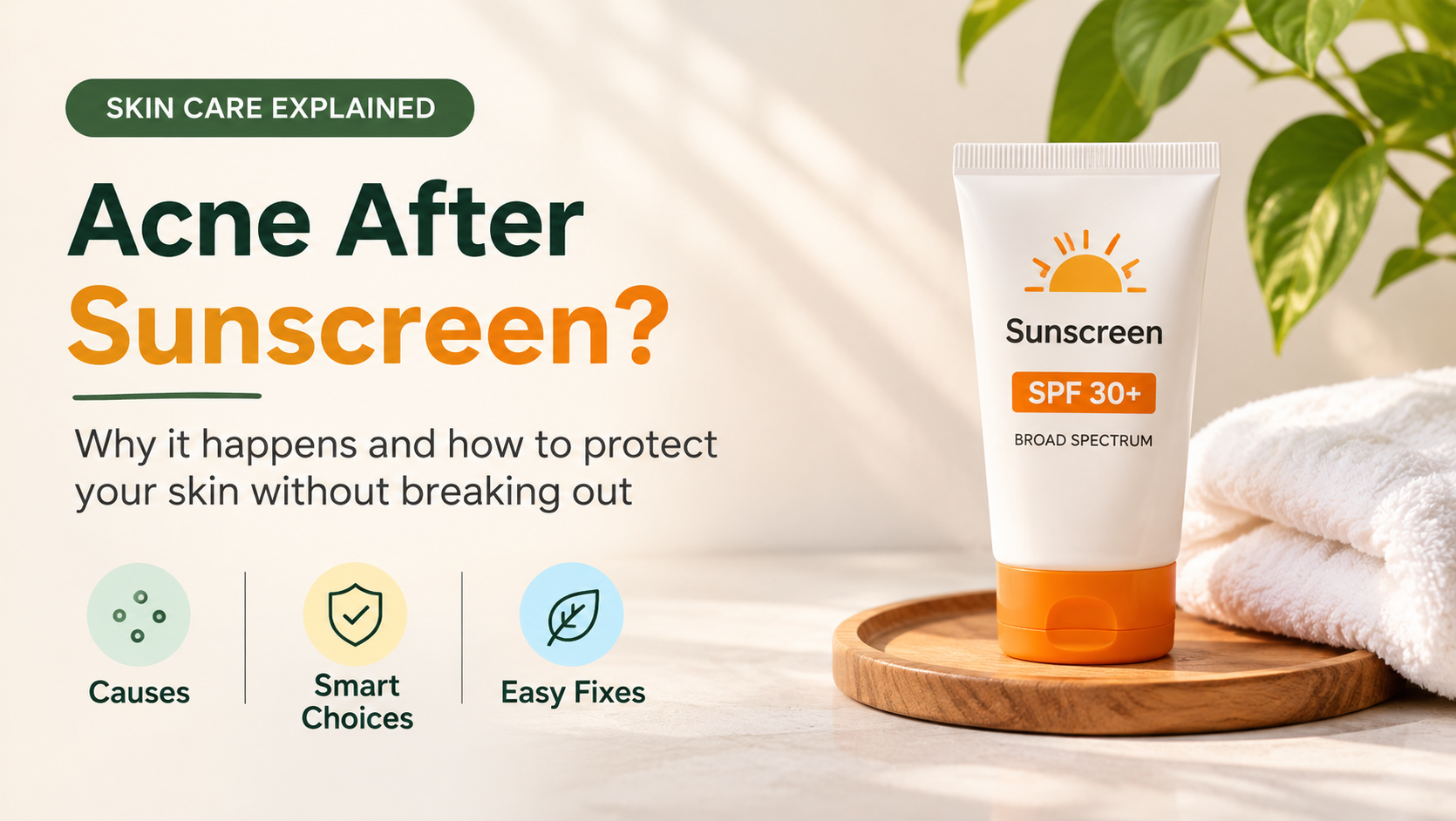
Acne After Sunscreen: Why It Happens and How to Fix It

You are doing the right thing by wearing SPF. Here is how to stop it causing breakouts.
You have been told that sunscreen is the most important step in any skincare routine, so you apply it every morning. Then the pimples start to appear. It is frustrating and confusing: is your sunscreen causing acne, or is something else going on?
In many cases the answer is that a particular product, or the way you use and remove it, is not working for your skin. This guide explains why acne can appear after sunscreen, how to tell clogged pores from irritation or allergy, how to choose a more suitable formula, how to apply and remove sunscreen properly and when to ask a doctor for help.
Please note
This article is for general education and is not medical advice or a diagnosis. Do not stop using sun protection altogether. If you have an itchy rash, swelling, blistering, severe pain or you are unsure what is happening, speak to a doctor or dermatologist.
In this guide
- Quick answer
- Why you should not skip sunscreen
- Why sunscreen can lead to breakouts
- Clogged pores, irritation or allergy?
- Ingredients that can cause trouble
- Mineral vs chemical sunscreen
- How to choose a sunscreen for acne-prone skin
- How to apply and remove sunscreen
- Treating existing breakouts
- When to see a doctor
- Frequently asked questions
Quick Answer
Acne after sunscreen is usually caused by a formula that is too heavy or clogging for your skin, incomplete removal at night, too many layered products, heat and sweat, or irritation and allergy to an ingredient. The fix is not to skip sunscreen, but to switch to a lightweight, non-comedogenic, fragrance-free formula, apply it in a thin routine and cleanse thoroughly each evening. If you have a rash, itching or swelling, stop the product and seek advice.
Why You Should Not Skip Sunscreen
Sun protection helps guard against sunburn, premature aging and skin cancer. For people with acne it matters even more: UV exposure can make post-acne marks darker and slower to fade, and some acne treatments, such as retinoids and exfoliating acids, can make skin more sun-sensitive. Skipping sunscreen may reduce one trigger but creates other problems, so it is better to find a formula that suits you.
Why Sunscreen Can Lead to Breakouts

1. The formula is too heavy or rich
Thick, creamy sunscreens that feel greasy can form a film on the skin that traps oil and sweat, especially in oily or acne-prone skin and in hot weather.
2. Pore-clogging ingredients
Some sunscreens contain oils, butters, waxes or heavy emollients that may clog pores in people who are prone to congestion. Ingredient responses are individual, so something that breaks out one person may be fine for another.
3. Sunscreen is not removed properly
Water-resistant, tinted and long-wear formulas are designed to stay put. If you only splash your face with water or use a mild wash, residue can stay in pores overnight and gather around the hairline, jaw and nose.
4. Too many layers
Applying a rich moisturizer, serum, primer, sunscreen and foundation can create a heavy buildup that does not allow the skin to shed oil and dead cells easily.
5. Heat, sweat and friction
In hot or humid weather, sweat and oil mix with sunscreen and can clog pores, especially under masks, hats or helmets.
6. Irritation or allergy
Fragrance, alcohol, preservatives or certain UV filters can irritate sensitive skin or cause an allergic reaction. The skin may become red, dry, sore or bumpy, and it can be mistaken for acne.
7. The wrong formula for your skin type
A rich cream that is perfect for dry skin may be too much for an oily face. Likewise, a very drying formula can irritate the skin barrier and trigger more oil.
8. Coincidental acne
Sometimes breakouts begin around the time you start sunscreen but are actually caused by hormones, stress, another new product or friction. A careful look at timing and location helps identify the real cause.
Clogged Pores, Irritation or Allergy?
The way your skin looks and feels gives clues about what is going on.

Ingredients and Features That Can Cause Trouble
There is no single list that applies to everybody, and ingredient lists do not tell the whole story. These are common features that some people with acne-prone skin find problematic.
| Feature | Why it may be a problem | What to try |
|---|---|---|
| Heavy oils, butters and waxes | May feel rich and occlusive; can clog pores in some people | Look for lighter, oil-free textures |
| Fragrance and essential oils | Can irritate sensitive or reactive skin | Choose fragrance-free |
| High alcohol content | Can feel drying or irritating | Fine for some, but not for sensitive skin |
| Certain UV filters | Can trigger stinging or allergy in some people | Patch test and switch if you react |
| Heavy silicones or thick film-formers | Can feel heavy and trap sweat in hot weather | Try a gel or fluid texture |
| Tinted or water-resistant formulas | Harder to remove completely | Use a proper first cleanse |
Mineral vs Chemical Sunscreen for Acne-Prone Skin
You will often hear that mineral sunscreens are better for acne. The truth is more nuanced.
| Type | How it works | Things to know |
|---|---|---|
| Mineral (physical) | Zinc oxide or titanium dioxide sits on the skin and reflects UV | Often well tolerated by sensitive skin; some feel thick or leave a white cast |
| Chemical (organic) | Filters absorb UV and convert it to heat | Often lighter and more invisible; can sting or irritate some people |
| Hybrid | A mix of both types | Depends on the individual formula |
Neither type is automatically right or wrong for acne. Texture, ingredients, fragrance and your own skin response matter more than the category. If one type breaks you out or irritates you, try a different one and observe.
How to Choose a Sunscreen for Acne-Prone Skin
- Broad-spectrum protection. It should protect against both UVA and UVB rays, with an SPF of at least 30 as commonly recommended by skin health organizations.
- Non-comedogenic and oil-free on the label, remembering it is a guide and not a guarantee.
- Lightweight texture. Gel, fluid, lotion or milk textures often feel lighter than rich creams.
- Fragrance-free. This is often gentler for reactive skin.
- Made for the face. Body sunscreens are often thicker and may not suit facial skin.
- Soothing extras if tolerated. Ingredients such as niacinamide are found in some face sunscreens and may help calm skin.
- A finish you will actually use. The best sunscreen is one you enjoy wearing every day.
Patch test first
Before using a new sunscreen on your whole face, apply a small amount to a small area, such as near the jawline, for a few days. Watch for redness, itching, stinging or new bumps.
How to Apply and Remove Sunscreen the Right Way

In the morning
- Keep your routine simple: gentle cleanser, light moisturizer if needed, then sunscreen.
- Use the amount recommended on the label so you get the protection shown, but avoid piling on other heavy products underneath.
- Let each layer settle before the next one.
- Reapply when outdoors as directed on the label.
In the evening
- Use a first cleanse, such as a cleansing balm, oil or micellar water, to lift sunscreen and makeup.
- Follow with a gentle, water-based cleanser to clean the skin.
- Pay attention to the hairline, sides of the nose, jawline, neck and ears.
- Pat dry and apply only the treatment and moisturizer your skin needs.
How to Treat Existing Breakouts
- Switch to a gentler sunscreen rather than stopping SPF completely.
- Keep the rest of your routine simple while skin settles.
- Use proven acne ingredients such as benzoyl peroxide, salicylic acid or adapalene carefully and one at a time. These can make skin drier and more sun-sensitive, so sunscreen becomes even more important.
- Do not pick or pop spots, which can cause marks and scars.
- Give it time. Clogged-pore breakouts may take a few weeks to settle after you remove the cause.
Other Ways to Reduce Sun Exposure
If you cannot find a comfortable face sunscreen right away, add other forms of protection while you test options: wear a wide-brimmed hat, seek shade at midday, wear sunglasses and cover up when possible. These do not replace sunscreen, but they reduce your exposure.
When to See a Doctor or Dermatologist
- Itchy rash, blisters, swelling or hives after using a product.
- Burning or severe pain.
- Deep, painful or cystic acne.
- Breakouts that do not improve after several weeks and a change of product.
- Acne leaving marks or scars.
- Uniform, itchy bumps that do not respond to normal acne products.
- You are unsure which product is causing the problem.
A professional can check for contact allergy, help you choose a suitable formula and treat the acne itself.
Frequently Asked Questions
Can sunscreen cause acne?
Sunscreen does not directly cause acne in everyone, but some formulas can clog pores or irritate skin, especially thick, greasy or heavily emollient ones used on oily or acne-prone skin. Leftover sunscreen that is not washed off properly can also contribute to breakouts.
Should I stop wearing sunscreen if I break out?
No. Daily sun protection is important for skin health, and UV exposure can make acne marks darker and last longer. Instead of skipping it, change the formula, check how you apply and remove it and speak to a professional if the problem continues.
Is mineral or chemical sunscreen better for acne-prone skin?
It varies from person to person. Some people with sensitive or acne-prone skin tolerate mineral sunscreens containing zinc oxide well, while others find them heavy or chalky. Others do better with lightweight chemical filters. The texture, ingredients and how your skin reacts matter more than the label alone.
What does non-comedogenic mean on sunscreen?
It means the product is formulated or tested in a way that aims not to clog pores. It is a helpful guide but not a guarantee, as skin responds differently to different ingredients. Patch testing and giving a product a couple of weeks is still wise.
How long should I try a new sunscreen before deciding?
Mild irritation, stinging or an allergic-type rash means you should stop right away. For clogged-pore breakouts, it can take a week or two to see a pattern. If new pimples keep appearing in the places you apply it, it is probably not suitable.
Why am I breaking out along my hairline and jaw?
Sunscreen that is not fully washed away often collects at the hairline, around the jaw and near the ears. Extra cleansing in these areas and avoiding heavy hair products near the forehead may help.
Can sweat and sunscreen together cause acne?
Yes. Heat and sweat can mix with a thick sunscreen film and trapped oil, which may clog pores. Cleanse after heavy sweating, choose a lightweight formula for hot weather and avoid layering heavy products.
When should I see a dermatologist?
See one if you have an itchy rash, swelling, blistering, painful or cystic acne, breakouts that do not improve after switching products or acne that is affecting your confidence. A professional can also check for contact allergy or other conditions that look like acne.
Final Thoughts
Breaking out after sunscreen is annoying, but it does not mean you are doomed to choose between clear skin and sun protection. Look at the formula, the number of layers, how well you remove it and whether your skin is irritated or just clogged. A lightweight, face-friendly, non-comedogenic sunscreen, a simple routine and thorough nighttime cleansing solve the problem for many people. If your skin is reacting strongly or the acne persists, a doctor or dermatologist can help.
Protect your skin from the sun every day, and be patient while you find the formula that works best for you.