

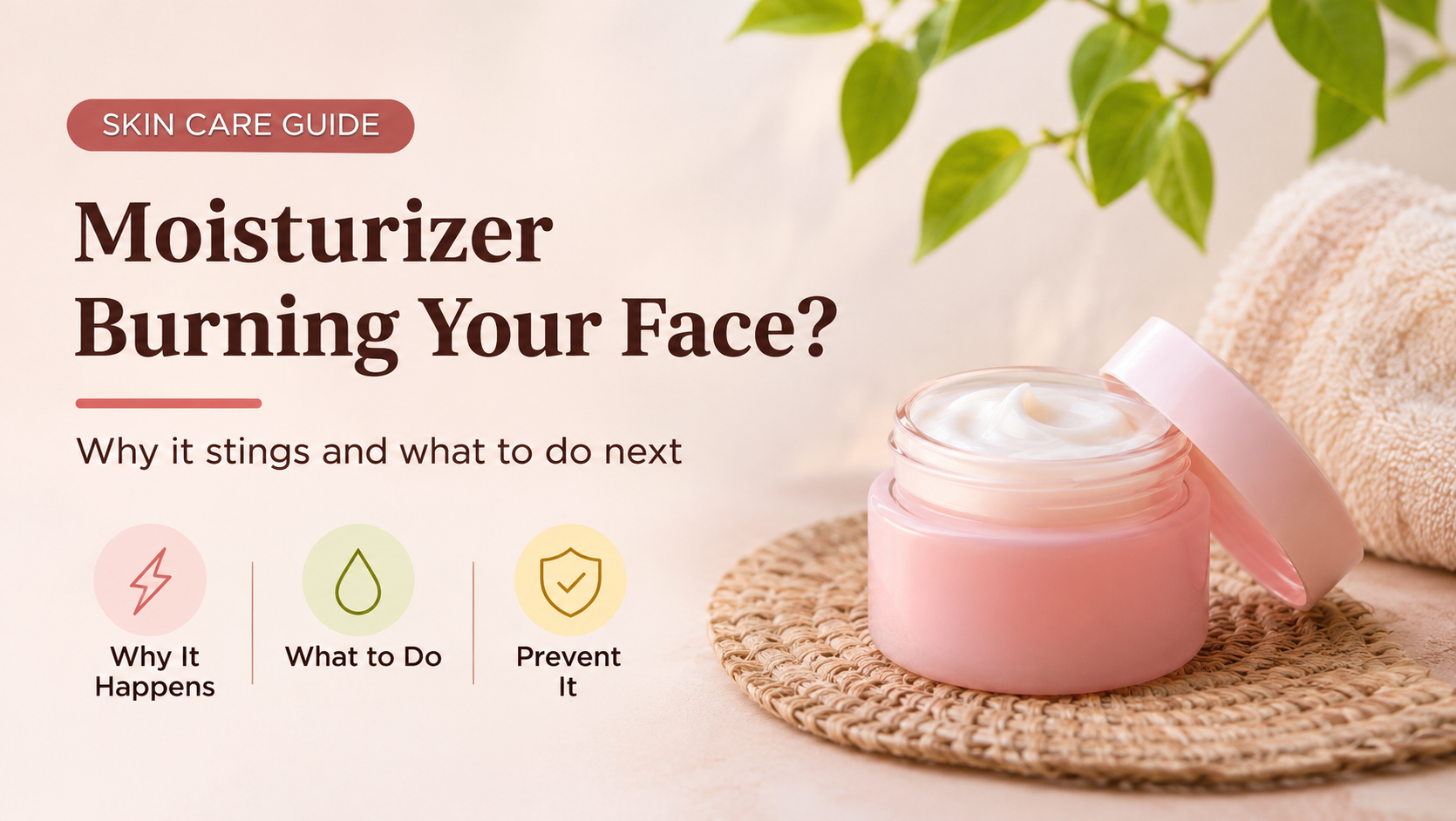

You smooth on your moisturizer expecting comfort, and instead your face tingles, stings, or burns. It is alarming, especially when the product is supposed to be gentle. A moisturizer that burns is not “working” or “purging.” It is a signal that something is wrong with the product, your skin, or the way you are using them.
This guide explains why moisturizer burns your face, how to tell mild irritation from an allergic reaction, what to do immediately, and how to choose and use a moisturizer that feels comfortable.
Why Does Moisturizer Burn My Face?
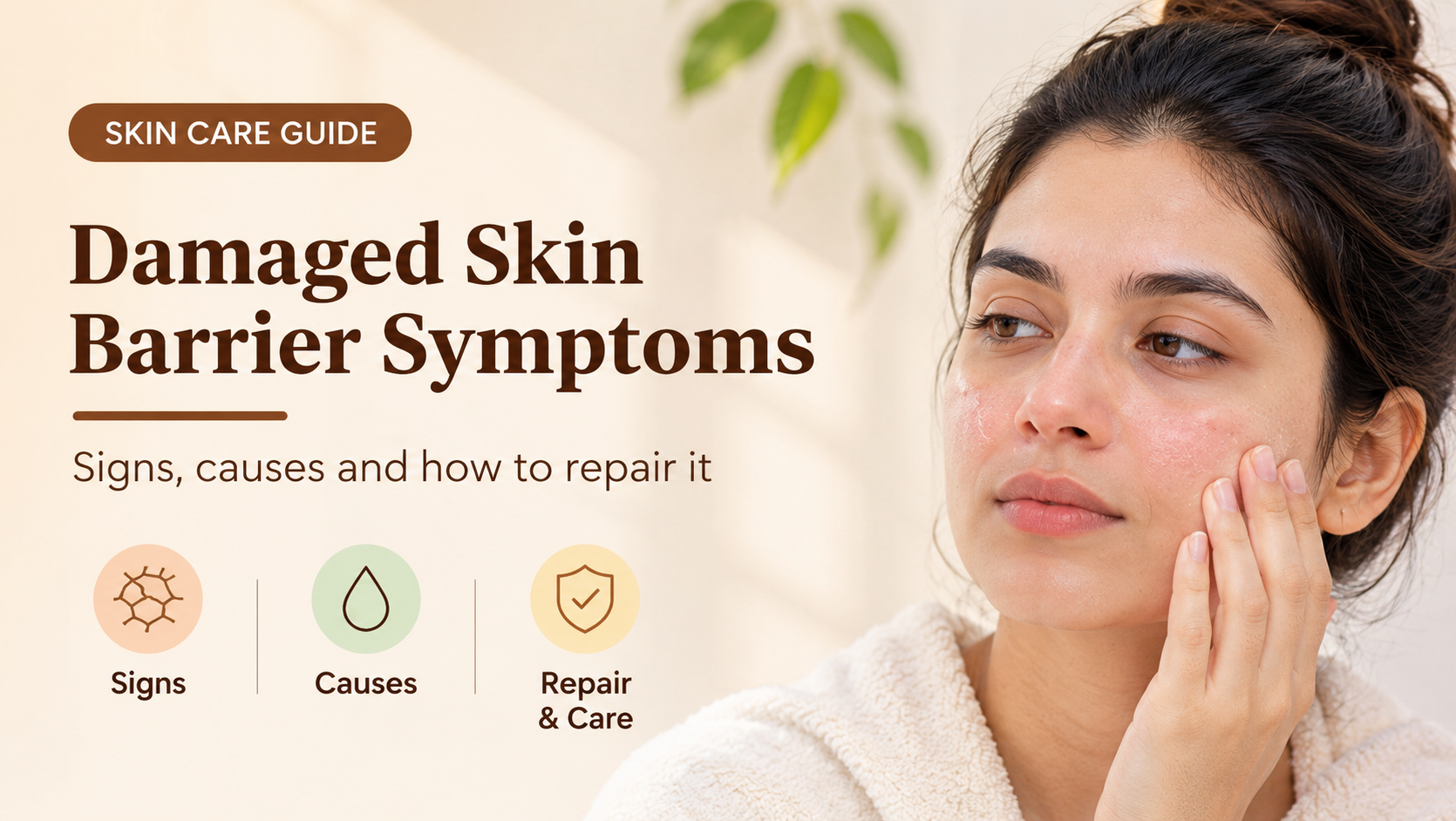
The most common reason is a weakened skin barrier. A healthy barrier keeps ingredients on the surface. When it is damaged, even mild ingredients reach nerve endings and sensitive layers more easily, and they cause stinging or burning. Other causes include irritating ingredients, allergies, or skin conditions that make the face more reactive.

Common Causes of Moisturizer Burning the Face
1. A Damaged Skin Barrier
Over-exfoliating, over-washing, strong actives, sunburn, and cold weather can all break down the barrier. Skin then stings with products that once felt fine, including plain moisturizers.
2. Fragrance and Essential Oils
Perfume, essential oils, and plant extracts are among the most common triggers of irritation and allergic contact dermatitis, even in products labeled “natural.”
3. Active Ingredients in the Moisturizer
Anti-aging and acne moisturizers may contain retinol, glycolic or lactic acid, salicylic acid, vitamin C, or high-strength urea. These can sting, particularly on sensitive or recently treated skin.
4. Alcohol and Cooling Agents
Denatured alcohol, menthol, camphor, and similar ingredients give a tingle that some people like, but sensitive skin often experiences it as burning.
5. Preservatives and Other Additives
Some people react to certain preservatives, such as methylisothiazolinone, formaldehyde releasers, or others. If you stung from several different products, check for shared preservatives.
6. Layering Too Many Products
Applying moisturizer over a fresh retinoid, acid, or vitamin C serum increases how deeply everything penetrates. Moisturizer then seems to burn when the real culprit is the product underneath.
7. Applying on Wet Skin When Skin Is Already Irritated
Damp skin absorbs more product. This helps with hydration, but on irritated skin it also increases penetration of ingredients that sting.
8. Allergic Contact Dermatitis
A true allergy is a delayed immune reaction. It may cause a burning feeling, intense itch, redness, swelling, bumps, or blisters hours to days after use.
9. Skin Conditions
Rosacea, eczema, seborrheic dermatitis, and acne can make skin more reactive and easier to sting. In these cases, many mainstream moisturizers can feel uncomfortable.
10. Sunburn, Windburn, or Heat
Skin that is sunburned or windburned will often burn when anything is applied. Hot weather, sweat, and saunas can also make products feel more irritating.
11. Expired or Contaminated Product
Old moisturizers can degrade, and jar products touched with fingers can pick up bacteria. Changes in smell, color, or texture are warning signs.
Is Burning After Moisturizer Ever Normal?
A very brief, mild tingle that fades in a minute may occur with certain active ingredients. Real burning, lasting stinging, redness, or discomfort is not normal. It is best to stop using the product and find the cause.
What to Do If Your Moisturizer Burns Your Face

- Rinse it off. Wash gently with lukewarm water. You can use a very mild cleanser if the product is thick.
- Cool the skin. Hold a clean, cool, damp cloth on your face for a few minutes. Do not use ice directly.
- Apply something bland. A plain, fragrance-free petrolatum ointment or simple barrier cream can protect skin while it heals.
- Stop the suspected product. Do not reapply it until you know what caused the reaction.
- Pause all actives. Skip retinoids, acids, scrubs, and vitamin C for two to four weeks.
- Do not scratch or pick. This slows healing and can lead to infection.
- Monitor symptoms. If burning gets worse or swelling, rash, or blisters appear, seek medical advice.
How to Rebuild Your Skin Barrier
- Cleanse once or twice a day with a mild, fragrance-free cleanser and lukewarm water.
- Use a short, simple routine: cleanser, moisturizer, and sunscreen.
- Choose moisturizers with ceramides, glycerin, panthenol, and squalane.
- Apply sunscreen every morning, preferably a gentle, fragrance-free one.
- Introduce one new product at a time and wait at least two weeks between additions.
How to Choose a Moisturizer That Does Not Burn
- Short ingredient list: fewer ingredients mean fewer potential triggers.
- Fragrance-free: look for “fragrance-free,” not just “unscented,” which can still contain masking fragrance.
- Free from alcohol denat. and essential oils.
- Barrier ingredients: ceramides, cholesterol, fatty acids, and glycerin.
- Suitable texture: gel-cream for oily skin, cream for normal to dry skin, ointment for very dry or irritated skin.
- Tubes or pumps: they stay cleaner than open jars.
- Dermatologist-tested for sensitive skin: helpful, though not a guarantee.
Ingredients to Be Careful With if Your Face Burns
- Fragrance, essential oils, and citrus extracts.
- Denatured alcohol, menthol, and camphor.
- Glycolic, lactic, and salicylic acids in leave-on products.
- Retinol and other retinoids.
- High-concentration vitamin C and urea.
How to Patch Test a Moisturizer

Test any new product on a small area for several days before using it on your whole face. Check the spot for redness, itching, bumps, or stinging. If there is any reaction, stop using the product.
Helpful Habits
- Moisturize at a time when your skin is not freshly exfoliated.
- Wait a few minutes between active serums and moisturizer.
- Keep products away from heat and direct sunlight and check expiry dates.
- Use clean hands or a spatula for jar products.
- Avoid hot water on your face.
When to See a Doctor or Dermatologist
Get medical advice if burning lasts more than a few days after stopping the product, or if you have significant redness, swelling, blisters, oozing, severe itching, or a rash spreading beyond your face. A dermatologist can perform patch testing to find allergens and treat conditions such as eczema or rosacea.
Seek urgent medical help if you have swelling of the lips, tongue, or throat, hives all over the body, or trouble breathing after using a product.
Frequently Asked Questions
Why does my moisturizer sting only on some days?
Skin sensitivity changes with weather, sleep, stress, and recent use of actives. A tired barrier stings more easily.
Can a basic moisturizer burn my face?
Yes. If your barrier is damaged or you are allergic to an ingredient, even simple formulas can sting.
Does burning mean the product is working?
No. Skin care should not hurt. Burning usually means irritation.
Why does moisturizer burn after washing my face?
Washing can leave the barrier slightly open and damp, so ingredients penetrate more. Harsh cleansers make this stronger.
How long does irritation last?
Mild irritation may calm in a few days with gentle care. Barrier recovery can take two to four weeks.
Can I still use sunscreen while my face is burning?
Sun protection is important, but if your usual sunscreen stings, switch to a gentle mineral, fragrance-free option and limit sun exposure.
Final Thoughts
Moisturizer that burns your face is a sign to stop and investigate, not to push through. Most cases come from a damaged skin barrier, fragrance, or active ingredients, and they improve once you simplify your routine and choose gentle formulas. Be patient, patch test new products, and see a professional if symptoms are severe or persistent.
Disclaimer: This article is for general information only and is not medical advice. If you have persistent or severe skin problems, please consult a qualified healthcare professional.