

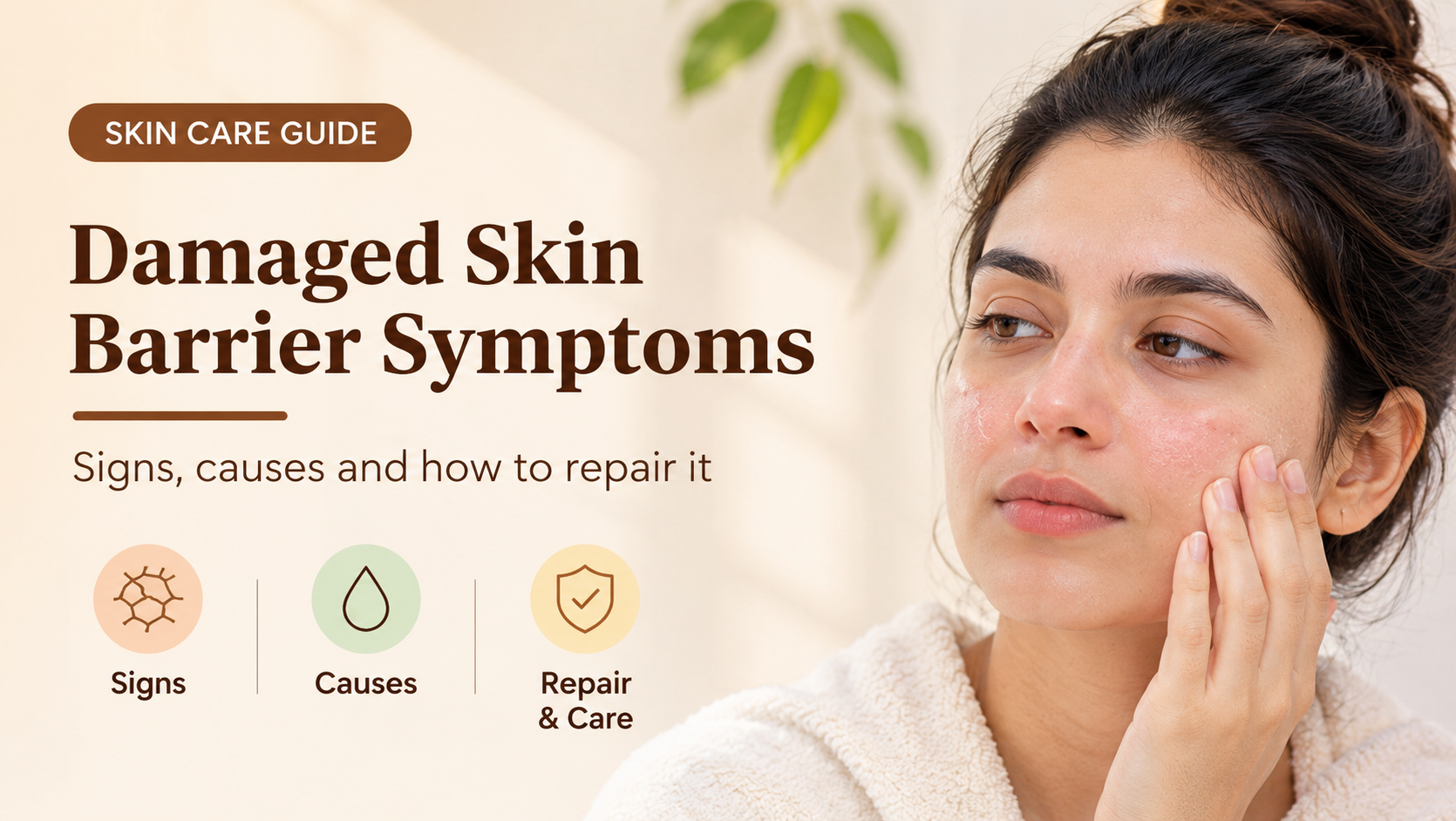

If your skin suddenly feels dry, tight, red, or stings when you apply products that used to feel fine, your skin barrier may be damaged. This is one of the most common reasons behind sensitive, irritated, and unpredictable skin, and it is often caused by everyday habits rather than a serious disease.
This guide explains what the skin barrier is, the symptoms of damage, what causes it, how to repair it, and when to get professional help.
What Is the Skin Barrier?
The skin barrier is the outermost layer of your skin, called the stratum corneum. It works like a brick wall: skin cells are the bricks, and natural fats such as ceramides, cholesterol, and fatty acids are the mortar that holds everything together. A healthy barrier keeps water inside the skin and keeps irritants, allergens, and bacteria outside.

When the mortar breaks down, water escapes more easily and irritants get in. This is called increased transepidermal water loss, and it is the root of most barrier-related symptoms.
Damaged Skin Barrier Symptoms

1. Dryness and Flaking
Skin that stays dry even after moisturizing, with visible flakes or rough patches, is one of the earliest signs.
2. Tightness
A stretched, uncomfortable feeling, especially after washing, shows that the skin is losing water quickly.
3. Redness and Inflammation
A weakened barrier lets irritants reach deeper layers, which triggers redness, warmth, and visible irritation.
4. Stinging or Burning
If gentle products such as moisturizer, sunscreen, or even water cause stinging, the barrier is likely compromised.
5. Itching
Dry and inflamed skin often feels itchy. Scratching worsens the damage, so it can turn into a cycle.
6. Rough, Uneven Texture and Dullness
When dead cells do not shed evenly, skin looks dull, bumpy, and patchy, and makeup may sit poorly.
7. Increased Sensitivity
Products that once worked well, such as vitamin C, retinoids, or acids, suddenly cause irritation.
8. Breakouts and Clogged Pores
A damaged barrier can encourage acne-like bumps. Some people also overproduce oil to compensate, which may confuse them into thinking their skin is oily.
9. Oily but Dehydrated Skin
Shiny skin that still feels tight is a classic sign. The skin has oil but lacks water and healthy barrier lipids.
10. Eczema-Like Flare-Ups
Patches of dry, itchy, scaly, or cracked skin may appear, and existing conditions such as eczema or rosacea can flare more often.
11. Frequent Infections or Slow Healing
A weak barrier lets bacteria and fungi enter more easily, so small cuts, spots, or irritated areas may take longer to heal.
What Causes a Damaged Skin Barrier?
- Over-cleansing: washing too often or using harsh, sulfate-heavy cleansers.
- Over-exfoliating: scrubs, acids, brushes, and peeling products used too frequently.
- Too many active ingredients: layering retinoids, vitamin C, and acids without recovery time.
- Hot water: long, hot showers and face washing with very hot water.
- Weather: cold, wind, dry air, heating, and air conditioning.
- Sun damage: frequent sunburn and UV exposure.
- Alcohol and fragrance: irritating ingredients in toners and creams.
- Stress and poor sleep: both can slow skin repair.
- Skin conditions: eczema, psoriasis, and dermatitis.
- Age: natural lipid production declines over time.
- Pollution and hard water: may add irritation and residue.
How to Tell If Your Skin Barrier Is Damaged
There is no single home test, but a few clues point strongly to barrier damage: your usual products suddenly sting, your skin looks red or flaky without a clear reason, you feel tightness soon after washing, and the problems started after a change such as a new active product, travel, or harsh weather. A dermatologist can examine your skin and rule out other causes.
How to Repair a Damaged Skin Barrier
- Simplify your routine. Use only a gentle cleanser, a moisturizer, and sunscreen in the morning.
- Stop strong actives. Pause retinoids, exfoliating acids, scrubs, and benzoyl peroxide until skin recovers.
- Cleanse gently. Use a cream or low-foam cleanser with lukewarm water, and wash only once or twice daily.
- Moisturize generously. Apply to slightly damp skin, twice or more a day.
- Use barrier-supporting ingredients. Look for ceramides, cholesterol, fatty acids, glycerin, panthenol, and niacinamide.
- Seal with an occlusive. A thin layer of petrolatum-based balm at night reduces water loss.
- Protect from the sun. Use broad-spectrum sunscreen, preferably fragrance-free.
- Be patient. Give skin at least two to four weeks before reintroducing actives one at a time.

Best Ingredients for Barrier Repair
- Ceramides: replace the natural mortar between skin cells.
- Cholesterol and fatty acids: work with ceramides to restore balance.
- Hyaluronic acid and glycerin: attract water into the skin.
- Panthenol (vitamin B5): soothes and supports healing.
- Niacinamide: strengthens the barrier and reduces redness.
- Squalane: softens skin without a heavy feel.
- Colloidal oatmeal and centella asiatica: calm irritation and itching.
Ingredients and Habits to Avoid During Recovery
- Retinoids, glycolic or salicylic acid, and strong vitamin C.
- Physical scrubs and cleansing brushes.
- Alcohol-based toners and fragranced products.
- Hot showers and long face steaming.
- Picking at flakes or scabs.
Daily Habits That Protect the Barrier
- Use a humidifier in dry or air-conditioned rooms.
- Sleep seven to nine hours and manage stress.
- Eat omega-3 rich foods such as fish, walnuts, and flaxseed.
- Patch test every new product and add one at a time.
- Reapply sunscreen when outdoors.
How Long Does It Take to Heal?
Mild damage may improve in one to two weeks. Moderate damage often takes about four weeks, which matches the skin renewal cycle for many adults. Chronic conditions or severe damage can take longer and may need medical care.
When to See a Dermatologist
Seek professional advice if symptoms last longer than four weeks despite gentle care, or if you have severe redness, cracking, oozing, swelling, pain, widespread rash, or signs of infection. A dermatologist can diagnose conditions like eczema, rosacea, or contact allergy and recommend suitable treatment.
Frequently Asked Questions
What are the first signs of a damaged skin barrier?
Usually dryness, tightness, and stinging when applying products, often followed by redness and flaking.
Can oily skin have a damaged barrier?
Yes. Oily skin can be dehydrated and damaged, and may feel tight and break out more when the barrier is weak.
Should I keep using my active ingredients?
Pause them during recovery, then reintroduce them slowly, one at a time, once your skin feels comfortable.
Can a damaged skin barrier heal on its own?
Often yes, if you remove the cause and care for it gently. Moisturizers with barrier lipids can speed up recovery.
Is a damaged skin barrier permanent?
No. Most cases are temporary and reversible with proper care.
Final Thoughts
A damaged skin barrier shows up as dryness, tightness, redness, stinging, and sensitivity, but it is usually reversible. Strip your routine back to the basics, use barrier-supporting ingredients, avoid harsh products, and give your skin time. When your barrier is strong again, your skin will look calmer, feel more comfortable, and respond better to every product you use.
Disclaimer: This article is for general information only and is not medical advice. If you have persistent or severe skin problems, please consult a qualified healthcare professional.