




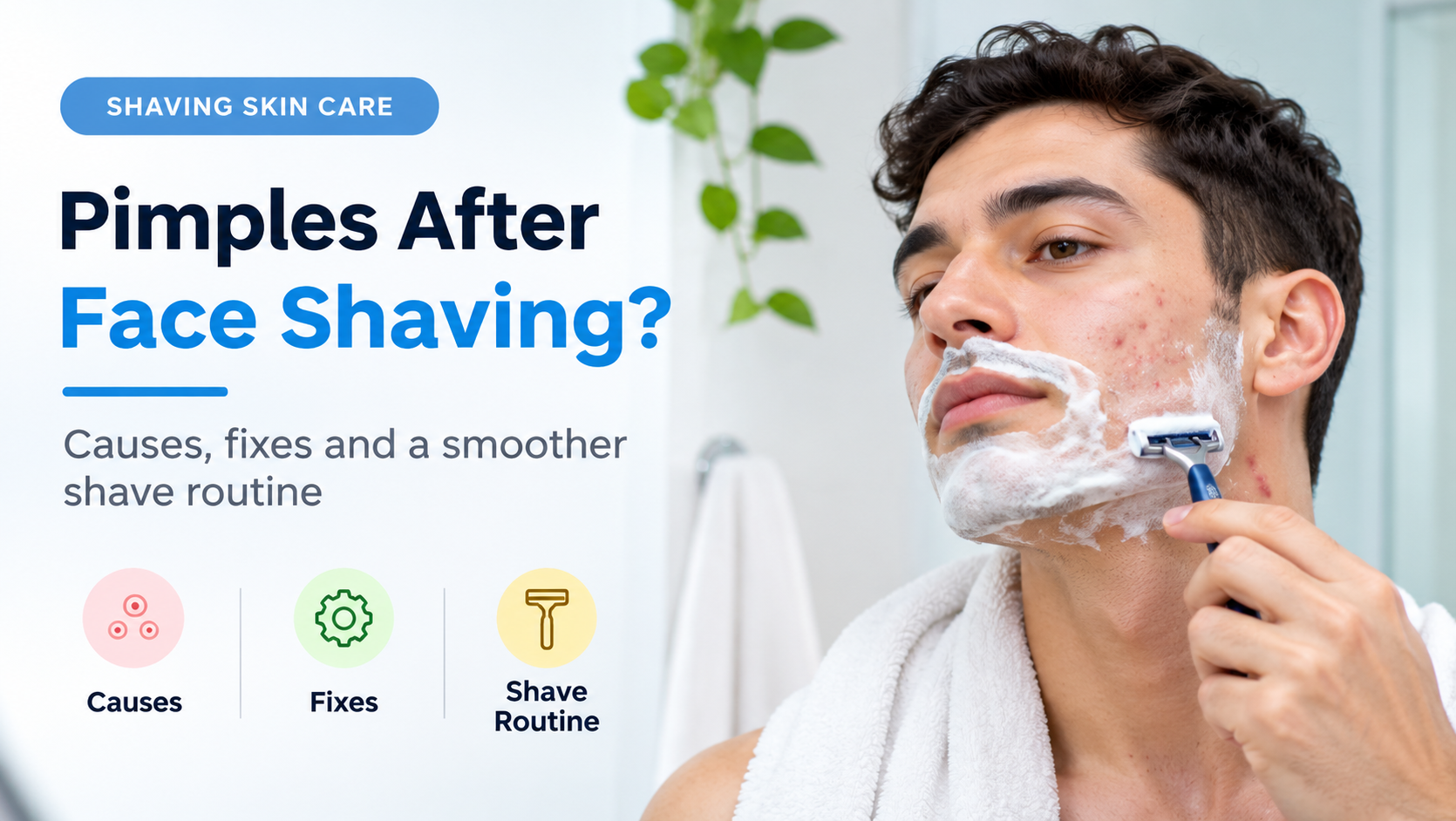
You finish shaving, your face feels smooth, and a day or two later red bumps appear along your jaw, cheeks or neck. If you keep getting pimples after face shaving, you are far from alone. It affects people of all ages and skin types, and it is usually caused by technique, tools or aftercare rather than anything serious.
In this guide you will learn why shaving can trigger pimples, how to tell razor burn, razor bumps, folliculitis and acne apart, how to soothe irritated skin, how to prevent breakouts with a better routine and when to see a doctor.
Quick Answer
Pimples after face shaving are usually caused by a dull or dirty razor, shaving dry, shaving against the grain, pressing too hard, ingrown hairs, folliculitis, harsh aftershave or poor skin prep. Use a clean, sharp razor, soften the skin first, shave with the grain using light pressure, and moisturize afterward with a gentle, fragrance-free product.
Medical Note
This article is for general information and is not medical advice. If your skin is painful, infected or not improving, speak to a doctor or dermatologist.
Table of Contents
- Why shaving can cause pimples
- 8 causes of pimples after face shaving
- Razor burn, razor bumps, folliculitis or acne?
- How to treat bumps after shaving
- Best shaving tools for bump-prone skin
- Soothing ingredients and what to avoid
- 7-step routine to prevent pimples
- Shaving tips for curly hair and sensitive skin
- Common mistakes
- When to see a doctor
- Frequently asked questions
Why Shaving Can Cause Pimples
Shaving is a form of mild skin trauma. A blade cuts the hair at skin level, but it also removes a thin layer of dead skin cells and can leave tiny scratches. This makes the skin more sensitive, and allows bacteria, sweat, oil and product residue to settle into open follicles. If the cut hair then curls back into the skin, the follicle becomes inflamed and looks like a pimple.
8 Causes of Pimples After Face Shaving
Cause 1: A dull or dirty razor
A worn blade tugs and drags across the skin instead of cutting cleanly. It also collects bacteria, hair, dead skin and product residue, which can irritate follicles and lead to red bumps.
What helps:
- Replace blades after roughly 5-7 shaves, or sooner if you feel tugging.
- Rinse the razor well after each use and let it dry fully before storing it.
- Do not share razors with other people.
Cause 2: Dry or rushed shaving
Shaving dry or with only soap and no lubrication increases friction, which can scrape the top layer of skin and inflame the follicle.
What helps:
- Soften the skin with warm water for a couple of minutes before shaving.
- Use a quality shaving gel or cream and apply a generous layer.
- Take your time, especially around the jawline, chin and neck.
Cause 3: Shaving against the grain
Going against hair growth gives a closer shave, but it can cut hairs below the skin surface. Sharp tips can then curl back into the skin and cause razor bumps.
What helps:
- Shave in the direction of hair growth, especially on your first pass.
- Skip the second pass against the grain if your skin is prone to bumps.
- Do not stretch the skin tight while shaving, as the hair can retract below the surface.
Cause 4: Pressing too hard
Heavy pressure does not give a closer shave. It removes more of the protective skin surface and increases redness and bumps.
What helps:
- Let the weight of the razor do the work.
- Use short, light strokes.
- Avoid going over the same area many times.
Cause 5: Ingrown hairs and razor bumps
When a cut hair grows back into the skin instead of out of the pore, the body treats it like a foreign object, causing an inflamed bump. Tightly curled hair is more prone to this.
What helps:
- Consider letting hair grow slightly or trimming it with a guard instead of shaving very close.
- Gently exfoliate a few times a week with a mild acid or soft cloth, not right before shaving.
- Never dig at ingrown hairs with sharp tools. If a hair loop is visible, free it gently with a clean tool or leave it alone.
Cause 6: Folliculitis (inflamed or infected follicles)
Tiny cuts and irritation make it easier for bacteria or yeast to enter the follicles. This causes small red bumps or pimples with a white or yellow center.
What helps:
- Pause shaving the affected area for 1-2 weeks if you can.
- Wash gently and avoid touching or picking.
- See a doctor if the bumps spread, become painful, or form crusts.
Cause 7: Harsh aftershave and scented products
Alcohol, strong fragrance and some astringents can sting, dry the skin and worsen irritation, which may then look like new pimples.
What helps:
- Choose alcohol-free, fragrance-free balms or lotions.
- Apply a light moisturizer after rinsing with cool water.
- Avoid layering several active products on freshly shaved skin.
Cause 8: Skipping skin prep and aftercare
Shaving over oily, unclean or dry skin can clog follicles, and leaving skin without moisture afterward makes irritation last longer.
What helps:
- Cleanse your face before shaving to remove oil and dirt.
- Moisturize afterward with a non-comedogenic product.
- Use sunscreen in the daytime, since freshly shaved skin is more sensitive.
Razor Burn, Razor Bumps, Folliculitis or Acne?
The spots that appear after shaving are not always the same thing. Telling them apart helps you choose the right solution.
| Condition | What it looks like | Main cause | What helps |
|---|---|---|---|
| Razor burn | Red, stinging, tender skin soon after shaving | Friction, dull blade, dry shave | Cool compress, moisturizer, gentler technique |
| Razor bumps (pseudofolliculitis barbae) | Firm, itchy, sometimes dark bumps, often under the jaw and on the neck | Cut hairs curl back into the skin, common with tightly curled hair | Shave less closely, with the grain, or trim instead |
| Folliculitis | Red bumps or pimples with a white or yellow center around hair follicles | Bacteria, yeast or irritation entering the follicles | Keep skin clean, pause shaving, see a doctor if it spreads |
| Acne | Blackheads, whiteheads and inflamed spots that also appear away from shaved areas | Oil and clogged pores | Regular acne routine, as advised by a professional |
How to Treat Bumps After Shaving
- Pause shaving the affected area for several days to a couple of weeks so the skin can recover.
- Use a cool compress for a few minutes to calm redness and discomfort.
- Cleanse gently with a mild, fragrance-free cleanser and avoid scrubbing.
- Moisturize with a lightweight, non-comedogenic lotion or gel.
- Do not pick or squeeze bumps, which raises the risk of infection and scars.
- Consider a mild exfoliating product with low-strength salicylic acid a few times a week once the skin is no longer irritated.
- Ask a pharmacist or doctor about short-term use of a mild hydrocortisone cream for irritation, and never use it on infected skin without advice.
Important
If bumps are filled with pus, spreading, very painful or accompanied by fever or honey-coloured crusts, see a doctor. This can be a bacterial infection that needs proper treatment.
Best Shaving Tools for Bump-Prone Skin
The tool you use can make a big difference, especially if your hair is coarse or curly.
| Shaving tool | Best for | Watch out for |
|---|---|---|
| Multi-blade cartridge | Quick, close shaves for people without sensitivity | The closest shave can pull hairs below the skin, raising bump risk |
| Single-blade or safety razor | Bump-prone skin, as it cuts less aggressively | Needs a slower technique; cuts are possible if you press hard |
| Electric shaver or foil | Sensitive, curly-haired or bump-prone skin | Keep it clean and use it on dry or lightly prepped skin as directed |
| Beard trimmer with guard | Preventing ingrown hairs by leaving about 1 mm of length | Not a clean-shaven look; clean the blades regularly |
Soothing Ingredients and What to Avoid
| Ingredient | How it helps after shaving | Notes |
|---|---|---|
| Aloe vera | Cools and calms irritated skin | Choose fragrance-free gels |
| Glycerin and hyaluronic acid | Replaces lost moisture | Suitable for most skin types |
| Panthenol (vitamin B5) | Supports the skin barrier and soothes | Often found in gentle after-shave balms |
| Niacinamide | Helps with redness and barrier support | Introduce gradually |
| Salicylic acid (low strength) | Helps keep pores clear and may reduce bumps | Use on non-irritated skin, not right after shaving |
| Alcohol-heavy products or strong fragrance | These tend to sting and dry the skin | Best avoided on freshly shaved skin |
7-Step Routine to Prevent Pimples After Shaving
Extra Tips for Curly Hair and Sensitive Skin
- Trim instead of shaving close if you often get razor bumps. A guard that leaves around 1 mm of hair reduces ingrown hairs.
- Shave less often to give the skin time to recover.
- Use a single-blade or electric razor that does not cut as close as multi-blade cartridges.
- Hold the skin naturally rather than pulling it tight.
- Do a patch test before using a new shaving gel or aftershave.
- Consider professional hair reduction options, such as laser treatments, if bumps keep coming back. Discuss suitability with a qualified dermatologist.
Common Mistakes to Avoid
- Using the same blade for weeks. Bacteria and dullness build up.
- Shaving immediately after waking up. Facial skin can be puffy, and a quick wash and a few minutes of warmth give a better result.
- Applying a strong aftershave full of alcohol. It stings and dries the skin.
- Over-exfoliating before or right after shaving. This can leave skin raw.
- Touching your face with dirty hands after shaving.
- Ignoring the signs of infection such as pus, swelling and increasing pain.
When to See a Doctor
- Painful, pus-filled or spreading bumps, or boil-like lumps.
- Fever, honey-coloured crusts or other signs of infection.
- Bumps that keep returning despite improved technique.
- Scarring, dark marks or thickened scars.
- Bumps that do not improve after 2-4 weeks of gentle care.
Frequently Asked Questions
Why do I get pimples right after shaving my face?
Most are razor bumps, razor burn or inflamed follicles caused by friction, a dull blade, shaving against the grain or ingrown hairs. If they look like regular pimples, shaving can also irritate existing acne or spread bacteria.
How long do razor bumps take to go away?
Mild razor burn often settles within a few days. Razor bumps can take one to several weeks, especially if you keep shaving over them. Give the area time to heal.
Can I shave over pimples?
It is best to avoid shaving directly over inflamed pimples, as razors can cut them and spread bacteria. If you must shave, go around the spots with a clean razor, light pressure and no repeated passes.
Should I use a moisturizer after shaving if I have acne?
Yes. Choose a lightweight, non-comedogenic moisturizer. Skipping moisturizer can leave skin irritated, and irritated skin is more likely to break out.
Can women get pimples after shaving their face?
Yes. Women who shave facial hair or use dermaplaning can also get razor bumps, irritation and ingrown hairs. The same prep, technique and aftercare apply.
Is it better to shave in the morning or at night?
Either works. Some people prefer shaving after a warm shower when the hair is soft. If your skin is sensitive, shaving in the evening gives it time to calm before sun exposure.
Do hot or cold towels help?
A warm towel before shaving helps soften the hair, and a cool compress afterward can calm redness. Avoid very hot water, which can dry and irritate the skin.
When should I see a doctor?
See a doctor if you have pus-filled or very painful bumps, spreading redness, fever, honey-coloured crusts, scarring or dark marks, or if bumps keep returning despite good technique. A dermatologist can also discuss options like prescription creams or laser hair reduction for stubborn cases.
Final Thoughts
Pimples after face shaving are very common, and in most cases they can be improved with simple changes. Use a clean and sharp razor, soften your skin first, shave with the grain with light pressure, avoid harsh aftershaves and moisturize afterward. If you have curly hair, consider trimming rather than shaving very close.
Give your skin time to settle, and change one thing at a time so you can see what works. If bumps keep returning, look infected or leave marks, a doctor or dermatologist can recommend targeted options.