



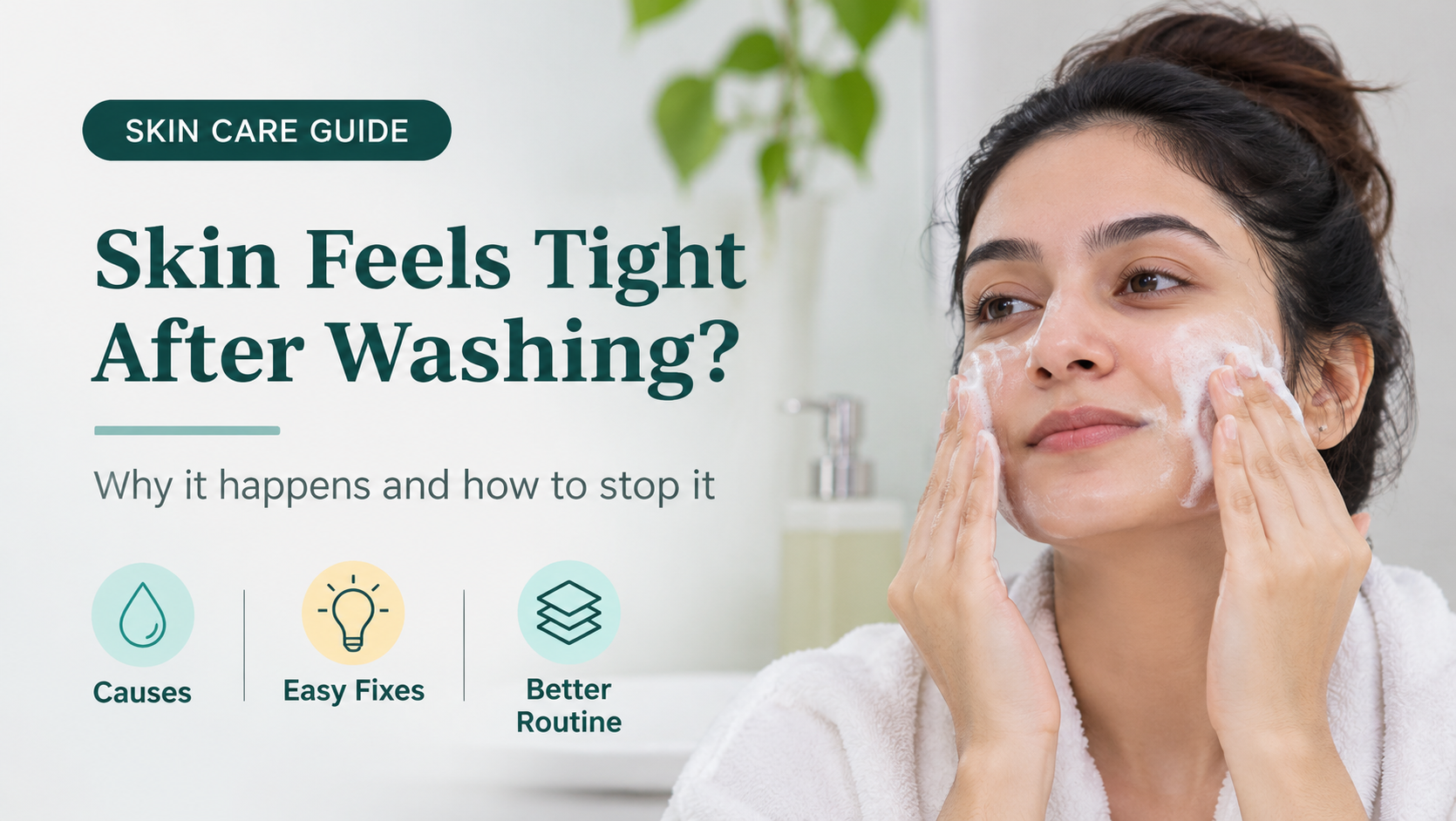

You rinse your face, pat it dry, and within a minute your skin feels stretched, tight, and a little uncomfortable. Many people assume this means their skin is “squeaky clean.” In reality, that tight feeling is usually your skin telling you something is off.
This guide explains why skin feels tight after washing, which habits and products trigger it, and how to fix it with a gentle, effective routine.
Why Does Skin Feel Tight After Washing?
Your skin is covered by a thin protective layer made of natural oils, ceramides, and water-binding molecules. This is called the skin barrier. When you wash, some of these oils are removed. A mild cleanser takes away dirt and excess oil while leaving the barrier intact. A harsh one removes too much, so water evaporates from the skin faster than normal. The result is that tight, dry, stretched feeling.

Common Causes of Tight Skin After Cleansing
1. Harsh or Sulfate-Heavy Cleansers
Strong surfactants create lots of foam, but they can also strip natural lipids. Cleansers that leave skin “squeaky” are usually too strong for daily use.
2. Water That Is Too Hot
Hot water dissolves skin oils more aggressively and can increase redness and sensitivity. Lukewarm water is much safer.
3. Hard Water
Water high in calcium and magnesium can leave a residue on the skin and make cleansers harder to rinse off. Many people notice tightness and dullness after moving to an area with hard water.
4. Washing Too Often
Cleansing more than twice a day, or washing again after every sweat or touch, can wear down the barrier over time.
5. Over-Exfoliation
Scrubs, brushes, and strong acids remove dead cells. Used too often, they leave skin thin, shiny, and tight. If your skin stings when you wash, this may be the cause.
6. Skipping Moisturizer
Moisturizer replaces lost water and lipids. When you skip it, the tightness continues. People with oily skin sometimes skip this step, but oily skin can still be dehydrated.
7. Naturally Dry or Dehydrated Skin
Dry skin produces less oil, while dehydrated skin lacks water. Both feel tighter after cleansing because there is less cushion in the surface layer.
8. Skin Conditions
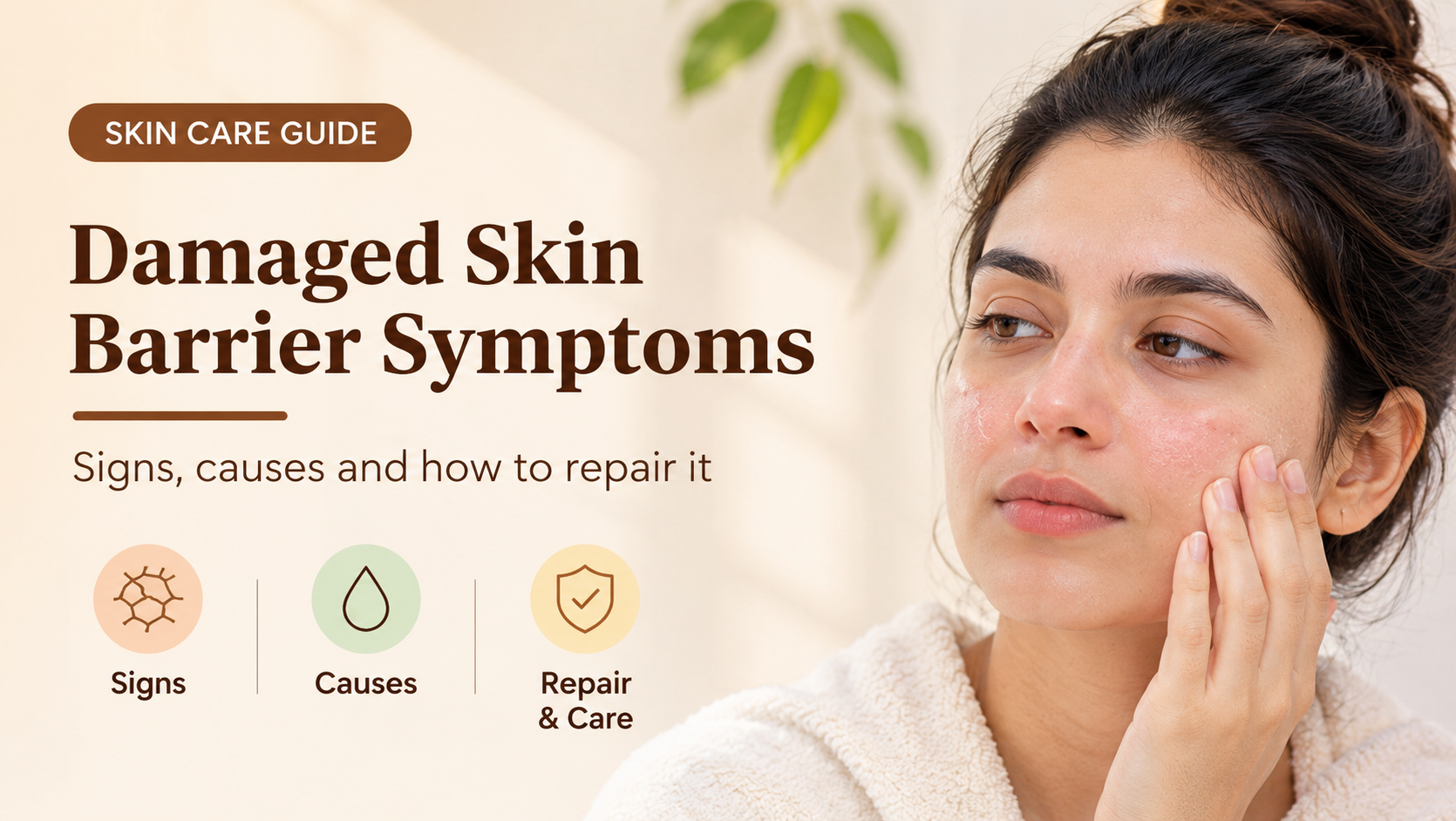
Eczema, rosacea, seborrheic dermatitis, and contact dermatitis can all make skin more reactive. If tightness comes with redness, flaking, burning, or itching, a skin condition may be involved.
9. Climate and Indoor Air
Cold weather, wind, heating, and air conditioning reduce humidity and make moisture loss after washing even faster.
Is Tight Skin After Washing Normal?
A brief feeling of freshness is normal. Tightness that lasts more than a few minutes, or comes with flaking or stinging, is not. A well-matched cleanser should leave skin feeling soft, comfortable, and balanced, with no urge to apply moisturizer immediately.
How to Fix Tight Skin After Washing

- Switch to a gentle cleanser. Look for cream, milk, gel-cream, or low-foam formulas labeled fragrance-free or for sensitive skin.
- Use lukewarm water. It should feel neutral on your wrist, not hot.
- Limit cleansing. Wash twice a day at most. In the morning, a water rinse is often enough for dry or sensitive skin.
- Keep contact time short. Massage the cleanser for about 30 seconds and rinse thoroughly.
- Pat dry. Use a clean, soft towel and press rather than rub.
- Moisturize quickly. Apply a hydrating serum and moisturizer while skin is still slightly damp.
- Pause strong actives. Take a break from scrubs, acids, and retinoids for two to four weeks while your barrier recovers.
Ingredients to Look For
- Glycerin and hyaluronic acid: draw water into the skin.
- Ceramides and cholesterol: rebuild the barrier.
- Panthenol (vitamin B5): soothes and supports healing.
- Niacinamide: strengthens the barrier and calms redness.
- Squalane and plant oils: soften without heaviness.
- Mild, amino-acid or glucoside-based cleansing agents: clean without over-stripping.
Ingredients and Habits to Limit
- Strong sulfates and heavy fragrance in cleansers.
- Alcohol-based toners.
- Daily physical scrubs and cleansing brushes.
- Very hot face steaming or long hot showers.
Skin Type Guide: What to Do Differently
- Dry skin: use a cream cleanser, wash at night only, and seal with a rich moisturizer.
- Oily skin: choose a gentle gel cleanser, avoid stripping products, and use a lightweight moisturizer. Over-washing can trigger more oil.
- Combination skin: use a gentle cleanser all over and apply richer cream only on dry areas.
- Sensitive skin: keep your routine to three or four simple products and patch test anything new.
Do You Need a Water Filter or a Different Towel Routine?
If you live in a hard water area and nothing else helps, a shower filter or rinsing with filtered water may reduce residue. Also use a fresh towel regularly, because old towels hold bacteria and can feel rough on delicate skin.
When to See a Dermatologist
Speak with a professional if tightness continues for several weeks despite a gentle routine, or if you notice persistent redness, burning, swelling, cracks, or rashes. A dermatologist can identify conditions such as eczema or rosacea and suggest suitable treatment.
Frequently Asked Questions
Why does my face feel tight after washing even with a gentle cleanser?
Water temperature, hard water, rough drying, or skipping moisturizer may be the cause, even if the cleanser itself is mild.
Should my skin feel squeaky clean after washing?
No. A squeaky feeling usually means natural oils have been removed. Healthy skin feels soft and comfortable after cleansing.
Should I stop washing my face?
No, but you can simplify. Many people with dry or sensitive skin do well with a gentle wash at night and just water in the morning.
How long does it take to repair the skin barrier?
Most people notice improvement in one to two weeks, while full recovery can take up to a month or longer.
Can oily skin feel tight after washing?
Yes. Strong cleansers can strip oily skin, causing tightness and sometimes more oil production afterward.
Final Thoughts
Tight skin after washing is a signal, not a sign of cleanliness. By choosing a gentle cleanser, using lukewarm water, drying carefully, and moisturizing right away, you can keep your barrier healthy and your skin comfortable. Make small changes, give them a few weeks, and let your skin tell you what works.
Disclaimer: This article is for general information only and is not medical advice. If you have persistent or severe skin problems, please consult a qualified healthcare professional.