



Suede shoes look soft, rich and effortlessly stylish, but they have a reputation for being hard to keep clean. One splash of rain, one scuff from a doorframe or one drop of oil, and many people assume the pair is ruined. The truth is much more encouraging. With the right tools and a gentle, patient approach, most suede shoes can be cleaned at home and brought back to a fresh, velvety finish.
This guide explains exactly how to clean suede shoes, from everyday dust to stubborn stains. You will learn which tools you need, a reliable five-step routine, how to treat specific stains such as water, oil, mud and salt, and how to protect and store your shoes so they stay looking good for years.
Quick Answer
To clean suede shoes at home:
- Remove the laces and stuff the shoes with paper or shoe trees.
- Brush the whole surface with a suede brush, in one direction, to remove loose dirt.
- Rub scuffs and marks gently with a suede eraser, then brush again.
- Spot treat stains: white vinegar for water and salt marks, cornstarch for fresh oil.
- Let the shoes air dry away from heat, then brush to restore the nap and apply a protector spray.
Always test any cleaner on a hidden area first, and never soak suede.
Understanding Suede Before You Clean It
Suede is leather that has been buffed on the flesh side to create a soft, fuzzy surface called the nap. That nap is what gives suede its luxurious feel and matte colour, but it is also what makes it delicate. The tiny fibres trap dirt easily, soak up liquid quickly and flatten or turn shiny when rubbed too hard.
It helps to know the difference between a few similar materials, because the care methods are close but not identical:
- Suede: Made from the underside of the hide, usually lamb, goat or calf. Soft with a short, fine nap.
- Nubuck: Made by sanding the outer side of the hide. Slightly more durable, with a finer, denser nap. Most of the methods below work on it as well.
- Synthetic suede (microfibre): Man-made imitation. Often easier to clean and more tolerant of water, but you should still check the care label first.
Because suede is sensitive, the golden rules are simple: start dry, work gently, use as little moisture as possible, and always let it dry naturally.
What You Need to Clean Suede Shoes
You do not need an expensive kit. A few basic items handle almost every situation, and most can be found at home or in a shoe shop.

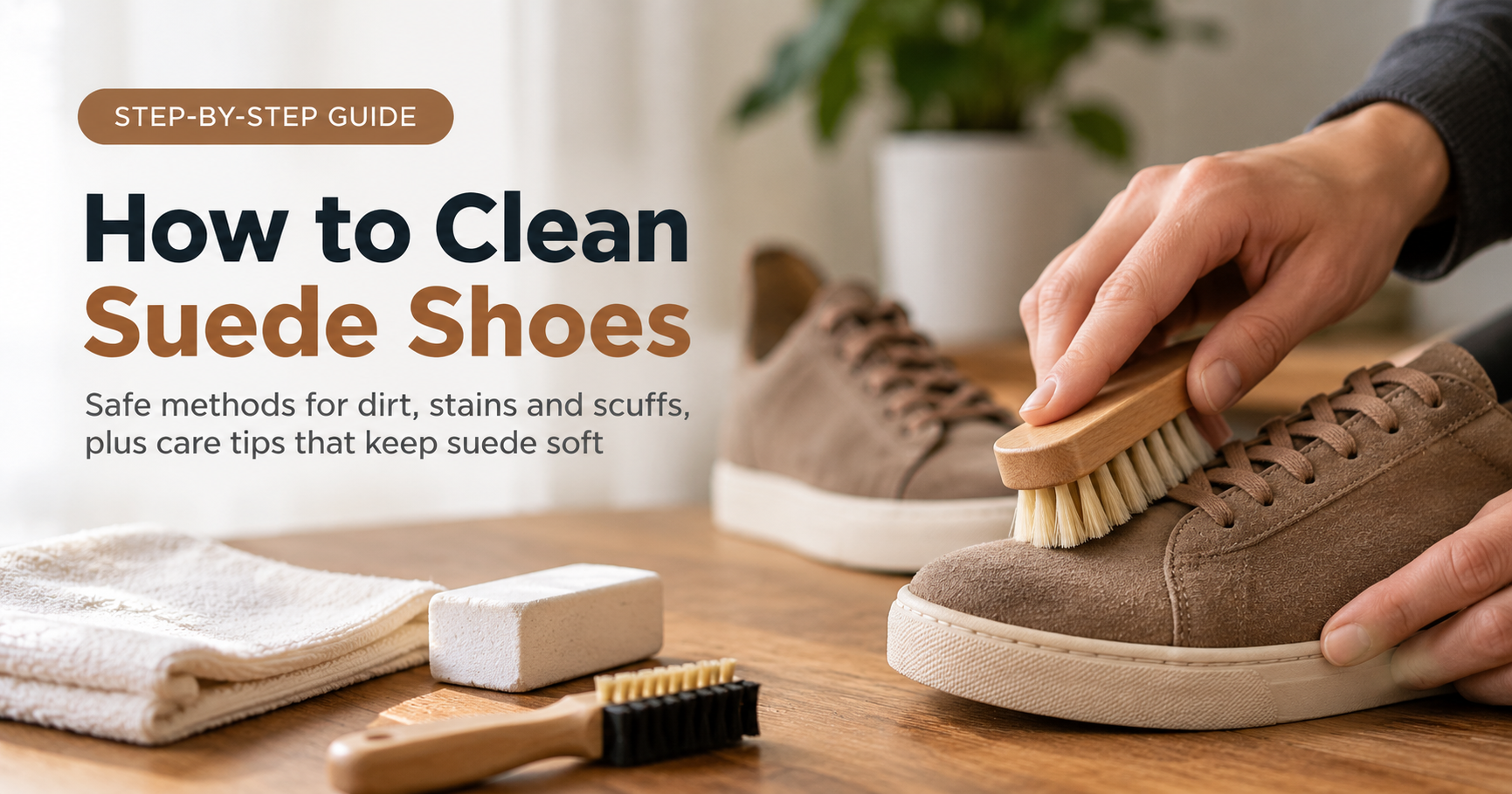
- Suede brush: Usually has soft brass or nylon bristles on one side and rubber nubs on the other. It lifts the nap and removes dry dirt.
- Suede eraser: A dry rubber block that rubs out scuffs and dried marks without liquid. A clean pencil eraser in a pinch, white and not coloured, can work on small marks.
- White vinegar: A mild acid that helps with water stains, salt marks and some dried-in dirt.
- Cornstarch or talcum powder: Absorbs fresh oil and grease before it sets.
- White cloths or paper towels: For blotting and dabbing. Use white so no dye transfers to the suede.
- Protector spray: A spray made for suede and nubuck that helps repel water and stains.
Optional extras include shoe trees or plain paper to hold the shape while drying, a soft toothbrush for tight seams, and a dedicated suede shampoo or cleaner for overall deep cleaning. If you buy a commercial cleaner, make sure the label says it is safe for suede, and follow the instructions.
How to Clean Suede Shoes: The 5-Step Method
This routine works for general dirt, light scuffs and dull-looking shoes. Do it in a well-lit place, and take your time. Rushing is how most suede mistakes happen.

Step 1: Prepare the shoes
Make sure the shoes are completely dry before you begin. If they are damp, let them dry naturally first. Remove the laces so you can clean around the tongue and eyelets. Stuff the shoes with shoe trees or crumpled paper so they hold their shape and give you a firm surface to work on. Knock the soles together outdoors to dislodge any caked-on dirt.
Step 2: Brush away loose dirt
Use the suede brush with light, even strokes in one direction. This removes dust, dried mud and surface dirt, and lifts the flattened nap. Do not scrub in circles, which can rough up the fibres. For stubborn areas, a little more pressure is fine, but let the bristles do the work. Use a soft toothbrush for seams, stitching and around the sole edge.
Step 3: Erase scuffs and marks
Take the suede eraser and rub the scuffed or shiny spots using short, gentle back-and-forth strokes. The rubber lifts the mark out of the fibres. Brush away the crumbs and fluff the nap again. Repeat if needed, but avoid rubbing hard in one place, since overworking suede can leave a bald patch.
Step 4: Treat stains and tough marks
If marks remain, move on to targeted treatment. Use the stain guide in the next section for water, oil, mud and salt. The key principle is to apply as little liquid as possible, blot rather than rub, and keep any dampness limited to the affected area or a whole panel so no tide mark is left behind.
Step 5: Dry, brush and protect
Let the shoes air dry at room temperature, away from radiators, direct sun and hairdryers. Heat can shrink and harden suede and cause cracks. Keep the paper or shoe trees inside while drying, and swap in fresh dry paper if the first batch gets damp. Once the shoes are fully dry, brush the nap once more to restore the texture. Finish with a light, even coat of suede protector spray.
How to Remove Specific Stains From Suede
Different stains need different treatments. The sooner you act, the better your chances, so deal with spills as soon as they happen.

Water spots
It sounds strange, but water marks on suede are often fixed with a little more water, applied evenly. A spot looks dark because the moisture dried unevenly and left a ring.
- Lightly dampen the whole affected panel, edge to edge, using a barely damp cloth or a fine mist. Do not soak it.
- Stuff the shoe with paper and let it dry naturally.
- Once dry, brush the nap to restore its texture.
For stubborn rings, dab the area with a cloth lightly dampened with white vinegar, let it dry, and brush.
Oil and grease stains
Oil is the most worrying suede stain, but fast action helps a lot.
- Blot away any excess oil gently with a clean cloth. Do not rub.
- Cover the stain generously with cornstarch or talcum powder.
- Leave it for several hours, or overnight, so the powder can draw out the oil.
- Brush the powder off with a suede brush.
- Repeat with fresh powder if the mark is still visible.
Old or large oil stains may not come out fully at home. In that case, a professional suede cleaner is the safest option.
Mud and dried dirt
Never try to wipe wet mud off suede, because it grinds the dirt deeper into the nap. Let the mud dry completely, then flake off the bulk of it with your fingers or the edge of a soft brush. Brush the remaining residue away, use the suede eraser on any marks left behind, and finish by brushing the nap again.
Salt marks from winter
Salt and road grit leave pale, crusty lines on suede. Mix equal parts white vinegar and water. Dampen a clean white cloth with the mixture, wring it out well, and dab along the salt line, working from the outside of the mark inwards. Let it dry, then brush. Repeat if needed.
Scuffs, shiny patches and flattened areas
Areas that look shiny or flat have usually been rubbed too much, often around the toe, heel or where the shoe bends. Use the suede eraser, then brush the nap up with firm, even strokes. Holding the shoe over gentle steam from a kettle for a second or two, from a safe distance, can also help the fibres lift, but be careful not to wet the suede. Brush straight afterwards.
Ink, wine and other coloured stains
Dye-based stains are the hardest to remove. Blot fresh spills immediately without rubbing, then take the shoes to a professional cleaner as soon as possible. Home remedies often spread the colour or damage the suede finish.
How to Deep Clean Very Dirty Suede Shoes
If your shoes are dirty all over, the dry method may not be enough. A suede-specific shampoo or cleaner is designed for this. As with all products, follow the directions printed on the bottle, but the general process looks like this:
- Brush and erase the shoes first to remove all dry dirt.
- Apply a small amount of suede cleaner to a soft cloth or brush, not directly onto the shoe.
- Work it gently over one section at a time, using light strokes.
- Wipe away residue with a clean, damp (not wet) cloth.
- Stuff with paper and let the shoes air dry completely, which can take a full day.
- Brush the nap once dry and apply protector spray.
Always test the product on a hidden area, such as the inside of the tongue, to check for colour change before you use it on a visible part.
Can You Wash Suede Shoes in a Washing Machine?
Generally, no. Real suede does not cope well with the soaking, tumbling and heat of a machine wash. It can leave the leather stiff, stained, misshapen and with a ruined nap. Some synthetic suede sneakers are labelled as machine washable, so check the care label first. If there is no label, or the shoes are real leather suede, stick with the dry and spot-clean methods above, or use a professional cleaning service.
Common Mistakes That Ruin Suede Shoes

- Soaking the shoes. Too much water stiffens suede and leaves tide marks. Use the least moisture possible.
- Using heat to dry them. Hairdryers, radiators and direct sunlight can shrink, crack and discolour suede. Always dry naturally.
- Scrubbing too hard. Heavy rubbing flattens the nap and leaves bald, shiny patches.
- Using the wrong products. Bleach, strong detergents, household sprays, wipes with alcohol and normal leather polish can stain or strip suede.
- Rubbing wet dirt. This pushes the stain deeper. Let it dry, then brush it off.
- Skipping the patch test. Suede dye can lift. A quick test on a hidden spot avoids a costly surprise.
- Leaving stains to set. Fresh stains come out far more easily than old ones.
How to Protect Suede Shoes
Prevention is easier than cure. A good protector spray adds an invisible barrier that helps repel water and makes dirt easier to brush off.
- Start with clean, dry shoes. Spraying over dirt locks it in.
- Work outdoors or in a well-ventilated space.
- Hold the can at the distance stated on the label, usually about 15 to 20 centimetres, and apply a light, even coat.
- Let it dry fully, then apply a second thin coat if the instructions allow it.
- Allow time for it to cure before wearing the shoes, as directed on the product.
Reapply the spray every month or two if you wear the shoes often, and always after a deep clean. Keep in mind that protector sprays reduce the chance of damage, but they do not make suede waterproof. If it is pouring, it is still better to choose a different pair.
Everyday Suede Care Habits
A few small routines keep suede looking newer for longer and cut the amount of heavy cleaning you need to do.
- Brush regularly. A quick brush after every few wears removes dust before it settles into the nap.
- Rotate your shoes. Giving each pair a day or two to rest lets moisture from your feet evaporate and helps the shoes keep their shape.
- Check the weather. Avoid wearing suede in heavy rain, snow or on salted roads whenever you can.
- Blot spills immediately. Press a clean cloth on the spot and lift. Do not rub.
- Use shoe trees. Cedar shoe trees absorb moisture and keep the shape.
- Be careful with products. Keep perfume, sunscreen, hair products and food away from your shoes.
How to Store Suede Shoes
Good storage prevents fading, mould and misshapen shoes, especially during seasons when you are not wearing them.
- Clean and fully dry the shoes before storing them.
- Insert shoe trees or acid-free tissue paper to hold the shape.
- Keep them in a cool, dry, well-ventilated spot out of direct sunlight, which can fade suede colours.
- Use a breathable cloth shoe bag or the original box with ventilation. Avoid sealed plastic bags and boxes that trap moisture.
- Do not stack heavy items on top of the shoes.
When to Take Suede Shoes to a Professional
Home cleaning solves most problems, but some situations call for an expert cleaner who knows suede and leather:
- Large, old or deeply set oil stains.
- Ink, wine, dye or paint marks.
- Mould or a strong lingering smell.
- Expensive designer pairs or shoes with sentimental value.
- Colour fading or patchiness that you want restored or re-dyed.
- Shoes that have already been damaged by a home remedy.
Frequently Asked Questions
What is the best way to clean suede shoes at home?
Start with a dry method. Brush the shoes with a suede brush to remove loose dirt, then use a suede eraser on scuffs and marks. Treat remaining stains individually with white vinegar or cornstarch, let the shoes air dry, and brush the nap again. Finish with a suede protector spray.
Can I use water to clean suede shoes?
Only in very small amounts. Water can be used to even out a water stain by lightly dampening the whole panel, or to dilute vinegar for salt marks. Never soak suede or put it under a running tap.
Does white vinegar damage suede?
White vinegar is widely used for light stain removal on suede, but it should be used sparingly and tested on a hidden area first. Dab it on with a cloth rather than pouring it, let the shoes dry naturally, and brush the nap afterwards.
How do I get oil out of suede shoes?
Blot the excess, cover the stain with cornstarch or talcum powder, and leave it for several hours or overnight. Brush the powder off and repeat if you need to. Old or large stains may need a professional cleaner.
How do I make flat suede fluffy again?
Use a suede brush or eraser to lift the nap, brushing in one direction. A brief pass over steam from a safe distance, followed by brushing, can help stubborn flattened areas, as long as the suede does not get wet.
Can I clean suede shoes with a toothbrush?
Yes, a clean, soft toothbrush is handy for seams, stitching and tight spots where a normal suede brush will not reach. Use gentle strokes.
How often should I clean suede shoes?
Brush them lightly every few wears, and do a fuller clean when they look dirty or dull. Reapply protector spray every month or two with regular use and after every deep clean.
Can I use a hairdryer to dry suede?
It is best not to. Direct heat can shrink, stiffen and discolour suede. Stuff the shoes with paper and let them dry naturally at room temperature.
Can suede shoes be machine washed?
Real suede should not be machine washed. Only synthetic suede that is specifically labelled as machine washable should go in the machine, so always check the care label.
Final Thoughts
Knowing how to clean suede shoes takes away most of the worry about owning them. The method is easy to remember: brush first, erase marks, treat stains with the right fix, dry naturally and protect the finish. The gentler you are, and the less moisture you use, the better the results.
Build a quick brushing habit, use a protector spray, store your pairs properly and deal with spills right away. Do that, and your suede shoes will keep their soft texture and rich colour for many seasons to come.