Disclosure: This article may contain affiliate content. If you buy a product through this site, we may earn a small commission at no extra cost to you. Our recommendations stay honest and based on research.

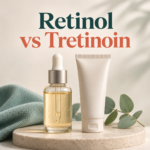
Walk into any skincare aisle and you will see the word retinol on everything from serums to eye creams. Visit a dermatologist, though, and you are likely to hear about tretinoin. Both come from vitamin A, both are famous for fighting acne and wrinkles, and both are often confused for one another. They are not the same, and choosing the wrong one can mean wasted money, irritated skin, or slower results than you hoped for.
In this complete guide to retinol vs tretinoin, you will learn exactly how they differ, which one suits your skin concerns, how to start safely, and what to look for when you shop.
In this article
- What are retinoids?
- What is retinol?
- What is tretinoin?
- Retinol vs tretinoin: key differences
- Which one is better for acne?
- Which one is better for anti-aging?
- Side effects and how to reduce them
- How to start using a retinoid
- How to choose a product
- Who should avoid retinoids
- Frequently asked questions
- Final verdict
What Are Retinoids?
Retinoids are a family of compounds derived from vitamin A. They speed up skin cell turnover, help unclog pores, stimulate collagen production, and even out pigmentation. Dermatologists consider them among the most researched and effective ingredients in topical skincare.
The family includes several members, ranked here from gentlest to strongest in general terms:
- Retinyl esters (such as retinyl palmitate): the mildest forms
- Retinol: the most popular over-the-counter retinoid
- Retinaldehyde (retinal): one step closer to the active form
- Adapalene: a synthetic retinoid, available over the counter in many countries
- Tretinoin: the active form, usually prescription only
The key idea is simple: your skin can only use retinoic acid. Every other retinoid must be converted into it. The more steps required, the gentler (and slower) the product.
What Is Retinol?
Retinol is a form of vitamin A found in a huge range of serums, creams and night treatments. In most countries it is sold without a prescription, usually in concentrations from about 0.1% to 1%.
Once applied, skin enzymes convert retinol first into retinaldehyde and then into retinoic acid. Because this conversion is gradual and incomplete, only a portion of the retinol ever becomes active. That is why retinol is gentler, but also why results take longer to appear.
Benefits of retinol
- Smoother skin texture and a more even tone
- Softer appearance of fine lines
- Reduced look of enlarged pores
- Help with mild breakouts and clogged pores
- Easy to buy with no prescription
Limitations of retinol
- Slower visible results
- Product quality varies, and the actual strength delivered depends on formulation and packaging
- Less effective for moderate to severe acne
What Is Tretinoin?
Tretinoin is all-trans retinoic acid, the biologically active form of vitamin A. It binds directly to receptors in skin cells without any conversion, which is why it is much stronger. It has been used in dermatology for decades and is one of the best-studied topical treatments for acne and sun-damaged skin.
In most countries tretinoin requires a prescription. It is available as creams, gels and lotions, commonly in strengths such as 0.025%, 0.05% and 0.1%, with lower-strength gels also available. Your doctor will choose the strength and formulation based on your skin type and goals.
Benefits of tretinoin
- Proven treatment for acne, including comedonal and inflammatory types
- Well-documented improvement of fine lines, rough texture and sun damage
- Helps fade some types of dark marks and uneven pigmentation
- Faster visible results than retinol
Limitations of tretinoin
- Higher chance of dryness, peeling and redness
- Needs a prescription and ideally medical follow-up
- Requires patience and a careful ramp-up
Retinol vs Tretinoin: Key Differences

The diagram above explains the most important difference. Tretinoin works immediately because it is already the active molecule. Retinol has to travel through two conversions, which reduces its strength at each stage. Commonly cited estimates suggest retinol may be many times weaker than tretinoin, although the exact figure varies.

| Feature | Retinol | Tretinoin |
|---|---|---|
| Type | Vitamin A derivative (pro-drug) | Retinoic acid (active form) |
| Availability | Over the counter | Prescription in most countries |
| Typical strength | 0.1% to 1% | 0.01% to 0.1% |
| Potency | Mild to moderate | Strong |
| Speed of results | Slower (3 to 6 months) | Faster (6 to 12 weeks for acne) |
| Irritation risk | Low to moderate | Moderate to high |
| Best for | Beginners, sensitive skin, maintenance | Acne, deeper lines, sun damage |
| Cost | Wide range, many budget options | Often affordable as a generic, plus consultation costs |
Which One Is Better for Acne?
For acne, tretinoin generally has the edge. It is a standard dermatology treatment because it prevents clogged pores from forming, reduces blackheads and whiteheads, and calms inflammatory breakouts over time. For moderate or persistent acne, a doctor will often start with a prescription retinoid, sometimes combined with other treatments.
Retinol can still help if your acne is mild or you mainly deal with congestion and rough texture. If you want a middle option available without a prescription in many places, adapalene is another retinoid worth asking a pharmacist about.
Tip: Expect an adjustment period. Some people experience temporary extra breakouts in the first few weeks, often called “purging”, as clogged pores are pushed to the surface. This usually settles, but speak to a professional if it is severe or does not improve.
Which One Is Better for Anti-Aging?
Both ingredients support collagen production, smooth fine lines and improve tone. Tretinoin has a stronger body of evidence for reversing visible signs of photoaging, while retinol offers a gentler and more accessible route for the same goals.
- Early signs of aging (late 20s to 30s): Retinol is usually a sensible starting point.
- Visible sun damage, deeper lines, rough texture: Tretinoin may deliver more noticeable change, with medical guidance.
- Sensitive or reactive skin: Start with retinol, or a lower-strength product, and build up slowly.
Side Effects and How to Reduce Them
All retinoids can cause irritation, especially at the start. This adjustment phase is sometimes called retinization. Common effects include:
- Dryness and tightness
- Flaking or peeling
- Redness and mild stinging
- Increased sensitivity to sunlight
- Temporary breakouts in the first weeks
Ways to reduce irritation
- Start slowly with two nights a week
- Use a pea-sized amount for the entire face
- Apply to completely dry skin
- Use the “sandwich method”: moisturizer, retinoid, then moisturizer again
- Avoid stacking strong exfoliating acids on the same night
- Apply sunscreen every single morning
How to Start Using a Retinoid

A simple routine
- Morning: Gentle cleanser, light moisturizer, broad-spectrum sunscreen (SPF 30 or higher).
- Evening (retinoid night): Gentle cleanser, wait until skin is fully dry, apply a pea-sized amount of retinoid, then a barrier-supporting moisturizer.
- Evening (rest night): Gentle cleanser and moisturizer only.
Be consistent and patient. Most people need at least 12 weeks before judging whether a retinoid is working for them.
Ingredients that pair well
- Hyaluronic acid and glycerin for hydration
- Ceramides and fatty acids to support the skin barrier
- Niacinamide, which many people tolerate alongside retinoids
Ingredients to be careful with
- Strong exfoliating acids (glycolic, salicylic) on the same night
- Benzoyl peroxide, which can reduce the effectiveness of some retinoids and increase dryness. Ask your doctor how to combine them.
- Harsh scrubs and drying toners
How to Choose a Retinol or Tretinoin Product
If you are choosing a retinol
- Start low: A concentration around 0.1% to 0.3% suits most beginners. Move up gradually.
- Check the packaging: Retinol breaks down with light and air. Opaque, airless pumps or tubes keep it more stable than open jars.
- Look at the base: Formulas with soothing, hydrating ingredients are usually easier to tolerate.
- Be realistic with price: A higher price does not always mean a better formula. Stability, concentration and packaging matter more than branding.
- Consider alternatives: Retinaldehyde products can be a good step between retinol and prescription options.
If you are considering tretinoin
- Get a proper consultation: A dermatologist or licensed provider can prescribe the right strength and form for your skin.
- Cream or gel: Creams are usually gentler and suit dry skin, while gels can suit oilier skin.
- Use only licensed pharmacies: Avoid unverified sellers, as counterfeit or incorrectly labeled products carry real risks.
- Follow the prescribed plan: Do not increase strength or frequency on your own.
Who Should Avoid Retinoids?
- Anyone who is pregnant, planning pregnancy or breastfeeding, unless a doctor advises otherwise
- People with active eczema, a damaged skin barrier or sunburn
- Anyone who has had a previous reaction to retinoids
If you have a skin condition such as rosacea, or you are taking other acne or skin medications, check with a healthcare professional first.
Frequently Asked Questions
Is tretinoin the same as retinol?
No. Tretinoin is retinoic acid, the active form of vitamin A that your skin cells respond to directly. Retinol is a precursor that must be converted into retinoic acid first, so it is gentler and slower.
Is tretinoin stronger than retinol?
Yes. Because tretinoin skips the conversion steps, it is considerably more potent. Commonly cited estimates put retinol at a fraction of tretinoin’s strength, although the exact difference varies between products.
Can I use retinol and tretinoin together?
It is generally not recommended. Using both increases the risk of redness, peeling and a damaged skin barrier without a proven extra benefit. Choose one and use it consistently.
Which is better for acne, retinol or tretinoin?
Tretinoin has the stronger evidence for treating acne and is a standard prescription option. Retinol can help mild congestion and clogged pores, but results are usually slower and milder.
Which is better for wrinkles and anti-aging?
Both can improve fine lines, texture and uneven tone. Tretinoin tends to show results faster, while retinol is a gentler option you can often start without a prescription.
How long until I see results?
Most people notice early changes in texture after 8 to 12 weeks. Visible improvement in fine lines and pigmentation usually takes 3 to 6 months of steady use.
Can I use these during pregnancy?
Topical and oral retinoids are generally avoided during pregnancy and while trying to conceive. Speak to your doctor about safe alternatives.
Do I need sunscreen with retinoids?
Yes. Retinoids can make skin more sensitive to sun, so a broad-spectrum sunscreen with SPF 30 or higher should be used every morning.
Final Verdict: Retinol or Tretinoin?
There is no single winner. The better choice depends on your skin, your goals and your patience.
- Choose retinol if you are new to retinoids, have sensitive skin, want an easy-to-buy option, or are mainly focused on gentle anti-aging and texture.
- Choose tretinoin if you have persistent acne, visible sun damage, or you want faster, stronger results and are happy to work with a doctor.
Many people start with retinol and move on to tretinoin later if they want more power. Whichever you pick, the real secret to results is the same: go slowly, moisturize well, wear sunscreen daily, and stay consistent for months, not weeks.
Medical disclaimer: This article is for general information only and is not medical advice. Always consult a qualified dermatologist or healthcare provider before starting a new treatment, especially a prescription product.