
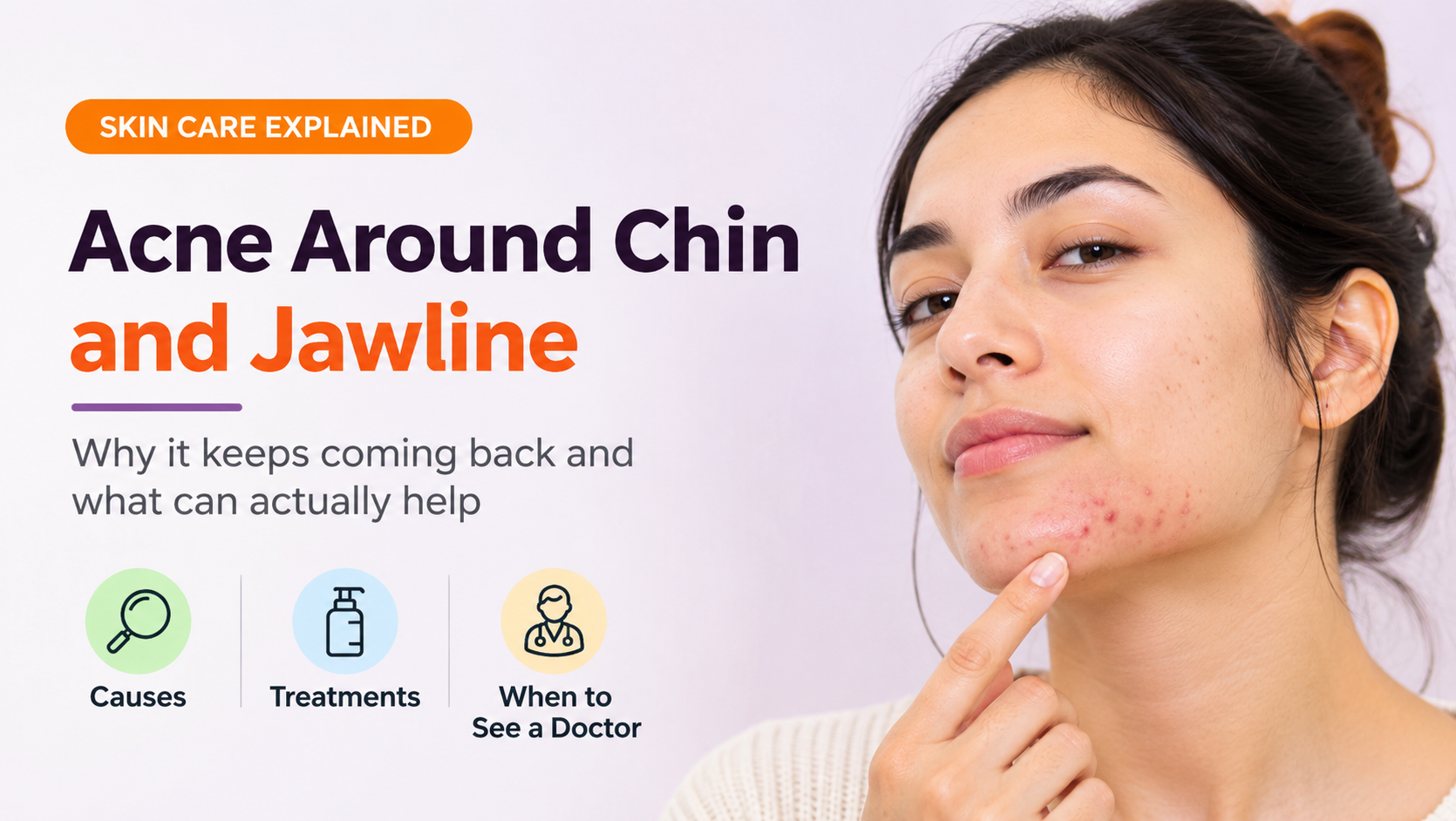
Acne Around Chin and Jawline: Causes, Treatment and Prevention
Why the lower face breaks out, why it keeps returning and what really helps.
If your forehead and cheeks are mostly clear but stubborn, painful bumps keep showing up along your chin and jawline, you are far from alone. Acne in this area is especially common in adults and can feel harder to treat than the breakouts you had as a teenager.
This guide explains why acne appears around the chin and jawline, the most common causes (from hormones to everyday habits), how to tell different kinds of breakouts apart, practical ways to treat and prevent them and when it is time to talk to a doctor or dermatologist.
Please note
This article is for general education and is not medical advice or a diagnosis. Skin problems and hormone-related conditions vary from person to person. If your acne is painful, deep, scarring or comes with other symptoms, speak to a doctor or dermatologist.
In this guide
- Quick answer
- Why the chin and jawline are acne-prone
- Common causes
- Hormonal acne: signs and patterns
- Is it really acne? Look-alikes
- Daily skin care routine
- Treatment steps
- Lifestyle habits that help
- Habits to avoid
- When to see a doctor
- What to look for in products
- Frequently asked questions
Quick Answer
Acne around the chin and jawline is most often linked to hormonal changes that increase oil production, along with clogged pores, bacteria and genetics. Everyday triggers such as friction from hands, masks and phones, pore-clogging products, shaving, stress, poor sleep and some medications can add to the problem. A gentle routine, proven acne ingredients and patience help many people, and persistent or deep acne is best managed with a healthcare professional.
Why the Chin and Jawline Are So Acne-Prone
The lower face has many oil (sebaceous) glands, and these glands respond strongly to hormones called androgens. When androgen levels rise or the glands become more sensitive to them, they produce more oil. That extra oil mixes with dead skin cells and can block pores, creating the perfect environment for bacteria and inflammation.
This is one reason why acne in adults, especially women, often appears on the chin, jawline and lower cheeks, while teenage acne tends to show up more on the forehead, nose and cheeks. The chin is also an area people touch often, which can add oil, dirt and irritation.
Common Causes of Chin and Jawline Acne
1. Hormonal fluctuations
Hormones are one of the most common drivers of acne along the jawline and chin. Flares can occur around the menstrual cycle, during puberty, in pregnancy, when starting or stopping hormonal contraception and during perimenopause. Conditions such as polycystic ovary syndrome (PCOS) can also play a role. Hormonal acne often appears as deep, tender bumps or cysts that come back in the same places.
2. Excess oil and clogged pores
Regardless of the trigger, acne begins when pores become clogged with oil and dead skin cells. Naturally oily skin or very active oil glands make this more likely.
3. Genetics
If your parents or siblings had acne, you are more likely to experience it too. Genetics influence how your oil glands respond to hormones and how your skin reacts to inflammation.
4. Friction and pressure
Constant rubbing or pressure on the jawline can irritate follicles and trap sweat and oil. Common examples include resting your chin on your hand, holding a phone against your face, wearing face masks, helmets or chin straps and playing instruments that rest against the jaw, such as a violin.
5. Skincare, makeup and hair products
Heavy creams, oils, foundations and some beard or hair products can clog pores along the jaw. Products that touch the area, such as leave-in conditioner or beard oil, are often overlooked culprits.
6. Shaving and hair removal
Shaving, waxing or plucking can irritate the skin and cause ingrown hairs and folliculitis, which look like small acne bumps around hair follicles. They can appear on the chin, jaw and neck.
7. Stress and poor sleep
Stress does not directly cause acne, but it can worsen breakouts in some people and often leads to touching or picking the skin. Poor sleep may also contribute to hormonal and metabolic changes that influence the skin.
8. Diet and lifestyle
The relationship between food and acne is complex and varies between individuals. Some research links high-glycemic diets and, for some people, certain dairy products with more breakouts, but results are not consistent. If you suspect a link, track your habits and talk to a healthcare professional before making major changes.
9. Medications
A few medications, including some corticosteroids, lithium and certain anti-seizure drugs, can cause or worsen acne. Never stop a prescribed medicine on your own. Speak to the prescribing doctor if you suspect it is affecting your skin.
10. Picking and touching
Squeezing and touching spreads oil and bacteria and can drive inflammation deeper, increasing the risk of scars and dark marks.
11. Sun exposure and irritation
Excess sun exposure and harsh scrubbing or over-washing can damage the skin barrier and may lead to more irritation and breakouts in the long term.
Hormonal Acne: Signs and Patterns
Hormonal acne has some typical features. It may be hormonal if you notice:
- Deep, tender bumps or cysts concentrated on the chin, jawline and lower face.
- Flares before or during your period, or breakouts that follow a monthly pattern.
- Acne that started or worsened in adulthood.
- Breakouts that return in the same spots.
- Other signs such as irregular periods, extra hair growth on the face or body or thinning scalp hair.
These signs do not confirm a diagnosis, but they are good reasons to speak to a doctor, who can examine your skin and, if appropriate, check for underlying hormonal conditions.
Is It Really Acne? Look-Alikes to Know About
Not every bump around the chin is classic acne. Different conditions need different care.
- Folliculitis: Inflamed or infected hair follicles, often after shaving.
- Ingrown hairs: Hairs that curl back into the skin and cause red bumps.
- Perioral dermatitis: Small red bumps around the mouth and chin, sometimes with a rash. It can be triggered by certain creams and does not respond to regular acne products.
- Rosacea: Persistent redness and bumps, usually on the central face, which can be mistaken for acne.
- Allergic or irritant reactions: Reactions to products, masks or metals may cause bumps and itching.
If treatments are not working or the rash is itchy, burning or spreading, ask a dermatologist to take a look.
A Simple Daily Skin Care Routine
A gentle, consistent routine is better than aggressive scrubbing.
| When | What to do | Why |
|---|---|---|
| Morning | Gentle cleanser, lightweight non-comedogenic moisturizer and non-comedogenic sunscreen | Keep it simple |
| Evening | Remove makeup and sunscreen, cleanse and apply a treatment if you use one, then moisturize | Do not over-wash |
| After sweating or wearing a mask | Rinse or cleanse gently and change into clean fabrics | Reduce trapped sweat and oil |
| Weekly | Wash pillowcases, towels and masks; clean your phone screen | Cut down on transfer |
- Use lukewarm water and a gentle, non-drying cleanser twice a day.
- Introduce one new product at a time and give it several weeks.
- Avoid harsh scrubs, alcohol-heavy toners and very hot water.
- Moisturize, even if your skin is oily, to protect the skin barrier.
Treatment Steps: Start Simple, Step Up if Needed
Step 1: Gentle home care
Adopt the basic routine above, remove obvious triggers such as friction or heavy products and avoid touching or picking.
Step 2: Over-the-counter treatments
| Option | What it does | Notes |
|---|---|---|
| Benzoyl peroxide | Reduces acne-causing bacteria and inflammation | Start with a low strength; may bleach fabrics |
| Salicylic acid | Helps unclog pores and loosen dead skin cells | Can be drying; use as directed |
| Adapalene (retinoid) | Helps prevent clogged pores and supports skin renewal | Introduce slowly; can cause dryness and sun sensitivity |
| Azelaic acid | Calms inflammation and helps fade marks | Often gentle; ask a professional about strength |
| Hydrocolloid patches | Protect an individual pimple and reduce picking | Not for deep cysts |
Use treatments exactly as directed on the label, and give them six to eight weeks. If you are pregnant, planning pregnancy or breastfeeding, check with a healthcare professional before using any acne treatment.
Step 3: Professional help
If acne is deep, painful, scarring, widespread or hormonal in pattern, a doctor or dermatologist can offer stronger options. These may include prescription topical medicines, certain oral medicines, hormone-related treatments for suitable patients and in-office procedures. Which option is right depends on your health, age, goals and whether you may become pregnant, so this is a decision to make with a professional.
Lifestyle Habits That Can Help
- Keep hands off your face and avoid resting your chin on your hand.
- Clean your phone regularly and use headphones or speaker mode when you can.
- Wash masks, scarves, straps and pillowcases often.
- Shave gently. Use a clean, sharp razor, shave with the grain and moisturize afterwards.
- Prioritize sleep and find stress-management habits that work for you.
- Eat a balanced diet and note whether specific foods seem to affect your skin.
- Use non-comedogenic hair and beard products and keep them off your jawline.
- Protect your skin from the sun every day.
Habits That Can Make It Worse
- Picking, squeezing or scratching.
- Over-washing or using harsh scrubs.
- Sleeping in makeup.
- Using many strong active ingredients at once.
- Changing products every few days.
- Ignoring a pattern that points to a medical cause.
When to See a Doctor or Dermatologist
- Deep, painful cysts or nodules.
- Acne that scars or leaves dark marks.
- No improvement after six to eight weeks of consistent care.
- Sudden, severe adult acne.
- Acne with irregular periods, excess hair growth or thinning hair.
- Signs of infection such as increasing swelling, warmth, pus or fever.
- Itchy, burning or rash-like bumps around the mouth and chin.
- Acne that affects your confidence or mental well-being.
What to Look for in Skincare and Hair Products
- Non-comedogenic and oil-free labels on moisturizers, sunscreens and makeup.
- Gentle, fragrance-free cleansers suited to acne-prone skin.
- Well-known acne ingredients such as benzoyl peroxide, salicylic acid or adapalene.
- Light beard and hair products that do not feel heavy or greasy on the skin.
- Breathable face masks and clean, soft fabrics that touch the jawline.
- Gentle razors and shaving products if you shave the area.
- Transparent ingredient lists from reputable brands.
Frequently Asked Questions
Why do I get acne only on my chin and jawline?
The chin and jawline have many oil glands that respond to hormones called androgens. That is why breakouts in this area are often linked to hormonal changes, particularly in adults. Friction from hands, masks or straps, skincare and hair products, shaving and genetics can also play a part.
Is chin and jawline acne always hormonal?
Not always. Hormones are a common cause, especially when the breakouts are deep, tender and flare in a pattern such as around periods. But friction, products, shaving, medications and other skin conditions can cause similar bumps, so a professional can help you work out the cause.
Why does jawline acne come back every month?
Many people notice flares before or during their period because hormone levels shift and oil production can increase. If this pattern is clear and over-the-counter products are not enough, a doctor or dermatologist can discuss options.
Can birth control affect jawline acne?
Yes. Some hormonal contraceptives can help improve acne, while starting, stopping or switching methods can sometimes trigger breakouts. Responses differ from person to person, so talk to your doctor about what is right for you.
What does irregular periods plus chin acne mean?
Acne together with irregular periods, excess hair growth or thinning scalp hair can sometimes be linked to a hormone-related condition such as polycystic ovary syndrome (PCOS). This does not confirm a diagnosis, but it is a good reason to see a doctor.
Can my phone, mask or hands cause acne on my chin?
They can contribute. Anything that rubs, presses on or deposits oil and bacteria onto the skin may worsen breakouts in that area. Clean your phone, wash masks and headwear, avoid resting your chin on your hands and keep your hands off the area.
Should I pop chin or jawline pimples?
It is best not to. Squeezing deep or inflamed pimples can push inflammation deeper and increase the risk of scars and dark marks. Use targeted treatments and let a professional handle large or painful lesions.
How long does it take to clear chin and jawline acne?
Most treatments need around six to eight weeks to show clear results, and hormonal acne can take longer. If there is no improvement, or the acne is painful, deep or scarring, see a dermatologist.
Final Thoughts
Acne around the chin and jawline is common, frustrating and very treatable. Hormones are a frequent driver, but friction, products, shaving, stress and genetics often add fuel. A gentle routine, proven ingredients, smart habits and patience help many people. If your acne is painful, deep, scarring or part of a bigger pattern, a doctor or dermatologist can help you find the right plan.
Be patient and kind to your skin. Lasting improvement usually comes from consistency, not quick fixes.