





Waterproof mascara is a lifesaver at weddings, on beach days and through emotional movies. It holds your curl, survives humidity and never runs down your cheeks. But when the day is over, that same staying power becomes a problem. Splash it with water and nothing happens. Rub harder and you end up with panda eyes, red lids and a few fallen lashes on your cotton pad.
The good news is that removing waterproof mascara is not about force; it is about using the right ingredients and the right technique. In this guide you will learn how to remove waterproof mascara gently and completely, which products work best, how to handle sensitive eyes, contact lenses and lash extensions, and the common mistakes that quietly damage your lashes over time.
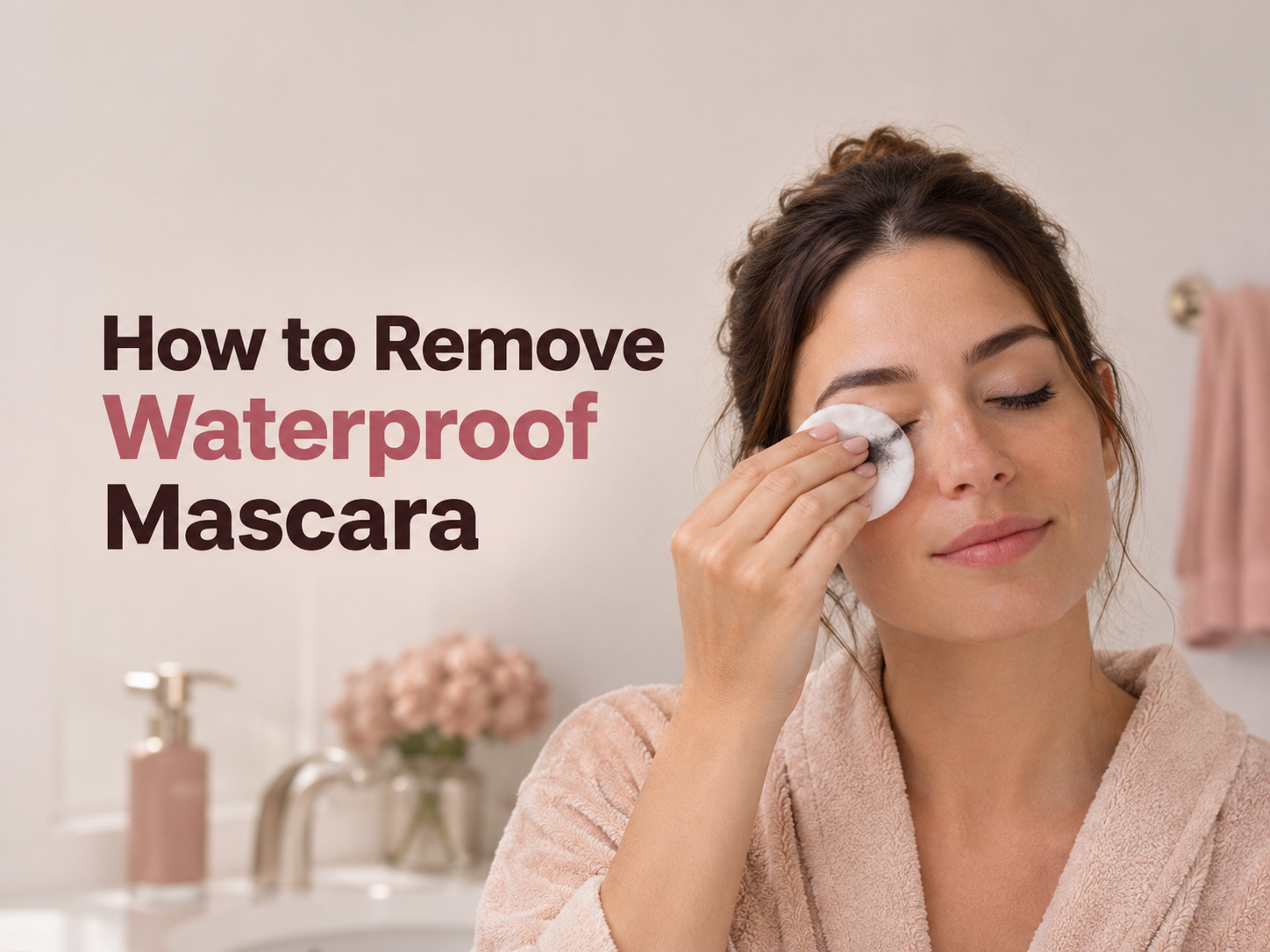
To remove waterproof mascara, soak a cotton pad in an oil-based or bi-phase eye makeup remover, close your eye and press the pad against your lashes for 20–30 seconds so the formula can dissolve. Then wipe gently downward and outward without rubbing. Clean the lash line with a remover-dipped cotton swab, and finish by washing your face with a gentle cleanser to remove any oily residue.
In This Guide
- Why waterproof mascara is so hard to remove
- What you will need
- Step-by-step: the gentle press-and-hold method
- 5 effective ways to remove waterproof mascara
- Method comparison table
- Special cases: sensitive eyes, contacts and lash extensions
- Do’s and don’ts
- How to choose the right eye makeup remover
- Lash aftercare
- Frequently asked questions
Why Waterproof Mascara Is So Hard to Remove
Regular mascara is usually water-based, so it softens with warm water and a normal face wash. Waterproof mascara is built differently. Its formula relies on waxes, oils, silicones and film-forming polymers that create a flexible, water-repelling coating around each lash. Once that coating dries, water simply beads up and rolls off, which is exactly why it does not smudge when you sweat, swim or cry.
Chemistry has a simple rule: like dissolves like. Because waterproof mascara is oil-loving rather than water-loving, it needs an oil or an oil-based solvent to break it down. That is why soap and water fail, and why oil-containing removers melt it almost instantly.
What You Will Need
You do not need an expensive routine. A few basics make the process faster and much kinder to your lashes:
- An oil-based or bi-phase eye makeup remover – the single most important item.
- Soft cotton pads – thick, lint-free pads hold more product and reduce friction.
- Cotton swabs – for the lash line and the corners of the eye.
- A cleansing balm or cleansing oil (optional) – great as an all-in-one makeup melter.
- A gentle face cleanser – to remove leftover oil and residue.
- A clean, soft towel – pat, never rub, when drying.
Step-by-Step: The Gentle Press-and-Hold Method
This is the technique makeup artists and eye-care professionals recommend most often. It works with almost any oil-based remover and keeps friction to an absolute minimum.
- Wash and dry your hands. Clean hands keep bacteria away from your eyes, which is especially important if you are prone to styes or irritation.
- Shake and saturate. If you are using a bi-phase remover, shake the bottle until the two layers mix. Soak a cotton pad generously; a damp pad drags, a soaked pad glides.
- Press and hold for 20–30 seconds. Close your eye and rest the pad over your lashes. Do not move it. This waiting time is the real secret: it gives the oil enough time to break down the waterproof film.
- Wipe gently downward and outward. Using light pressure, slide the pad down the lashes and toward your temple. Most of the mascara should come away in one or two passes.
- Clean the lash line. Dip a cotton swab in remover and roll it along the base of the upper and lower lashes to pick up the last traces of pigment.
- Repeat if needed with a fresh pad. For several coats of mascara, a second press-and-hold is far better than scrubbing with the first pad.
- Cleanse your face. Wash with a gentle cleanser and lukewarm water to remove the oily film so it does not clog pores or blur your vision overnight.
- Pat dry. Gently pat the eye area with a soft towel. Never rub.
5 Effective Ways to Remove Waterproof Mascara
There is no single “best” method for everyone. The right choice depends on your skin type, how sensitive your eyes are and what you already have at home. Here are the five methods that work reliably.
1. Bi-Phase (Dual-Phase) Eye Makeup Remover
Bi-phase removers have two visible layers: an oil phase that dissolves waterproof formulas and a water phase that cleanses and leaves the skin feeling refreshed rather than greasy. When shaken, they combine into a fast-acting solution. For most people this is the most effective and convenient option, and it is the product many eye doctors and makeup artists reach for first.
Best for: heavy or multi-coat waterproof mascara, everyday use, people who want quick results.
2. Cleansing Balm or Cleansing Oil
Cleansing balms are solid at room temperature and melt into a silky oil on contact with your skin. Massage a small amount over closed eyes using your fingertips with very light pressure, wait a few seconds, then add a splash of warm water. The oil turns milky (emulsifies) and rinses away together with your mascara, foundation and sunscreen. It is ideal if you prefer a one-step routine for your entire face.
Best for: full-face makeup removal, dry or normal skin, double-cleansing routines.
3. Oil-Infused Micellar Water
Standard micellar water is excellent for regular mascara but often struggles with waterproof formulas. Look instead for an oil-infused or “waterproof makeup” micellar water, which usually comes in two layers like a bi-phase remover. Use the same press-and-hold technique and give it a little extra time.
Best for: oily or combination skin, people who dislike a greasy after-feel.
4. Natural Oils (Jojoba, Coconut, Olive, Almond)
If you run out of remover, plain oil from your kitchen or vanity will work. Apply a few drops to a cotton pad and use the press-and-hold method. Each oil behaves a little differently:
- Jojoba oil – structurally close to the skin’s natural sebum, lightweight and a good choice for most skin types.
- Coconut oil – very effective at melting makeup, but it can clog pores and may cause bumps around the eyes in acne-prone skin.
- Olive oil – inexpensive and gentle; rinse well because it is quite heavy.
- Sweet almond oil – soft and nourishing; avoid it completely if you have a nut allergy.
Best for: emergencies, minimalist routines, people who prefer simple ingredient lists.
5. Petroleum Jelly
A thin layer of petroleum jelly applied to the lashes with a cotton swab will break down waterproof mascara surprisingly well. Leave it for a minute, then wipe away with a damp cotton pad. It is very gentle and well tolerated by sensitive skin, but it is thick and can temporarily blur your vision, so it is better suited to the evening than to a quick touch-up.
Best for: very sensitive or dry skin, nighttime removal.
Method Comparison Table
| Method | Effectiveness | Gentleness | Residue | Ideal For |
|---|---|---|---|---|
| Bi-phase remover | ★★★★★ | ★★★★☆ | Light | Most people, heavy mascara |
| Cleansing balm / oil | ★★★★★ | ★★★★☆ | Rinses off | Full-face makeup removal |
| Oil-infused micellar water | ★★★★☆ | ★★★★★ | Very light | Oily and combination skin |
| Natural oils | ★★★★☆ | ★★★☆☆ | Heavy | Emergencies, minimal routines |
| Petroleum jelly | ★★★☆☆ | ★★★★★ | Heavy | Very sensitive, dry skin |
Ratings are a general guide based on how each method typically performs; individual results vary by mascara formula and skin type.
Special Cases: Sensitive Eyes, Contact Lenses and Lash Extensions
If You Have Sensitive Eyes
Choose a remover labelled fragrance-free and ophthalmologist-tested. Fragrance, essential oils and high levels of alcohol are the most common triggers for stinging and redness. Patch-test any new product on your inner arm or jawline for 24 hours before using it around the eyes, and keep your eyes closed throughout the removal process.
If You Wear Contact Lenses
Always take out your lenses before removing eye makeup. Oil can cling to soft lenses, cause cloudy vision and be difficult to clean off. After removal, rinse the eye area well and wash your hands thoroughly before handling your lenses again the next morning.
If You Have Lash Extensions
This is the one situation where oil is not your friend. Oil-based products can weaken the adhesive that holds extensions in place and cause them to shed early. Use an oil-free remover designed for extensions, apply it with a lint-free micro-brush or swab, and work carefully around the bonding area. Many lash artists also suggest skipping waterproof mascara entirely on extensions.
Do’s and Don’ts
Common Mistakes That Damage Your Lashes
- Rubbing back and forth. Friction is the number-one cause of lash breakage and premature fallout. The delicate skin around the eyes is also among the thinnest on the body, so repeated rubbing can lead to irritation.
- Picking off flakes. Pulling dried mascara by hand often takes the lash with it.
- Going to bed with mascara on. Leftover mascara can flake into the eye, block the tiny oil glands along the lash line and increase the risk of irritation and styes. It also leaves lashes dry and brittle.
- Using face wipes alone. Many wipes are not strong enough for waterproof formulas, which encourages scrubbing.
- Using expired products. Mascara is generally best replaced about every three months, and old removers can lose effectiveness or irritate.
How to Choose the Right Eye Makeup Remover
When you are shopping for a remover, the label tells you far more than the price tag. Use this checklist to find a formula that works with waterproof mascara and suits your skin:
- “Waterproof” or “long-wear” on the label – confirms the formula contains enough oil to break down water-resistant makeup.
- Bi-phase or dual-phase format – the most effective all-round option for waterproof mascara.
- Ophthalmologist-tested – indicates it has been assessed for use around the eyes.
- Fragrance-free – especially important for sensitive eyes and contact lens wearers.
- Soothing ingredients – look for gentle additions such as panthenol, aloe vera, cucumber extract or chamomile.
- Oil-free formula – only if you wear lash extensions; otherwise oil is what you want.
- Bottle size and pump type – a pump or flip-top makes it easier to soak pads without wasting product.
Lash Aftercare: Keep Your Lashes Healthy
Waterproof mascara can be drying because of the waxes and polymers that make it so durable. A simple aftercare routine helps your lashes stay soft, strong and full:
- Give your lashes rest days. Wear regular or tubing mascara on ordinary days and save waterproof formulas for occasions when you truly need them.
- Condition overnight. A tiny amount of a lash conditioning serum, or a light lash-safe oil applied with a clean spoolie, can help soften lashes after removal.
- Use a clean spoolie. Brushing your lashes after cleansing removes any remaining flakes and keeps them neatly separated.
- Be gentle with eyelash curlers. Always curl before applying mascara, never after, to avoid snapping stiff lashes.
- Eat a balanced diet. Like hair, lashes benefit from adequate protein, iron and essential vitamins.
Frequently Asked Questions
Can I remove waterproof mascara with just water?
No. Waterproof mascara is designed to repel water, so water alone will barely touch it. You need an oil-based or bi-phase remover, a cleansing balm or a natural oil to break down the formula.
Does regular micellar water remove waterproof mascara?
Regular micellar water usually struggles with waterproof mascara and leads to rubbing. Choose an oil-infused or two-phase micellar water specifically made for waterproof makeup.
Is coconut oil safe for removing eye makeup?
Coconut oil is effective and generally safe for many people, but it can clog pores and may cause small bumps around the eyes in acne-prone skin. Jojoba oil is often a gentler alternative. Always rinse well afterward.
Can removing waterproof mascara cause lash loss?
The mascara itself does not usually cause lash loss, but rough removal does. Rubbing, pulling and scrubbing can break or pull out lashes. The press-and-hold method dramatically reduces this risk.
How do I remove waterproof mascara without makeup remover?
You can use a few drops of jojoba, olive, sweet almond or coconut oil, a cleansing balm, or a thin layer of petroleum jelly. Apply, let it sit for 20–60 seconds, and wipe gently downward with a soft cotton pad.
Is it bad to sleep with waterproof mascara on?
Yes, it is best to avoid it. Sleeping in mascara can lead to flakes entering the eye, clogged oil glands along the lash line, irritation and dry, brittle lashes. Always remove it before bed.
How do I remove waterproof mascara with lash extensions?
Use an oil-free eye makeup remover designed for extensions, applied with a lint-free swab or micro-brush. Oil-based removers can weaken the extension adhesive and cause early shedding.
How often should I wear waterproof mascara?
Waterproof mascara is best saved for special occasions, workouts, swimming or humid weather. For everyday wear, a regular or tubing mascara is easier to remove and gentler on your lashes over time.
Key Takeaways
- Waterproof mascara repels water, so it needs oil to dissolve.
- A bi-phase eye makeup remover is the most effective option for most people.
- Press and hold the soaked pad for 20–30 seconds before wiping.
- Always wipe downward and outward; never rub or pull.
- Use oil-free removers if you wear lash extensions, and remove contact lenses first.
- Finish with a gentle cleanser and never sleep in your mascara.
Final Thoughts
Learning how to remove waterproof mascara properly is one of the simplest ways to protect your natural lashes. Once you swap scrubbing for the right remover and a little patience, the whole process takes less than two minutes, with no panda eyes, no stinging and no lashes left behind on the cotton pad.
Choose a formula that suits your skin, use the press-and-hold technique, treat the delicate eye area gently, and your lashes will stay healthy enough to show off waterproof mascara whenever the occasion calls for it.