


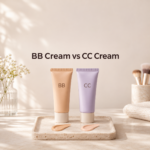

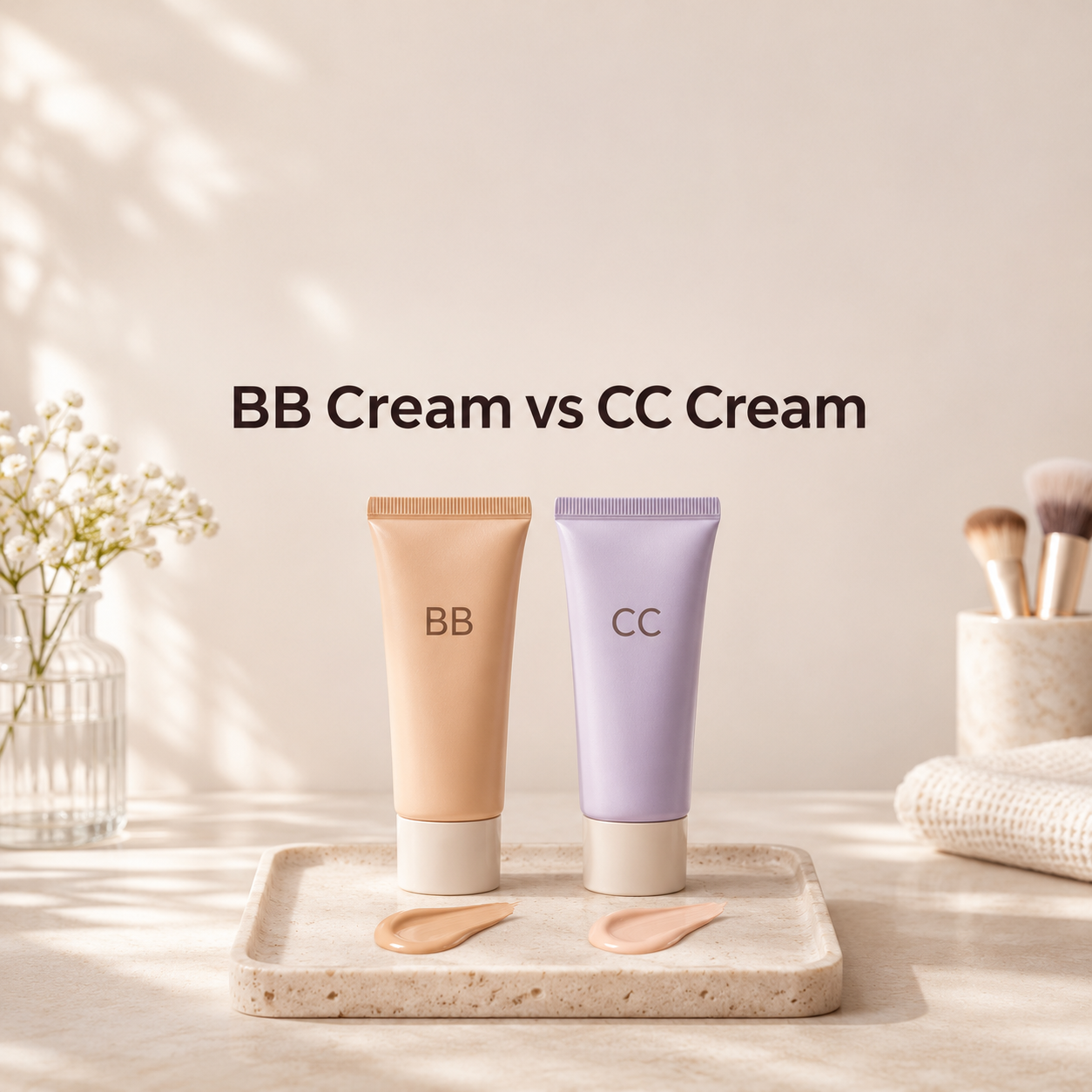

Walk into any beauty aisle and you will find tubes labeled BB cream and CC cream sitting side by side. They look similar, they promise a “perfect, natural” complexion, and both claim to do more than ordinary foundation. So what is the real difference, and does it matter which one you pick?
It does. The two products are built for different jobs. BB cream leans toward coverage and skin care, while CC cream leans toward lightness and correcting uneven skin tone. This guide explains how each one works, where they overlap, who should choose which, and how to apply them for a smooth, believable finish.
Quick Answer: BB Cream vs CC Cream
- Choose BB cream if you want medium coverage, extra hydration and a product that helps hide blemishes, marks and scars. It suits dry, normal and blemish-prone skin.
- Choose CC cream if you want a lighter feel, a natural finish and help with redness, dullness or a sallow tone. It suits oily, combination and mostly clear skin.
- Not sure? Start with CC cream for everyday wear and keep BB cream for days you want more coverage.
What Is BB Cream?
BB cream stands for “blemish balm” or “beauty balm.” It is a tinted, multi-purpose cream that sits somewhere between a moisturizer and a foundation. The idea is simple: instead of layering moisturizer, primer, foundation and concealer, you apply one product that does a bit of each.
Where BB Cream Came From
BB cream is commonly traced back to Germany in the 1960s, where it was developed by a dermatologist as a soothing, protective cream for skin recovering from treatments such as peels. It later became hugely popular in South Korea, where brands refined it into an everyday product with a lightweight texture, skin care ingredients and sun protection. From there it spread worldwide and became a staple of the “skin first” approach to makeup.
What BB Cream Does
- Evens out the complexion with a sheer to medium layer of pigment.
- Hydrates the skin thanks to moisturizing ingredients such as glycerin, hyaluronic acid or plant oils.
- Conceals small imperfections like spots, post-acne marks and mild discoloration.
- Often includes SPF and antioxidant or soothing ingredients, depending on the brand.
Pros and Cons of BB Cream
| Pros | Cons |
|---|---|
| Medium, buildable coverage | Can feel heavier on very oily skin |
| Hydrating, comfortable on dry skin | Limited color-correcting ability |
| Helps hide blemishes and marks | Shade range is narrow in some brands |
| Replaces several steps in a quick routine | May oxidize (darken) slightly on some skin |
What Is CC Cream?
CC cream stands for “color correcting” or “complexion correcting” cream. It followed BB cream as brands looked for a way to tackle uneven skin tone with a lighter touch. Where BB cream concentrates on coverage and nourishment, CC cream concentrates on balancing the color of your skin.
What CC Cream Does
- Neutralizes redness and dullness using color-correcting pigments (more on this below).
- Feels lighter on the skin, closer to a tinted moisturizer or serum.
- Gives a more natural, “skin but better” finish that lets real skin texture show through.
- Frequently adds brightening or anti-aging ingredients such as vitamin C, niacinamide or peptides, depending on the formula.
Pros and Cons of CC Cream
| Pros | Cons |
|---|---|
| Lightweight and breathable | Lower coverage than BB cream |
| Corrects redness and a tired, sallow look | Not enough for deep scars or heavy pigmentation |
| Natural, glowing finish | Some shades look pale or pink if mismatched |
| Good for everyday wear | May need a concealer for spots |
BB Cream vs CC Cream: Key Differences
The table below puts the main differences side by side. Keep in mind that formulas vary widely from brand to brand, so treat this as a general guide rather than a rule.
| Feature | BB Cream | CC Cream |
|---|---|---|
| Full name | Blemish balm / beauty balm | Color correcting / complexion correcting |
| Main purpose | Cover, hydrate and protect | Even out tone and brighten |
| Coverage | Light to medium | Sheer to light-medium |
| Texture | Creamier, a bit richer | Lighter, often more fluid |
| Color correction | Minimal | Strong, uses tinted pigments |
| Finish | Satin to dewy | Natural, luminous |
| Best for | Dry skin, blemishes, marks | Redness, dullness, oily or combination skin |
| Typical extras | SPF, hydrators, soothing agents | SPF, brighteners, anti-aging actives |

Detailed Comparison
1. Coverage
BB cream generally gives more coverage. One thin layer evens out the skin, and a second layer can soften the look of spots and post-blemish marks. CC cream is usually sheerer. It smooths redness and dullness, but it will not completely hide acne scars, dark spots or heavy discoloration. If you want to hide more, BB cream (or a spot concealer over CC cream) is the better route.
2. Texture and Feel
Because BB cream is usually creamier, it feels more like a moisturizer with color. CC cream tends to be lighter and more fluid, so it sits closer to the skin and is easier to wear in warm weather. If you dislike the feeling of “something on my face,” CC cream will usually feel more comfortable.
3. Color Correction
This is the biggest practical difference. CC creams are formulated with color-correcting pigments that work against specific skin tone concerns. A greenish tint can counter redness, a peachy tint can warm dull or bluish areas, and a lavender or pink tint can brighten a yellowish, tired-looking complexion. BB creams are tinted too, but they mainly cover rather than correct.
4. Skin Care Benefits
Both products can contain beneficial ingredients, and the label matters more than the category name. BB creams often lean toward hydration and soothing ingredients, while CC creams often lean toward brightening and anti-aging ingredients. Do not expect a tinted base to replace a proper moisturizer, serum or treatment. Think of these ingredients as a helpful bonus.
5. Sun Protection
Many BB and CC creams list an SPF, which is a convenient extra. However, the SPF number on the tube is tested at a generous application amount, and most people apply far less makeup than that to their face. For real sun protection, apply a dedicated broad-spectrum sunscreen first, then use your BB or CC cream on top and treat the built-in SPF as additional support.
6. Finish and Shade Range
BB cream often gives a satin or dewy finish, while CC cream looks more like natural, luminous skin. Shade range depends heavily on the brand. Always check that the product offers a shade close to your skin tone and undertone, because a mismatched tinted cream is more noticeable than a mismatched moisturizer.
Which One Should You Choose?
The best choice depends on your skin type, the concerns you want to address and how much coverage you like. Use the guide below as a starting point.

Choose BB Cream If You…
- Have dry or normal skin and want extra comfort and hydration.
- Want to reduce the look of blemishes, uneven texture or post-acne marks.
- Prefer a “one and done” base that replaces foundation on most days.
- Like a soft, dewy or satin finish.
Choose CC Cream If You…
- Have oily or combination skin and prefer something light.
- Deal with redness, dullness or a sallow, tired-looking tone.
- Want a natural, barely-there finish for everyday or office wear.
- Already have fairly clear skin and want to even out the tone.
Skin Type Guide at a Glance
- Dry skin: BB cream with hydrating ingredients, applied over a moisturizer.
- Oily skin: a lightweight, oil-free and non-comedogenic CC cream, set lightly in the T-zone.
- Combination skin: CC cream all over, with a little BB cream on areas where you want more coverage.
- Acne-prone skin: a non-comedogenic BB or CC cream, gently removed every night.
- Mature skin: a hydrating, light-reflecting formula in either category, avoiding very matte or heavy textures that can settle into lines.
- Sensitive skin: a fragrance-free formula in either category, and always patch test before full use.
How CC Cream Corrects Skin Tone
Color correction is based on the color wheel. Colors opposite each other cancel one another out, so a tint on the opposite side of the wheel can neutralize a skin tone concern. CC creams use small amounts of these pigments, blended into one shade that looks natural on the skin.

- Green tint: helps cancel out redness around the nose, cheeks or on blemishes.
- Peach or apricot tint: warms up bluish or purple shadows and dullness.
- Lavender or pink tint: brightens yellowish, sallow or tired-looking skin.
- Soft yellow tint: helps soften purple or bruise-like tones.
Because the pigments are blended, a CC cream will not look green or purple on your face. The effect is subtle: skin simply looks more even and fresh.
How to Apply BB Cream or CC Cream
Good application makes a bigger difference than most people expect. Follow these steps for a smooth, long-lasting result.

- Prep the skin. Cleanse, then apply a moisturizer suited to your skin type. Give it a minute or two to absorb so the base glides on instead of pilling.
- Add sunscreen. Apply a separate broad-spectrum SPF 30 or higher. Let it settle before makeup.
- Dot the product. Place small, pea-sized dots on the forehead, cheeks, nose and chin. Start with less than you think you need.
- Blend outward. Use clean fingers, a damp sponge or a soft brush. Work from the center of the face outward and blend into the jawline to avoid a visible edge.
- Build only where needed. Add a second thin layer over redness, marks or dark areas. Layering thinly looks more natural than one heavy coat.
- Set lightly. If your skin is oily, press a small amount of translucent powder into the T-zone only. Dry skin often does not need powder at all.
Pro Tips for a Natural Finish
- Warm the product between your fingertips before pressing it into the skin for better blending.
- Use a small amount of concealer after CC cream on spots or dark circles instead of adding more cream everywhere.
- Do not forget the neck and jawline so the color transitions evenly.
- Wash brushes and sponges regularly to keep bacteria and old product off your skin.
Can You Use BB Cream and CC Cream Together?
Yes. Many people combine them to get the best of both. Here are three simple ways to do it:
- Zone it: use CC cream across the face for an even, light base and add BB cream only where you need more coverage, such as around the nose or on blemish-prone areas.
- Layer it: apply BB cream first, let it set for a minute, then lightly add CC cream over areas with redness or dullness.
- Mix it: blend a small amount of each on the back of your hand for a custom level of coverage and finish.
If you try layering, keep each layer thin. Stacking too many layers can look heavy and may feel uncomfortable on the skin.
BB Cream vs CC Cream vs Foundation vs Tinted Moisturizer
These products overlap, which is why shoppers often get confused. Here is how they generally compare:
| Product | Coverage | Feel | Best For |
|---|---|---|---|
| Tinted moisturizer | Sheer | Very light | Minimal makeup days |
| CC cream | Sheer to light-medium | Light | Redness, dullness, natural look |
| BB cream | Light to medium | Light to medium | Hydration plus coverage |
| Foundation | Medium to full | Medium to heavy | Events, photos, full coverage |
What to Look for When Buying BB or CC Cream
Whichever product you choose, use this checklist to make a smarter purchase:
- Shade and undertone: test along the jawline in natural daylight. The shade should disappear into your skin, not sit on top of it.
- Skin type labels: look for terms like “oil-free” and “non-comedogenic” for oily or acne-prone skin, and “hydrating” for dry skin.
- Helpful ingredients: hyaluronic acid, glycerin, ceramides and niacinamide are popular for comfort and balance. Choose fragrance-free formulas if your skin is sensitive.
- SPF: a built-in SPF is a nice bonus, but it should not replace a separate sunscreen.
- Oxidation: some formulas darken after a few hours. Wear a sample for a full day before committing.
- Packaging: pump bottles and tubes are more hygienic than open jars.
- Shelf life: check the small open-jar symbol on the packaging for how many months the product stays good after opening.
- Reviews from similar skin: look for feedback from people with your skin type and tone, not just overall star ratings.
Common Mistakes to Avoid
- Choosing the wrong shade. Too light creates a gray or ashy cast, and too dark looks like a mask.
- Using too much product. These creams are designed to be sheer, so heavy application defeats the purpose.
- Skipping sunscreen. Built-in SPF is rarely applied thickly enough to rely on alone.
- Not blending to the neck. A visible line at the jaw is the quickest giveaway of a base.
- Sleeping in it. Always remove your base at night with a gentle cleanser, or a cleansing oil or balm if the formula is long-wearing.
- Applying to unprepared skin. Dry flakes or an unabsorbed layer of skin care can make the product patchy.
Frequently Asked Questions
Is CC cream better than BB cream?
Neither is better overall. CC cream is better for evening out tone with a light feel, and BB cream is better for more coverage and hydration. The right one depends on your skin type and goals.
Can I use BB or CC cream instead of foundation?
Yes, for everyday wear. Both give a more natural look than most foundations. For full coverage at events or photos, a foundation is still the stronger choice, though you can also use a spot concealer over BB or CC cream.
Do BB and CC creams replace moisturizer and sunscreen?
They can add a little hydration and some sun protection, but they should not replace your moisturizer or a dedicated sunscreen, especially if you spend long hours outdoors.
Which is better for oily skin?
A lightweight, oil-free CC cream is usually the more comfortable option. If you prefer BB cream, look for a matte or oil-control formula and set it lightly in the T-zone.
Which is better for acne-prone skin?
Choose a non-comedogenic formula in either category. BB cream may help hide blemishes and marks better, while CC cream can calm the look of redness. Cleanse thoroughly each night, and if your acne is persistent or painful, speak with a dermatologist.
Can men use BB and CC cream?
Absolutely. A shade-matched BB or CC cream is a simple way to even out skin tone and hide small imperfections without looking made up.
Can I wear BB or CC cream every day?
Yes, as long as the formula suits your skin and you remove it properly each night. If you notice breakouts, irritation or tightness, switch formulas or take a break.
Do BB and CC creams expire?
Yes. Check the open-jar symbol for the recommended months of use after opening. Throw the product away sooner if the smell, color or texture changes.
Final Verdict: BB Cream or CC Cream?
If you want hydration plus medium coverage that helps hide blemishes and marks, BB cream is the stronger pick. If you want a lightweight, natural finish that corrects redness and dullness, CC cream is the better fit. Many people keep one of each: CC cream for easy everyday wear and BB cream for days when they want a bit more coverage.
Whichever you choose, the same rules apply. Match your shade carefully, apply thin layers, use a separate sunscreen and remove everything at night. Do that, and either product can give you a fresh, even complexion with very little effort.
Note: This article is for general information only and is not medical advice. If you have a skin condition such as persistent acne, rosacea or eczema, please consult a qualified dermatologist before changing your routine.