
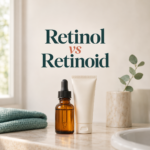
If you have ever stood in a skincare aisle, or scrolled an online store, trying to decide between a “retinol serum” and a “retinoid cream,” you are not alone. The two words are used almost interchangeably, yet they do not mean the same thing. Mixing them up can leave you with either disappointing results or a red, peeling face.
The short version: retinoid is the name of the entire family of vitamin A-derived ingredients, and retinol is just one member of that family. Everything else (strength, speed, side effects, price and whether you need a prescription) depends on which retinoid you are using. This guide breaks it all down in plain language so you can choose confidently and start safely.
Key Takeaways
- Every retinol is a retinoid, but not every retinoid is retinol.
- Retinol is available without a prescription and is gentler. Prescription retinoids such as tretinoin act faster and more powerfully.
- Skin must convert retinol into retinoic acid before it works, which is why results take weeks to months.
- Start low and slow: a pea-sized amount, two nights a week, followed by moisturizer.
- Use sunscreen every morning, and avoid retinoids during pregnancy unless a doctor advises otherwise.
What Is a Retinoid?
“Retinoid” is the umbrella term for any compound that is chemically related to vitamin A or that acts on the same receptors in your skin cells. Think of it like the word “citrus”: lemons, oranges and limes are all citrus fruits, but they taste and behave very differently.
Retinoids are among the most studied ingredients in dermatology. They are used to treat acne, fade dark marks, smooth fine lines, improve rough texture and support firmer-looking skin. They do this by speeding up skin cell turnover, helping clogged pores clear, and encouraging the skin to produce more collagen over time.
The family includes natural and synthetic members, and it is usually divided into two practical groups: those you can buy over the counter and those that need a prescription.
What Is Retinol?
Retinol is the best-known over-the-counter retinoid. It is the alcohol form of vitamin A and is found in countless serums, night creams and eye creams. Cosmetic products usually contain somewhere between 0.1% and 1% retinol, and the right percentage for you depends largely on how experienced your skin is with retinoids.
Retinol is popular for a simple reason: it offers a very good balance between results and tolerability. It is strong enough to visibly improve texture, tone and fine lines over time, yet mild enough that most people can use it without medical supervision.
The Other Over-the-Counter Retinoids
- Retinyl esters (such as retinyl palmitate): the mildest and most stable forms. They need several conversion steps, so results are subtle.
- Retinaldehyde (retinal): one step away from the active form, so it tends to work faster than retinol while remaining reasonably gentle for many people.
- Adapalene: a synthetic retinoid designed for acne. It is sold over the counter in some countries and by prescription in others.
How Retinoids Work in Your Skin
Here is the part most beauty articles skip, and it explains almost everything about the retinol versus retinoid question. Your skin cells can only use one form of vitamin A directly: retinoic acid. Every other retinoid has to be converted into retinoic acid by enzymes in the skin before it can do anything.
Retinol, for example, first becomes retinaldehyde and then becomes retinoic acid. Retinyl esters need an extra step before that. Prescription tretinoin, on the other hand, is retinoic acid, so it skips the conversion entirely.
This conversion process is the reason milder retinoids cause less irritation: only a portion of the product ever reaches the active form. It is also the reason they take longer to show results.
Retinol vs Retinoid: Side-by-Side Comparison
Because “retinoid” is the whole family, the most useful comparison is between over-the-counter retinol and prescription retinoids such as tretinoin. Here is how they typically stack up:
| Feature | Retinol | Prescription Retinoids (e.g. Tretinoin) |
|---|---|---|
| What it is | One specific type of retinoid | Stronger members of the retinoid family |
| Availability | Over the counter in most countries | Usually prescription-only |
| Conversion needed | Two steps to reach retinoic acid | None for tretinoin, which is retinoic acid |
| Typical strengths | Roughly 0.1% to 1% | Commonly 0.025% to 0.1% (tretinoin) |
| Speed of results | Slower; often 3 months or more | Faster; early changes often within 2 to 3 months |
| Irritation risk | Low to moderate | Moderate to high, especially at first |
| Best for | Beginners, mild ageing signs, uneven tone, maintenance | Persistent acne, deeper lines, sun damage, stubborn texture |
| Supervision | Self-managed with sensible care | Guided by a doctor or dermatologist |
Keep in mind that these are general patterns. A well-formulated retinaldehyde product, for instance, can sit somewhere in between, and individual skin always has the final say.
The Proven Benefits of Retinoids
Whichever type you choose, consistent use over months can bring a range of improvements:
- Smoother texture: faster turnover helps shed dull, rough surface cells.
- Fewer breakouts: retinoids help keep pores clear and reduce the formation of new blemishes.
- Softer fine lines: over time, collagen support makes lines look less pronounced.
- More even tone: dark spots and post-acne marks tend to fade more quickly.
- Brighter, healthier-looking skin: a steady renewal cycle gives a fresher complexion.
The key word is consistent. Retinoids are a long-term investment, not an overnight fix. Most people need at least 8 to 12 weeks before judging results, and improvements often continue for many months beyond that.
Side Effects and the “Adjustment Period”
Almost everyone who starts a retinoid notices some changes in the first few weeks. Dermatologists often call this the adjustment period (sometimes “retinization”). Common effects include:
- Dryness, tightness and flaking
- Mild redness or a slight stinging sensation
- Temporary breakouts as clogged pores clear out faster than usual
- Increased sensitivity to sun and harsh products
These effects usually settle as skin adapts, typically within four to six weeks, particularly if you build up gradually. Severe burning, swelling, blistering or persistent redness is not normal. Stop using the product and speak with a healthcare professional if that happens.
Who Should Be Careful or Avoid Retinoids?
- Pregnant or planning pregnancy: retinoids are generally avoided. Always check with your doctor.
- Breastfeeding: ask your doctor before using any retinoid product.
- Eczema, rosacea or very sensitive skin: these can flare easily, so professional guidance is wise.
- Sunburned or broken skin: wait until the skin barrier has fully healed.
- Using other strong treatments: if you are on prescription acne treatments or have had recent procedures, ask your skin specialist first.
Which One Should You Choose?
If You Are a Complete Beginner
Start with a low-strength retinol (around 0.1% to 0.3%) or a gentle retinyl ester formula. This gives your skin time to adapt without overwhelming it. You can always step up later.
If You Have Sensitive or Dry Skin
Look for retinol blended with calming, barrier-supporting ingredients such as ceramides, hyaluronic acid and panthenol. Use it less often at first and consider the “sandwich method” described below.
If You Have Oily or Acne-Prone Skin
Skin that is oily and acne-prone often tolerates retinoids well. Adapalene (where available over the counter) or a retinol serum can work nicely, and a dermatologist can advise whether a prescription option is better for persistent acne.
If Your Main Goal Is Anti-Ageing
Retinol is a solid starting point. If you have used it consistently for several months and want stronger results, retinaldehyde or a prescription retinoid may be the next step, ideally with professional advice.
If You Have Stubborn Acne or Significant Sun Damage
This is where prescription retinoids shine. A doctor can recommend the right type and strength for you and monitor your progress.
How to Start Using a Retinoid Safely
Slow and steady wins. Rushing is the number one reason people give up on retinoids, so follow a gradual plan like the one below.
- Cleanse gently and pat skin completely dry. Applying retinoids to damp skin can increase irritation.
- Use a pea-sized amount for the whole face. More does not mean better results, only more irritation.
- Avoid the sensitive zones: keep product away from the corners of the nose, the corners of the mouth, and the eyelids unless the product is made for them.
- Follow with a moisturizer to support the skin barrier.
- Apply at night and wear broad-spectrum sunscreen (SPF 30 or higher) every morning.
Pro tip: the sandwich method
If your skin is dry or sensitive, apply a thin layer of moisturizer first, then your retinol, then another layer of moisturizer on top. This buffers the active ingredient and makes the adjustment period far more comfortable.
What to Pair With Retinoids (and What to Avoid)
Great Partners
- Hyaluronic acid: adds hydration and plumpness.
- Niacinamide: supports the barrier and can calm redness.
- Ceramides and peptides: help skin recover and stay resilient.
- Sunscreen: not optional, but essential every single morning.
Use With Caution
- Strong exfoliating acids (AHAs and BHAs): using them on the same night can over-exfoliate. Keep them on separate nights.
- Benzoyl peroxide: can irritate when combined with retinoids and may reduce the stability of some of them. Ask a professional how to schedule both.
- Vitamin C: works well in a routine with retinoids, but many people prefer vitamin C in the morning and retinoid at night.
- Physical scrubs and harsh cleansers: avoid them while your skin is adjusting.
How to Read the Label: What to Look For
Not every retinol product is built equally. A few details on the packaging tell you a lot about quality:
- Airtight, opaque packaging: retinoids break down with light and air, so pump bottles, tubes and dark containers are better than open jars.
- A clear percentage: brands that state the concentration make it easier to build up gradually.
- Supportive ingredients: ceramides, glycerin, squalane and soothing agents make the formula more comfortable.
- Fragrance-light formulas: especially important if your skin is sensitive.
- Product type: serums feel lighter and work well for oily skin, while creams add cushioning for dry skin.
Common Retinoid Mistakes to Avoid
- Starting too strong or too often. Build up gradually.
- Using too much product. A pea-sized amount covers the entire face.
- Skipping sunscreen. Sensitivity to the sun makes daily protection essential.
- Quitting too early. Real changes take months, not days.
- Layering too many actives. A simple routine of cleanser, retinoid, moisturizer and sunscreen is often best.
- Storing it in a hot, sunny bathroom. Keep it in a cool, dark place so it stays effective.
Frequently Asked Questions
Is retinol a retinoid?
Yes. Retinol is one type of retinoid. The word retinoid covers the entire family of vitamin A-related ingredients, including retinyl esters, retinol, retinaldehyde, adapalene, tretinoin and others.
Which is stronger, retinol or a retinoid?
It depends on which retinoid you mean. Retinol is milder than prescription retinoids such as tretinoin because skin has to convert it into retinoic acid first. Retinyl esters are even gentler, while retinaldehyde sits between retinol and tretinoin.
How long does it take to see results?
Most people need 8 to 12 weeks before they notice changes in texture or breakouts. Improvements in fine lines and dark spots usually take longer, often 3 to 6 months of consistent use.
Can I use retinol every day?
Many people eventually can, but it is best to build up slowly. Start with two nights a week and increase only if your skin stays comfortable. If you notice dryness, burning or peeling, scale back.
Should I use retinol in the morning or at night?
Night is the usual recommendation because retinoids can make skin more sensitive to sunlight and some forms break down in light. Whenever you use it, apply sunscreen every morning.
Is retinol safe during pregnancy?
Retinoids are generally avoided during pregnancy and when trying to conceive. Speak with your doctor about safer alternatives and about use while breastfeeding.
Can I use vitamin C and retinol together?
Yes, in the same routine over a day. Many people use vitamin C in the morning and retinol at night, which keeps things simple and reduces the chance of irritation.
Can I use retinol and tretinoin together?
This is not recommended unless a doctor has told you to. Combining two retinoids greatly increases the risk of irritation without adding clear benefit.
Final Thoughts: Retinol vs Retinoid
The retinol versus retinoid question is not really a contest. Retinoids are the whole category, retinol is a gentle, accessible member of it, and prescription options such as tretinoin sit at the stronger end. The best choice is the one your skin can tolerate consistently, because steady use over months beats aggressive use for a week.
If you are new to all of this, begin with a low-strength retinol, introduce it slowly, moisturize well and protect your skin from the sun every day. If your concerns are stubborn, or your skin is sensitive, a short visit to a dermatologist can save you months of trial and error.