


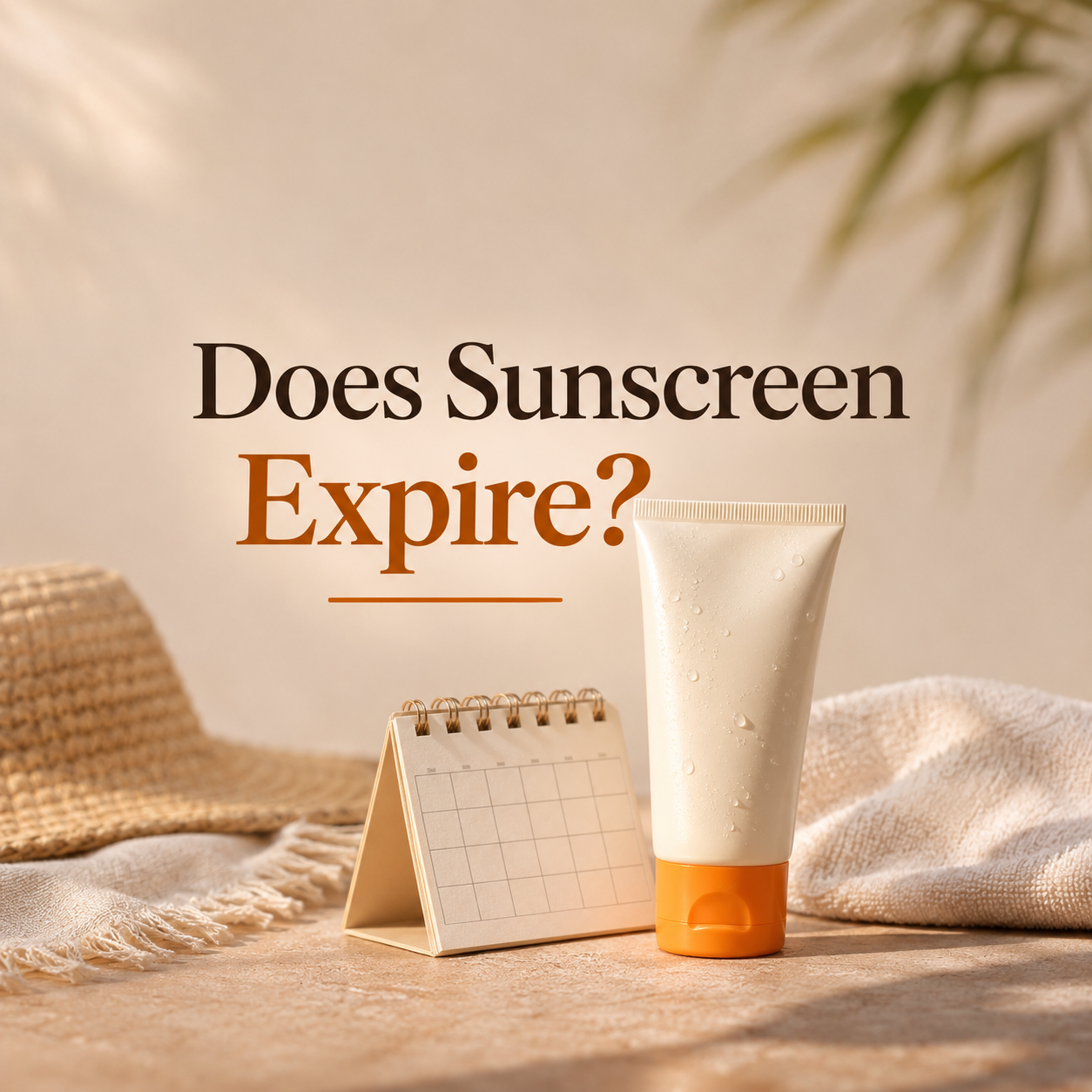
You open the beach bag at the start of summer and find a half-used bottle of sunscreen from last year. It looks fine, it smells like sunscreen, and it would save you a trip to the shop. So, does sunscreen expire, and is it really worth throwing out?
The short answer is yes. Sunscreen expires, and an expired bottle may not protect your skin the way the label promises. This guide explains how long sunscreen lasts, how to read the date on the bottle, the warning signs of a bottle that has gone off, how to store it properly, and what to look for when you buy a replacement.
Quick answer
- Sunscreen is designed to stay at full strength for up to about three years when unopened and stored well.
- Once opened, many brands recommend using it within 6 to 12 months. Check the open-jar symbol on your packaging.
- Heat, sunlight and a loose cap can make sunscreen break down much earlier than its date.
- If it is past its date, looks or smells different, or you cannot remember when you bought it, replace it.
Does sunscreen really expire?
Yes. Sunscreen is a carefully balanced formula. It contains active ingredients that filter or block ultraviolet (UV) rays, plus oils, emulsifiers, stabilizers and preservatives that keep everything evenly mixed and safe to use. Over time those ingredients change. The active filters can lose strength, the mixture can separate, and the preservatives can wear down.
In the United States, sunscreen is regulated as an over-the-counter drug. Manufacturers must show that a product keeps its labeled strength for a set period, and in general a sunscreen without an expiration date is expected to remain stable for about three years. Many bottles carry a printed date, often written as EXP or as a month and year. Other countries have similar rules, and most reputable brands follow the same three-year idea.
How long does sunscreen last?
The answer depends on whether the bottle is unopened or open, and on how it has been stored. Here is a practical guide.
| Situation | Typical shelf life | What to do |
|---|---|---|
| Unopened, stored in a cool place | Up to about 3 years from manufacture | Follow the printed expiration date |
| Opened, stored well | Often 6 to 12 months | Check the open-jar symbol, for example 12M |
| No date printed | Assume about 3 years at most | Write the purchase date on the bottle |
| Left in a hot car or in direct sun | Can degrade within weeks | Replace if it was heated or looks different |
| Spray or aerosol sunscreen | Follow the can’s date | Keep away from heat, since the can is pressurized |
Understanding the date and symbols on the package
Look for one of these on the tube, bottle or box:
- EXP or Expiry date: the last date the manufacturer stands behind the product’s strength. Do not use the bottle after it.
- Open-jar symbol (period after opening): a small jar icon with a number and the letter M, such as 6M or 12M. It means the product is best used within that many months after you first open it.
- Batch or lot code: a short code, usually stamped near the crimped end of the tube. It helps the brand trace the product and, on some brands, works out the manufacture date.
A simple habit helps: when you open a new bottle, write the month and year on it with a permanent marker.
Why does sunscreen stop working?
Sunscreen does not suddenly become useless on the day it expires, but its performance becomes less reliable. Several things happen over time.
- Active ingredients degrade. UV filters can break down with age, heat and light, so the real SPF may fall below the number on the front of the bottle.
- The formula separates. When oils and water-based parts split apart, the filters are no longer spread evenly. You may apply a thinner layer of protection than you think.
- Preservatives weaken. Once they wear down, bacteria and mold can grow more easily, especially in a bottle that has been opened many times with wet or sandy hands.
- Air and temperature changes. Each time you open the cap, a little air gets in. Repeated heating and cooling speeds up the changes.
The practical risk is simple: you believe you have SPF 50 protection, but you may have much less. That is how people end up with a painful sunburn after what felt like careful sun protection.
Signs your sunscreen has expired
The date is the best guide, but your senses can also warn you. Throw the bottle away if you notice any of the following.
- Color change: a yellow, orange or brownish tint in a lotion that was white or cream.
- Separation: watery liquid, oily streaks or visible layers that do not blend back together after shaking.
- Strange smell: a sour, rancid or sharp chemical odor that is different from the usual sunscreen scent.
- Texture changes: a runny, grainy, lumpy or stringy feel, or a pump or nozzle that sprays unevenly.
Keep in mind
You cannot test a sunscreen’s SPF at home. A bottle can look completely normal and still have lost strength, so the date and the storage history matter just as much as the appearance.
Is it safe to use expired sunscreen?
Using an out-of-date bottle is not usually dangerous in the way that eating spoiled food can be, but it is not a good idea for two reasons. First, the sun protection is uncertain, which raises your chance of sunburn and, over the years, of skin damage from UV exposure. Second, changed ingredients or bacterial growth in an old, much-handled bottle may irritate the skin, particularly on the face or on sensitive skin.
Dermatology organizations consistently advise that expired sunscreen should be thrown away rather than stretched for one more season. Sunscreen is inexpensive compared with the cost of sun damage, so replacing it is the safer choice. If you have a skin condition, a history of skin cancer, or a reaction to a particular product, ask your doctor or dermatologist which sunscreen suits you.
How to store sunscreen so it lasts longer
Heat is the biggest enemy of sunscreen. A bottle left on a car dashboard or in a beach bag in full sun can be ruined long before its printed date. A few easy habits make a big difference.
- Keep it cool and dry. A bedroom drawer or a cupboard away from windows works well.
- Do not leave it in the car. Take it with you when you leave the vehicle, especially in warm weather.
- Shade it outdoors. Keep the bottle in a bag or under a towel instead of on the sand or poolside.
- Close the cap firmly. This limits air getting in and stops the product drying out or leaking.
- Do not mix old and new. Topping up an old bottle with fresh lotion does not make the old product fresh.
- Label the bottle. Write the date you opened it so you never have to guess.
Do all types of sunscreen expire the same way?
All sunscreens have a shelf life, but the details differ a little between formulas.
Mineral sunscreens
Mineral formulas use zinc oxide or titanium dioxide, which sit on top of the skin and reflect or scatter UV rays. These ingredients are generally quite stable, but the lotion or cream base around them can still separate or spoil, so the same date rules apply.
Chemical sunscreens
Chemical formulas use ingredients such as avobenzone, octocrylene or similar filters that absorb UV rays. Some of these filters are more sensitive to heat and light, which is why they need careful storage.
Sprays, sticks and powders
Spray sunscreens come in pressurized cans, so they must be kept away from heat and flames. Sticks and powders can also dry out or clump with age. In every case, follow the date printed on the packaging.
How much sunscreen should you use?
Here is a reason many people never end up with an expired bottle: using enough sunscreen finishes it quickly. Skin care experts commonly suggest about one ounce, roughly a shot-glass amount, to cover the whole body of an adult, with more for the face and neck than most people expect. A small three-ounce bottle may only cover a few full applications. If your bottle lasts all summer and into next year, you are probably not applying enough.
Reapply about every two hours when outdoors, and straight after swimming or heavy sweating, even when the label says water resistant. Sunscreen works best as one part of a routine that also includes shade, a hat, sunglasses and protective clothing during strong sun hours.
What to look for when buying a new sunscreen
When it is time to replace an old bottle, these features are worth checking before you buy.
- Broad spectrum: protects against both UVA and UVB rays.
- SPF 30 or higher: SPF 30 is widely recommended for daily use, and a higher number can help during long outdoor days.
- Water resistance: useful for swimming, sports and hot, sweaty days.
- Your skin type: lightweight, non-greasy lotions often suit oily skin, richer creams suit dry skin, and fragrance-free mineral formulas are popular for sensitive skin.
- A clear expiration date: a visible date or open-jar symbol makes it easy to know when to replace it.
- A suitable size: choose smaller bottles if you use sunscreen only now and then, and larger ones for families or daily use so they are finished before they age.
Frequently asked questions
Can I use sunscreen that expired last month?
It is best not to. The date is a safety margin chosen by the manufacturer, so a bottle just past it may still be mostly fine, but you have no way of knowing. Replacing it is the dependable choice.
How can I tell how old my sunscreen is?
Check for a printed expiration date, an open-jar symbol, or a batch code. If none is visible and you cannot remember when you bought it, treat it as old and replace it.
Does sunscreen expire faster in hot weather?
Yes. High temperatures speed up the breakdown of the formula. A bottle kept in a hot car or beach bag can go bad well before its printed date.
Is it okay to use last year’s sunscreen if I only opened it a few times?
If it is still inside its date, has been stored in a cool place, and looks and smells normal, it may be fine. If the bottle has been opened for more than the period shown on its symbol, or it was kept somewhere hot, replace it.
Can I put expired sunscreen to another use?
Do not rely on it for sun protection. Some people use old lotion to clean tools or polish small items, but it is simply easier and safer to dispose of it with household waste, and to follow your local rules for aerosol cans.
Should children’s sunscreen be replaced more often?
The same rules apply. Because children’s skin is delicate and they spend a lot of time outdoors, it is worth checking dates before every season and replacing any bottle you are unsure about.
Final thoughts
So, does sunscreen expire? Yes. Most bottles stay effective for up to three years unopened and often around six to twelve months once opened, but heat, sunlight and poor storage can shorten that. Check the date, look for changes in color, smell and texture, and store your sunscreen in a cool, shaded place with the cap closed.
When in doubt, replace it. A fresh bottle is a small cost for dependable protection, and it lets you enjoy time outside with confidence.
This article is for general information only and is not medical advice. For questions about your skin or a particular product, speak with a doctor or dermatologist.