





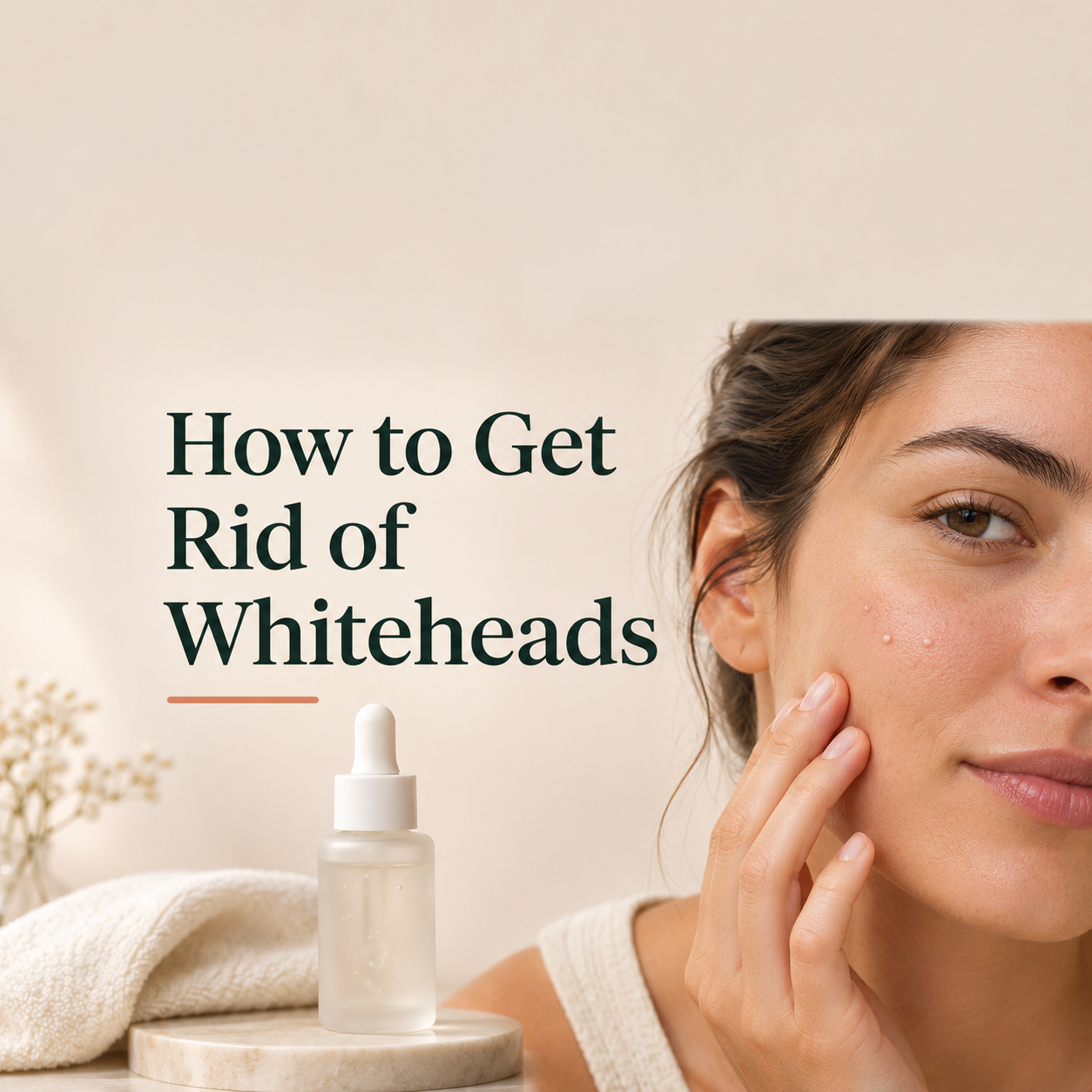

Whiteheads are one of the most common skin frustrations. They show up as small, flesh-colored or white bumps on the nose, chin, forehead and cheeks, and they can seem to hang around for weeks no matter how much you scrub. The good news is that whiteheads respond very well to the right ingredients and a calm, consistent routine. The bad news is that most of the things people instinctively do, like squeezing, scrubbing and layering harsh products, make them worse.
This guide explains exactly what whiteheads are, why they form, and how to get rid of them safely. You will also learn which ingredients actually work, how to build a simple daily routine, the mistakes to avoid, and when it is time to see a professional.
Quick answer
To get rid of whiteheads, wash your face gently twice a day, use a salicylic acid product (0.5–2%) or an adapalene retinoid at night, moisturize with an oil-free formula, wear non-comedogenic sunscreen, and never pick at the bumps. Expect visible improvement in about 8 to 12 weeks.
What Are Whiteheads?
Whiteheads, known medically as closed comedones, are a mild form of acne. They develop when a pore becomes blocked by a mixture of sebum (your skin’s natural oil) and dead skin cells. Unlike a blackhead, the pore opening is covered by a thin layer of skin, so the plug stays sealed beneath the surface and keeps its white or skin-toned color.
Whiteheads vs. blackheads vs. milia
- Whiteheads: closed pores that look like small white or flesh-colored bumps. They are not usually painful.
- Blackheads: open pores where the plug darkens after meeting air. The color comes from oxidation, not dirt.
- Milia: tiny, hard, pearl-like cysts formed by trapped keratin, most often around the eyes and on the cheeks. They are frequently mistaken for whiteheads, but they are not caused by clogged pores and do not clear with ordinary acne products.
What Causes Whiteheads?
Whiteheads rarely have a single cause. They usually appear when several factors line up and push your pores toward clogging.
- Excess oil production: Overactive oil glands produce more sebum than the pore can easily release.
- Dead skin cell buildup: When skin cells do not shed evenly, they stick together and plug the pore.
- Hormonal changes: Puberty, menstrual cycles, pregnancy and conditions such as PCOS can all increase oil production.
- Heavy or pore-clogging products: Thick creams, rich oils, some sunscreens, foundations and hair products can trap oil and debris.
- Friction and sweat: Helmets, face masks, tight straps and hands that constantly touch the face can irritate pores and encourage blockages.
- Over-cleansing and harsh scrubs: Stripping the skin damages its barrier, which can trigger even more oil and clogging.
- Genetics: If your parents had acne-prone skin, you are more likely to as well.
- Certain medications: Corticosteroids and some hormonal medicines can contribute. Never stop a prescribed medication without speaking to your doctor.
- Diet (for some people): High-glycemic foods and, in some studies, dairy have been linked to more breakouts, although the evidence is mixed.
How to Get Rid of Whiteheads: Step by Step
1. Cleanse gently, twice a day
Wash your face in the morning and evening with a mild, fragrance-free cleanser and lukewarm water. Use your fingertips for 30 to 60 seconds, rinse well and pat dry with a clean towel. Avoid hot water, rough washcloths and gritty scrubs. Washing more than twice a day will not clear whiteheads faster and often makes irritation worse.
2. Use salicylic acid as your first treatment
Salicylic acid is a beta hydroxy acid that dissolves in oil, which lets it travel into the pore and break down the sticky mix of sebum and dead cells. Look for cleansers, toners or leave-on gels and serums containing 0.5% to 2%. Start with once a day, then increase if your skin tolerates it.
3. Add a retinoid for long-term control
Retinoids such as adapalene are widely considered the foundation of comedone treatment because they correct the way skin cells shed, which stops pores from clogging in the first place. Apply a pea-sized amount to the whole affected area (not just the spots) at night. Start two or three nights a week, build up slowly, and expect mild dryness or a short “purging” phase in the first weeks. Retinoids make skin more sun-sensitive, so daily sunscreen is essential.
4. Try azelaic acid or a mild AHA if your skin is sensitive
If salicylic acid or retinoids feel too strong, azelaic acid is a gentle alternative that also helps fade the dark marks that whiteheads sometimes leave. A low-strength glycolic or lactic acid product can smooth the surface of the skin, but use it only a couple of nights a week.
5. Use benzoyl peroxide only when spots become inflamed
Pure whiteheads are not usually bacterial, but they can turn into red, tender pimples. In that case, a low-strength benzoyl peroxide (2.5% to 5%) used as a spot treatment or short-contact wash can help. It is less targeted for closed comedones, so think of it as a supporting product.
6. Moisturize and protect with sunscreen
Acne-prone skin still needs hydration, especially when you are using active ingredients. Choose a light, oil-free gel or lotion labeled non-comedogenic. Every morning, finish with a broad-spectrum SPF 30 or higher that is also labeled non-comedogenic. Sun exposure darkens the marks whiteheads leave behind and slows healing.
7. Use a warm compress to soften stubborn bumps
For a bump that will not budge, hold a clean cloth soaked in warm (not hot) water against it for 5 to 10 minutes. This softens the plug and helps your treatment products penetrate. It is a helper step, not a replacement for active ingredients.
Active Ingredients for Whiteheads at a Glance
Use this table to compare the most effective, well-studied options. Introduce only one new active at a time so you can tell what is working and what is irritating you.
Patch test first
Before using any new product on your whole face, apply a small amount to a patch of skin on your jawline or behind your ear for two to three days. If you notice burning, swelling or a rash, stop using it.
What About Hydrocolloid Patches, Pore Strips and Extraction?
- Hydrocolloid patches: These absorb fluid and protect the skin, so they are most helpful for pimples that have already opened or been picked. They are also useful for keeping your hands away from a spot, but they will not dissolve a deeply closed whitehead on their own.
- Pore strips: They mainly lift the surface of blackheads and are not designed for closed whiteheads.
- Professional extraction: A dermatologist or licensed esthetician can use sterile tools to open and clear stubborn whiteheads safely. This is far safer than doing it at home with nails or needles.
- Chemical peels and in-office treatments: Salicylic acid or glycolic acid peels and some light-based or microneedling treatments can help persistent cases.
Common Mistakes That Make Whiteheads Worse
- Picking and squeezing: This can drive the plug deeper, cause infection and leave scars or dark spots.
- Scrubbing aggressively: Physical scrubs do not unclog pores. They inflame the skin and damage its barrier.
- Using too many actives at once: Layering acids, retinoids and benzoyl peroxide in the same routine leads to dryness, redness and rebound oiliness.
- Skipping moisturizer: Dry, irritated skin can produce more oil and more clogs.
- Switching products every week: Skin needs at least 6 to 8 weeks to show real change.
- Using heavy oils and rich balms on the face: Coconut oil and thick butters are common culprits in clogged pores for many people.
- Sleeping in makeup: Leaving foundation and sunscreen on overnight is a straightforward way to block pores.
How to Prevent Whiteheads From Coming Back
- Check that your skincare, makeup, sunscreen and hair products are labeled non-comedogenic or oil-free.
- Keep hair products such as pomades, oils and styling creams away from your forehead and hairline.
- Change your pillowcase at least once a week and wash makeup brushes regularly.
- Cleanse your face soon after heavy sweating, and wash helmets, headbands and masks often.
- Avoid touching or resting your hands on your face during the day.
- Keep using a gentle retinoid or salicylic acid product a few times a week even after your skin clears.
- Notice patterns. If breakouts follow certain foods, products or your menstrual cycle, make a note and adjust.
How Long Does It Take to Clear Whiteheads?
Patience is the most underrated part of treating whiteheads. A clogged pore takes weeks to form, and it takes weeks of consistent treatment to prevent new ones. Most people notice smoother skin after four weeks and clear improvement by eight to twelve weeks.
When to See a Dermatologist
Make an appointment with a doctor or dermatologist if:
- You see little or no improvement after 8 to 12 weeks of consistent over-the-counter treatment.
- Your whiteheads are turning into painful, deep or cystic acne.
- You are developing scars or dark marks that are not fading.
- You suspect the bumps are milia, especially around the eyes.
- Breakouts come with irregular periods, excess hair growth or other hormonal symptoms.
- Your skin is affecting your confidence or emotional wellbeing.
A professional can prescribe stronger topical retinoids, azelaic acid, combination treatments, or hormonal therapy where appropriate, and can safely perform extractions or peels.
Pregnant or breastfeeding?
Some skincare ingredients, particularly retinoids and high-strength acids, are not recommended during pregnancy. Check with your doctor or pharmacist before starting any new acne treatment.
What to Look for When Buying Products for Whiteheads
The skincare aisle is crowded, so a few simple rules make shopping easier:
- Check the ingredient list, not just the front label. Look for salicylic acid, adapalene, azelaic acid or lactic acid in sensible strengths.
- Choose “non-comedogenic” and “oil-free” formulas for moisturizers, sunscreens and makeup.
- Pick fragrance-free options if your skin is easily irritated.
- Prefer gels, fluids and lightweight lotions over thick creams and balms.
- Avoid products with high alcohol content or strong physical scrubs, which tend to irritate rather than heal.
- Buy fewer, simpler products. A cleanser, one treatment, a moisturizer and a sunscreen is enough for most people.
Frequently Asked Questions About Whiteheads
Can I pop a whitehead?
It is best not to. Squeezing can push the plug deeper, tear the skin, cause infection and leave dark marks or scars. If a whitehead is bothering you, treat it with a proven ingredient or ask a dermatologist or licensed skin professional to extract it safely.
How long does it take to get rid of whiteheads?
Individual spots can fade in a few days to a couple of weeks with the right treatment, but preventing new ones takes longer. Most people see clear improvement after 8 to 12 weeks of consistent use.
Are whiteheads and milia the same thing?
No. Whiteheads are pores clogged with oil and dead skin cells. Milia are tiny cysts filled with trapped keratin that sit under the skin, often around the eyes and cheeks. Milia do not respond well to normal acne treatments, so a professional should remove them.
Do whiteheads go away on their own?
Sometimes, but they often linger for weeks or return. Because the pore stays blocked, an exfoliating ingredient such as salicylic acid or a retinoid usually speeds things up and reduces recurrence.
What is the difference between a whitehead and a blackhead?
Both are clogged pores. A whitehead is covered by a thin layer of skin, so the plug stays white or flesh-colored. A blackhead is open at the surface, and the exposed plug darkens when it reacts with air.
Does diet cause whiteheads?
Diet is not the main cause, but research suggests that high-glycemic foods and, for some people, dairy may worsen acne. The evidence is mixed, so a simple food diary can help you spot personal triggers.
Can I wear makeup while treating whiteheads?
Yes. Choose products labeled non-comedogenic and oil-free, apply with clean hands or brushes, and always remove makeup fully before bed.
Final Thoughts
Getting rid of whiteheads is less about finding a miracle product and more about following a gentle, consistent routine. Cleanse without stripping, use a proven pore-clearing ingredient like salicylic acid or adapalene, hydrate with oil-free products, protect your skin with sunscreen, and resist the urge to squeeze. Give your skin at least two to three months to respond, and reach out to a dermatologist if progress stalls.
Disclaimer: This article is for general information only and is not a substitute for professional medical advice, diagnosis or treatment. Always speak with a qualified healthcare provider about your skin concerns, especially if you are pregnant, breastfeeding, taking medication or have a skin condition.