






Gel Nails vs Acrylic Nails: Which One Is Better for You?

Standing at the nail salon, trying to decide between gel nails vs acrylic nails, is a surprisingly tough choice. Both give you longer-lasting, chip-free color. Both can be shaped, painted and decorated beautifully. Yet they differ a lot in how they feel, how long they last, how much they cost, and how they treat your natural nails.
In this complete guide, we compare gel and acrylic nails side by side, so you can pick the one that fits your lifestyle, budget and nail goals.
Quick Answer: Gel or Acrylic?
- Choose gel nails if you want a natural, glossy, lightweight finish and easier removal.
- Choose acrylic nails if you want maximum strength, dramatic length, or you are hard on your hands.
What Are Gel Nails?
Gel nails use a gel-based polish or builder gel that stays soft until it is cured (hardened) under a UV or LED lamp. Because each coat hardens only when exposed to light, the nail technician has plenty of time to apply the product evenly.
There are several types of gel services:
- Soft gel polish: a thin, flexible color applied over natural nails or tips. It is removed by soaking in acetone.
- Hard gel: a stronger builder gel used for extensions and overlays. It usually has to be filed off.
- Gel-X / soft gel extensions: pre-shaped soft gel tips that are cured onto the nail, popular for quick length.
What Are Acrylic Nails?
Acrylic nails are made by mixing a liquid monomer with a powder polymer. The mixture forms a bead that the technician sculpts onto the nail or over a tip or form. It hardens naturally when exposed to air, without any lamp.
Acrylics have been a salon favorite for decades because they create a hard, durable surface that holds shape well, even at long lengths.
Gel Nails vs Acrylic Nails: Key Differences

1. Application Process
Gel nails: The technician preps the nails, applies a base coat, then thin layers of gel color, curing each layer under a lamp. A top coat gives that signature mirror shine. The process is neat and fairly quiet.
Acrylic nails: The technician dips a brush into liquid monomer and powder, then sculpts the bead onto the nail. This takes more skill and speed, because the product begins to set within moments. Strong fumes are common during application.
2. Look and Feel
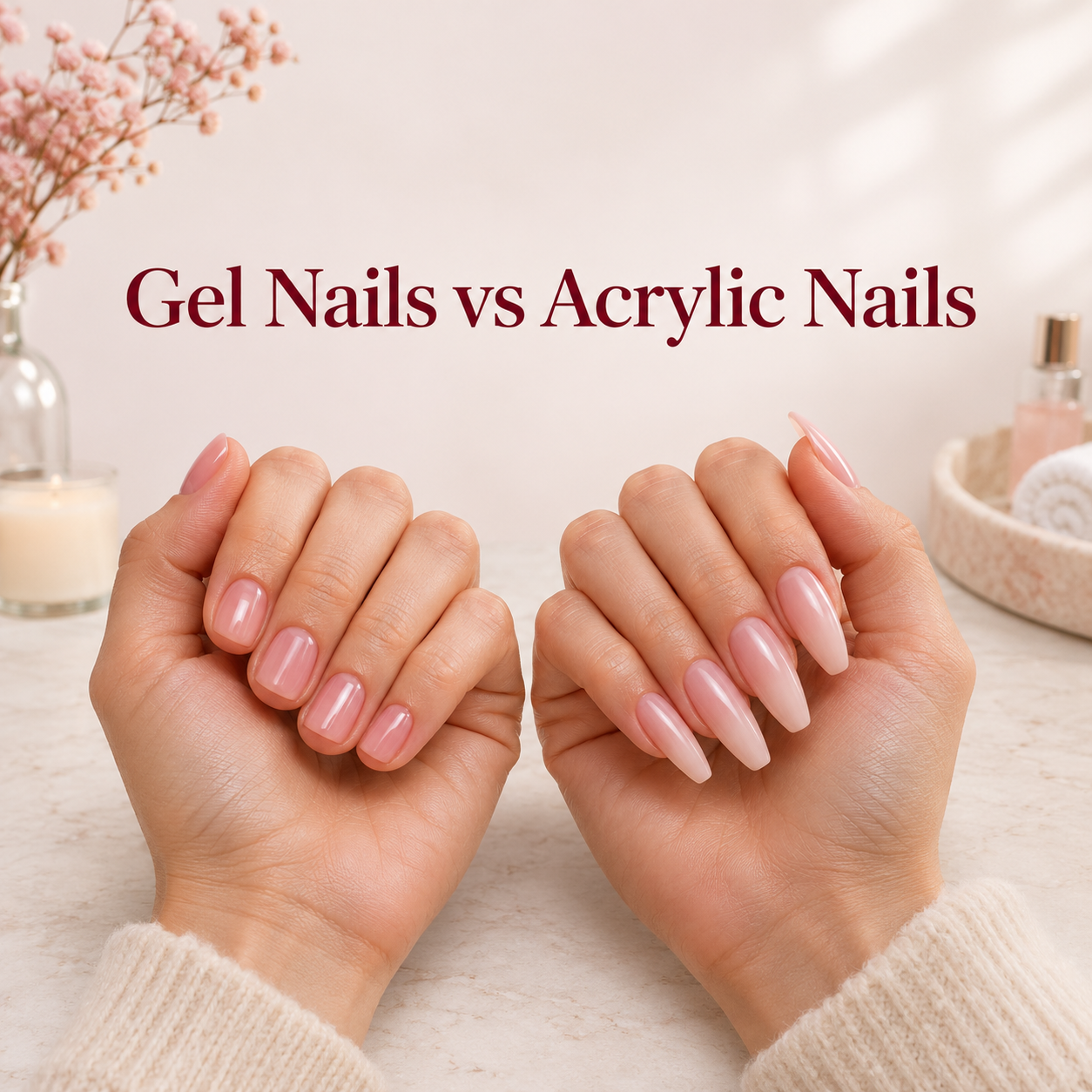
Gel nails usually look more natural, with a glassy shine and a flexible feel. Acrylic nails feel harder and thicker, and they are available in clear, pink, white and glitter powders, which makes them ideal for French tips, sculpted shapes and 3D art.
3. Durability and Longevity
Acrylics are generally tougher. If you type all day, lift heavy items or work with your hands, acrylic may resist breaking better. Gel typically lasts around two to three weeks before it starts to lift or grow out, while acrylic can look good for three to four weeks with regular fills.
Gel can still be very strong, especially hard gel and builder-in-a-bottle systems, but it is more flexible, so it can bend instead of snap.

4. Cost
Prices vary by city, salon and design complexity. In general, a gel manicure costs less than a full set of acrylics, while gel extensions and hard gel can be as pricey as acrylic. Acrylic fill appointments are usually needed every two to three weeks, which adds to the long-term cost.
5. Nail Health and Damage
Neither option is harmless if applied or removed poorly. The main nail-health risks are:
- Over-filing the natural nail plate, which thins it.
- Peeling or ripping off the product, which removes layers of natural nail.
- Allergic reactions to methacrylates found in both gel and acrylic products.
- UV exposure from gel lamps (using sunscreen or UV-protective gloves can help).
Soft gel polish is often considered gentler, because it is thin and removed by soaking. Acrylic is more rigid and can cause leverage damage if the nail catches on something. Choosing a skilled, licensed technician matters more than the product itself.
6. Removal
Soft gel soaks off in acetone in roughly 10 to 15 minutes. Acrylic requires longer soaking, often 20 to 30 minutes or more, plus some gentle filing. Hard gel generally needs to be filed off by a professional. Never pick or pull any enhancement off, as this is the number one cause of damage.
7. Odor and Comfort
Acrylic liquid monomer has a strong, distinct smell. Gel has a milder odor, so it can be more comfortable for people who are sensitive to fumes. Good ventilation in the salon is important in both cases.
Pros and Cons of Gel Nails
Pros
- Natural, glossy and flexible finish
- No drying time after curing
- Mild odor
- Soft gel is easier to remove
- Wide range of colors and finishes (cat-eye, chrome, sheer)
Cons
- Needs a UV/LED lamp
- Can be less strong for very long nails
- Hard gel removal needs filing
- Possible allergic sensitivity with repeated exposure
Pros and Cons of Acrylic Nails
Pros
- Very strong and durable
- Great for long, sculpted shapes
- Excellent for nail art, charms and 3D designs
- Can repair broken natural nails
Cons
- Strong chemical smell
- Thicker, heavier feel
- Removal takes longer and can dry the nail
- Technique-sensitive, so poor application can cause lifting
Which Is Better for Your Lifestyle?

For short natural nails
Soft gel polish or a gel overlay protects the nail while keeping a natural look.
For long, dramatic nails
Acrylic or hard gel extensions give the structure that long almond, coffin or stiletto shapes need.
For weak, peeling nails
An overlay in gel or acrylic can add strength. Many people choose hard gel or a thin acrylic overlay while their nails recover.
For active jobs
If you work with your hands, acrylic usually offers tougher wear. A strong builder gel is also a good alternative.
For sensitive skin or fume sensitivity
Gel may feel more comfortable, but always do a patch test and discuss allergies with your technician.
Gel vs Acrylic Nails at Home or in a Salon?
Professional salon application is recommended for acrylics because the technique is difficult to master. Gel polish is more beginner-friendly at home, since you control the curing time, but you still need a quality lamp, proper prep and careful removal.
Whichever you choose, avoid cheap, unlabeled products. Poor-quality gels and acrylic liquids can cause allergies and lifting.
Useful Tools and Products to Consider
If you are planning an at-home manicure or want to maintain your nails between salon visits, these categories are worth looking at:
- LED/UV nail lamp with timer settings for gel polish
- Gel polish starter kit including base coat, color and no-wipe top coat
- Acrylic starter kit with monomer, powders, brushes and forms (for experienced users)
- Cuticle oil to keep nails and surrounding skin hydrated
- Nail files and buffers in 180/240 grit for safe shaping
- Acetone and removal wraps for safer soak-offs
- Nail strengthener or treatment to use during breaks
How to Care for Gel and Acrylic Nails
- Moisturize daily: apply cuticle oil and hand cream every day.
- Wear gloves: protect nails when washing dishes or cleaning.
- Do not use nails as tools: avoid opening cans or scraping stickers.
- Keep fills on schedule: do not stretch the appointment past 3 to 4 weeks.
- Never peel or bite: this strips the natural nail.
- Give your nails breaks: a few weeks off between sets helps recovery.
- Use sunscreen: apply it to hands or use UV gloves under lamps.
Signs You Should See a Professional
Stop wearing enhancements and talk to a nail technician or doctor if you notice redness, swelling, pain, green discoloration under the nail, or lifting that traps moisture. These can signal an allergy or infection that needs attention.
Frequently Asked Questions
Are gel nails better than acrylic nails?
Not universally. Gel looks more natural, is lighter and usually easier to remove. Acrylic is stronger and better for long, sculpted nails. The better choice depends on your lifestyle and nail goals.
Which lasts longer, gel or acrylic?
Acrylic often lasts slightly longer, around three to four weeks with fills, while gel generally lasts two to three weeks.
Which is less damaging to natural nails?
Soft gel polish is usually gentler, but damage depends mostly on technique, filing and removal. Proper application and soak-off removal matter most.
Is gel cheaper than acrylic?
A basic gel manicure is typically cheaper than a full set of acrylic nails. Gel extensions, however, can cost about the same as acrylic.
Can I put gel polish over acrylic nails?
Yes. Many people apply gel polish over acrylic extensions for a glossy color finish and a wide range of shades.
Do gel nails need a UV lamp?
Yes. Gel only hardens when cured under a UV or LED lamp, while acrylic hardens on its own in the air.
How often should I take a break from nail enhancements?
There is no strict rule, but many experts suggest giving your nails a rest every few months and keeping them moisturized and healthy between sets.
Can I switch between gel and acrylic?
Yes. Many people alternate depending on the season, event or nail condition. Just make sure the old product is fully and safely removed first.
Final Verdict: Gel Nails vs Acrylic Nails
There is no single winner in the gel nails vs acrylic nails debate. Gel nails are ideal if you love a natural, flexible, glossy look and want an easier removal process. Acrylic nails are the better pick if you need strength, length and creative nail art that stays put.
Think about your daily activities, nail health, budget and style, then talk with a trusted technician. With good application, proper aftercare and safe removal, both options can give you beautiful nails you will love showing off.
Disclosure: This article is for general information only and is not medical advice. If you have nail or skin problems, consult a qualified professional.