



Walk into any bedding, lingerie, or fashion store and you will see both satin and silk labeled as luxurious, smooth, and shiny. They look alike, yet they are not the same thing, and the price gap can be huge. If you are deciding what to buy, understanding satin vs silk fabric will save you money and disappointment.
In this complete guide, we compare the two across feel, look, durability, care, price, and best uses, so you can pick the right one with confidence.
Quick Answer: What Is the Difference Between Satin and Silk?
Silk is a natural fiber. Satin is a type of weave. Silk comes from silkworm cocoons, while satin describes how threads are woven so that one side is glossy. Satin can be made from silk, but most satin today is polyester, nylon, or rayon.
What Is Silk?
Silk is a natural protein fiber produced by silkworms, most commonly the mulberry silkworm. Each cocoon yields a long continuous filament, which is spun and woven into fabric. Silk has been prized for thousands of years because of its soft hand feel, natural sheen, and ability to regulate temperature.
Common silk types include mulberry silk (the highest quality), charmeuse, habotai, chiffon, and dupioni. When shopping, look for the momme weight: 19 to 25 momme is ideal for pillowcases and sheets.
What Is Satin?
Satin is a weave in which several warp threads float over weft threads, creating a smooth, glossy face and a duller back. Because the technique is separate from the material, you will find silk satin, polyester satin, nylon satin, and rayon satin. Polyester satin is by far the most affordable and widely available.
Satin vs Silk: Side-by-Side Comparison
| Feature | Silk | Satin |
|---|---|---|
| Material | Natural protein fiber from silkworms | Weave type; usually polyester, also silk or nylon |
| Shine | Soft, pearl-like glow | Bright, mirror-like gloss |
| Feel | Smooth, light, warm in cold and cool in heat | Smooth and slippery, can feel cooler or clammy |
| Breathability | Excellent | Low to medium (polyester) / good (silk satin) |
| Durability | Delicate when wet, long-lasting with care | Polyester satin is tough; snags easily |
| Care | Hand wash or dry clean | Often machine washable |
| Price | High | Low to moderate |
| Best for | Luxury bedding, scarves, evening wear | Budget bedding, lingerie, party dresses, linings |
Appearance and Shine
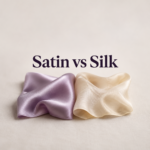
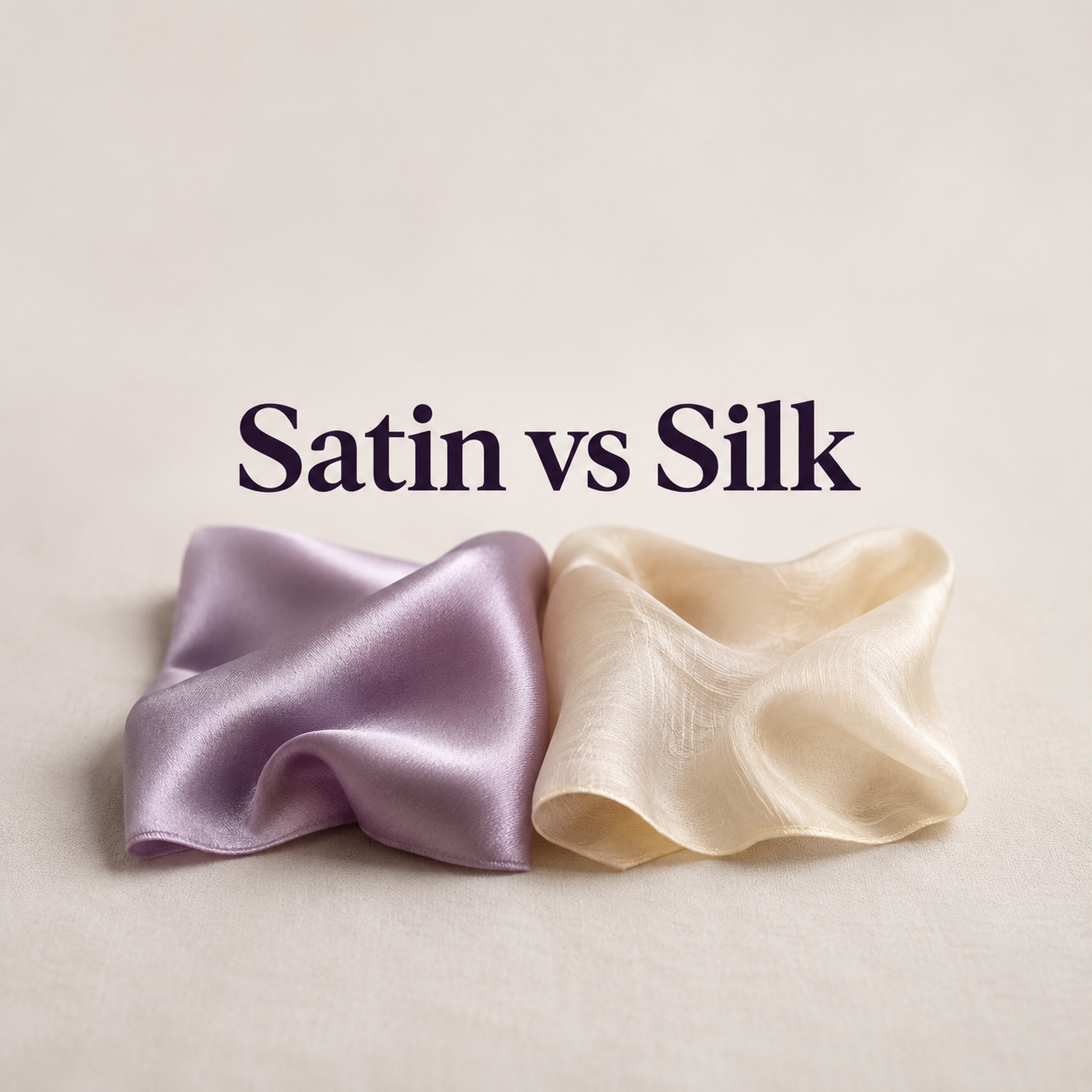
Satin has a high, mirror-like gloss that reflects light strongly. Silk has a softer, pearl-like glow with depth and subtle color shifts. If you want a dramatic, glamorous look for party wear, satin delivers. For an understated, elegant finish, silk looks more refined.
Feel and Comfort
Both fabrics feel smooth against the skin. Silk is lightweight and adapts to your body temperature, keeping you warm in winter and cool in summer. Polyester satin can trap heat and moisture, which may feel sticky in hot weather. Silk satin gives you the best of both worlds, but at a higher price.
Durability and Maintenance
Silk fibers are strong when dry but weaken when wet, and they can be damaged by sweat, sunlight, and harsh detergents. Hand washing with a gentle detergent or dry cleaning is recommended. Polyester satin is more forgiving: most pieces can go in a delicate machine cycle, though they snag easily and may develop static.
- Silk care tip: use cold water, avoid wringing, and dry flat in the shade.
- Satin care tip: wash inside a mesh bag, use low heat, and iron on the lowest setting.
Benefits for Skin and Hair
Both fabrics create less friction than cotton, which helps reduce hair breakage, frizz, and sleep creases. Silk is also less absorbent than cotton, so it does not pull moisture from your skin or hair products. Natural silk is also hypoallergenic and resists dust mites and mold, making it a smart choice for sensitive skin. Satin made from polyester offers similar slip but lacks these natural properties.
Price Comparison
Pure silk is expensive because of the labor-intensive production. A quality mulberry silk pillowcase often costs several times more than a polyester satin one. Satin is the budget-friendly option when you want a silky look without the investment.
Best Uses: Which Should You Choose?
Choose silk if you want:
- Luxury bedding and pillowcases with natural temperature control
- Hypoallergenic fabric for sensitive skin
- Long-term investment pieces, scarves, and formal wear
Choose satin if you want:
- An affordable alternative for sheets, bonnets, and pillowcases
- Easy-care clothing, lingerie, and robes
- Bold, shiny party dresses, decor, and gift wrapping
How to Tell Real Silk From Satin
- Touch test: real silk warms up quickly in your hand, while polyester feels cooler.
- Light test: silk shows a soft shimmer in multiple shades; satin shines uniformly.
- Label check: look for “100% mulberry silk” and the momme weight.
- Burn test (small thread only): silk smells like burnt hair and leaves crushable ash; polyester melts into a hard bead.
Buying Guide: What to Look For
- Check the fiber content, because “satin” alone does not mean silk.
- For bedding, pick 19 to 25 momme silk or a good-quality 100% polyester satin.
- Read the care label to be sure it fits your routine.
- Check return policies and verified customer reviews before buying online.
Pros and Cons Summary
Silk pros: breathable, hypoallergenic, luxurious, temperature regulating. Silk cons: expensive, delicate, needs careful washing.
Satin pros: affordable, glossy, easy to wash, many colors. Satin cons: may trap heat, snags easily, polyester is less eco-friendly.
Frequently Asked Questions
Is satin or silk better for sleeping?
Silk is better for temperature control and skin comfort. Satin is the better choice if you want a lower price and easy care.
Is satin made from silk?
Not always. Satin is a weave, so it can be made from silk, polyester, nylon, or rayon. Most satin sold today is polyester.
Which is better for hair, satin or silk?
Both reduce friction and frizz. Silk adds breathability, while satin gives similar slip at a fraction of the cost.
Does silk last longer than satin?
With proper care, silk can last for years, but polyester satin usually resists wear, stains, and washing better.
How can I tell real silk from satin?
Real silk feels warm quickly in your hand, has a soft shimmer that changes with the angle, and smells slightly like burnt hair when a loose thread is burned. Polyester satin feels colder and looks uniformly shiny.
Final Verdict
If comfort, skin health, and long-term luxury matter most, silk is worth the investment. If you want a stylish, budget-friendly, low-maintenance option, satin is an excellent choice. Now that you know the difference between satin and silk fabric, you can shop smarter and choose the fabric that fits your lifestyle and budget.